
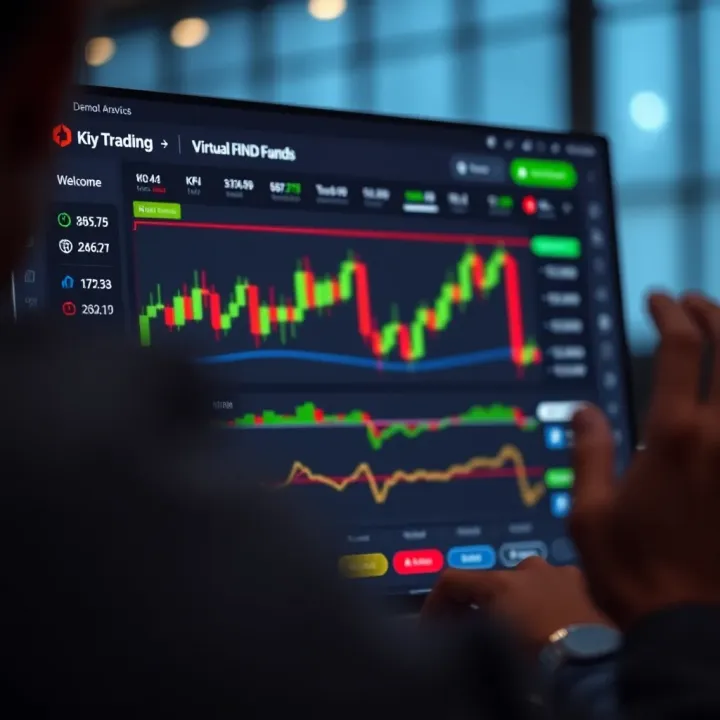
Understanding Demo Trading Accounts for Pakistani Traders
💹 Learn how demo trading accounts help Pakistani traders practise risk-free, improve skills, and prepare smartly before live market trading starts.
Edited By
Benjamin Clark
Forex trading has gained wide appeal in Pakistan, especially among new investors looking for ways to grow savings beyond traditional investments. However, jumping straight into live trading without preparation can lead to costly mistakes. This is where a forex trading demo account comes in handy.
A demo account simulates real market conditions without risking actual money. It allows you to practise buying and selling currency pairs such as USD/PKR or EUR/USD using virtual funds. This hands-on practice helps you understand how forex markets work, try strategies, and manage risks.
Starting with a demo account is like learning to drive on an empty road before tackling city traffic—it builds confidence and skills safely.
Pakistani traders benefit particularly from demo accounts as they can explore forex platforms that comply with State Bank of Pakistan regulations and PTA rules without financial exposure. Many brokers like IG, FXTM, and local platforms provide demo accounts with easy sign-up processes requiring just a valid CNIC and mobile number.
Key benefits of using demo accounts include:
Practising real-time trading without financial risk
Familiarising with trading platforms and tools
Testing various trading strategies and order types
Learning risk management techniques without pressure
Choosing the right demo account involves checking factors such as:
Platform usability and features
Realistic market conditions that mimic live trading
Customer support availability in Pakistan
Access to local currency pairs and PKR-related trading options
However, demo accounts have some limitations. They may not replicate the emotional pressure of risking real money or sudden market volatility during global events affecting PKR. Still, for Pakistani traders, they remain invaluable for skill-building before live trading.
In essence, demo accounts serve as both a learning ground and a confidence builder. Understanding how to use them properly and knowing when to move to live trading can improve trading success in Pakistan’s dynamic forex market.
A forex trading demo account is an essential tool for anyone looking to enter Pakistan's dynamic currency market. It offers a risk-free space to understand forex trading mechanics without financial exposure. The demo account mirrors real trading platforms, making it highly relevant for beginners and seasoned traders alike who want to refine strategies before risking actual capital.
A demo account provides a simulated trading setup that replicates the conditions of live forex markets. For instance, Pakistani traders using platforms like MetaTrader 4 or MetaTrader 5 can experience market fluctuations similar to the real market, allowing them to practice placing orders, managing trades, and reacting to market news without any real stakes. This environment helps traders build confidence and familiarity with trading terminology and tools.
Since demo accounts operate with virtual money, users face no financial risk. You don't need to lock in any capital or worry about losing your investment while you learn. For example, a trader in Lahore can practice buying USD/PKR or EUR/PKR pairs without actual cash. This hands-on experience is valuable especially when Pakistani traders are still getting to grips with leverage, margin, and spreads unique to currency trading.
When opening a demo account, brokers typically credit you with virtual funds ranging from Rs 100,000 to Rs 10 million, depending on the platform. These virtual funds serve as your initial capital for practising trades. For example, a trader can simulate entering a position worth Rs 500,000 in GBP/USD without risking real cash. This setup allows testing how different trade sizes affect profit and loss.
Demo accounts offer market data that is either real-time or delayed by a few seconds to minutes. Real-time data helps traders react to live market trends, which is crucial for scalp trading or news-based decisions. A trader in Karachi focusing on high-frequency trades gains from real-time quotes to time entries precisely. However, some brokers provide delayed data intentionally to prevent misuse, but it still serves the learning purpose by illustrating typical price movements and trends.
Using a forex demo account effectively requires approaching it as if real money is at stake. Treat virtual trades with serious attention to capture the complexities of market behaviour and platform navigation.
By practising with a demo account, Pakistani traders can master order types, understand spreads and commissions, and gain insight into currency volatility — all without exposing themselves to actual losses.
Forex demo accounts play a key role in helping Pakistani traders build their skills without risking real money. These accounts provide a safe space to understand market dynamics, test strategies, and gain hands-on experience with trading platforms before stepping into live markets. For traders in Pakistan, where forex is increasingly popular but still requires cautious steps, demo accounts are a practical starting point.
Understanding forex fundamentals is often the first challenge for beginners. A demo account offers real-time market conditions where you can learn how currency pairs move in response to economic news or geopolitical events, all without losing a single rupee. For instance, a novice trader in Lahore can observe how the USD/PKR pair behaves during changes in Pakistan’s trade balance announcements.
Practising order execution is another benefit that helps bridge theory and practise. Traders get to place buy and sell orders, experiment with market and limit orders, and see how each order type works practically. Such practice means you get comfortable with timing your trades and managing open positions so that when you start live trading, the process feels familiar and less stressful.
Evaluating risk management techniques is vital for preserving capital. Demo accounts allow you to try stop-loss orders or trailing stops without risking actual money. For example, you can check how setting a 50-pips stop-loss affects your overall profitability on the EUR/USD pair during volatile sessions.

Exploring different currency pairs broadens your market perspective. While most traders focus on popular pairs like EUR/USD or USD/JPY, a demo account lets you test emerging pairs such as USD/INR or USD/TRY. This exposure helps you understand liquidity levels, spreads, and price movements, essential factors when planning to diversify or hedge your live trades.
Platform navigation is crucial — a demo account introduces you to the structure and tools of trading software like MetaTrader 4, MetaTrader 5, or broker-specific platforms such as those offered by IG or OANDA. Knowing where to find charts, order settings, and account information improves your efficiency.
Using available tools and indicators in a demo environment helps you customise your trading approach. You can experiment with moving averages, RSI, Bollinger Bands, or Fibonacci retracements to see which indicators align best with your strategy. This practical learning reduces confusion and speeds up decision-making when you switch to live trading.
Practising in a demo account not only builds confidence but also helps avoid costly mistakes by giving traders a clear understanding of market mechanics and platform functionality.
Overall, using a forex demo account equips Pakistani traders with the knowledge and familiarity needed to trade prudently in live forex markets.
While forex demo accounts offer an invaluable learning platform, they also have notable limitations traders must recognise. These drawbacks often differentiate the demo trading experience from real market conditions, which can impact how effectively one prepares for live trading. Understanding the emotional and technical gaps helps set realistic expectations and prevents common pitfalls when moving from practice to actual trading.
Demo accounts do not involve real money, eliminating the emotional stress attached to risking actual capital. For Pakistani traders, this absence can understate the psychological challenges they will face in live markets. When trades are hypothetical, it's easy to remain calm or take risks you might avoid if your own savings were on the line. For example, a trader might hold onto losing positions longer or overtrade without fearing losses. This difference means that demo trading alone won't fully prepare you emotionally for the tough decisions live trading demands.
Because demo environments remove real loss consequences, traders may develop a false sense of security. Someone practising with virtual funds might feel they’ve mastered a strategy, only to find that live market volatility, emotions, and unexpected news events make execution much harder. Overconfidence can lead to larger risks or neglecting proper money management when transitioning to live accounts. It’s important for traders to remember that success in demos doesn’t guarantee live profits—they need to stay cautious and test live conditions slowly.
Execution speed on demo accounts can differ significantly from what traders experience live. Brokers sometimes simulate or delay order execution, which creates a smoother and faster experience in demo modes. However, in Pakistan’s volatile markets or during high-impact economic announcements, execution can be slower or face slippage in actual trading. For instance, a demo might instantly execute a stop-loss order, but in live markets, price spikes could cause delays, resulting in a less favourable fill price.
Demo platforms generally operate with ideal liquidity conditions, showing prices without the reality of market depth constraints. In live forex markets, especially for less traded pairs or during off-peak hours in Pakistan, limited liquidity can lead to wider spreads and difficulty entering or exiting trades at expected prices. For example, during times of major political announcements in Islamabad or Karachi, liquidity can dry up quickly, affecting order execution. These differences mean traders should anticipate and plan for real market frictions absent in demo trading.
While demo accounts serve as great learning tools, recognising their emotional and technical limitations is key for Pakistani traders to adapt smoothly when moving to real forex trading.
Choosing the right forex demo account is more than just signing up with any available broker. For Pakistani traders, this decision can significantly affect your learning curve and preparation for live trading. Demo accounts vary widely in features, regulations, and user experience. Picking a demo account that aligns with your trading goals, technical skills, and market knowledge will help you build confidence and avoid surprises when you shift to real money.
The Securities and Exchange Commission of Pakistan (SECP) regulates financial brokers to ensure transparency and security in financial dealings. When you choose a forex demo account linked to a SECP-regulated broker, you’re more likely to get a reliable and fair trading environment that mimics real market conditions closely. This gives Pakistani traders protection against shady practices and unfair execution policies.
For example, platforms backed by SECP have to follow strict rules on client fund segregation and reporting standards. So, practising on these demo accounts helps you familiarise yourself with the actual trading policies you will face when you move to a live account. Using a demo from an unregulated broker might give a misleading picture of how trades execute or spreads behave.
Good customer support plays a critical role, especially for beginners. You will want a broker who responds promptly when you have technical questions or face login issues with the demo account. Quality help can resolve problems swiftly so you don’t lose momentum while learning.
Platforms offering localised customer support, preferably with Urdu-speaking representatives, ease communication barriers common in Pakistan. For instance, if you encounter difficulty navigating the trading platform in Karachi or Lahore, a quick live chat or phone support available during Pakistan Standard Time (PKT) hours can be a big relief. Before committing to a demo account, check reviews and test the responsiveness of a broker’s support team.
In Pakistan, many traders rely on mobile phones for internet access due to convenience and data costs. Hence, a demo account linked to a broker with a strong mobile app or mobile-friendly website is crucial. Mobile compatibility ensures that you can practise trading during commutes, lunch breaks, or power cuts without waiting to use a desktop.
For example, brokers offering demo versions of their mobile app that work smoothly on popular platforms like Android and iOS allow Pakistani traders to stay connected with the market easily. Features like one-click order placement, candlestick charting, and real-time price updates on mobiles improve your preparedness for live forex trading.
Having a trading platform that supports Urdu or clear English can dramatically lower the learning barrier. Many Pakistani traders are not comfortable with English-only technical jargon used in global trading platforms. Urdu interfaces help beginners understand commands, terms, and instructions without confusion.
Besides language, platforms offering bilingual help pages, tutorial videos, or FAQs foster better comprehension. This localised touch not only speeds up your demo trading experience but builds confidence. For instance, a trader in Multan using a platform with an Urdu interface is less likely to make mistakes interpreting trade execution terms.
Choosing a Pakistani-friendly demo account—with proper regulation, reliable support, mobile access, and local language options—makes a concrete difference in your trading education and future success.
By keeping these factors in mind, you ensure that your practice phase prepares you well for live forex trading's real challenges in Pakistan's unique market environment.
Utilising a forex demo account effectively is vital for Pakistani traders aiming to build solid trading habits. Simply opening a demo account isn’t enough; consistent practice paired with clear goals and thorough self-review make the difference between learning and just playing around. The purpose of a demo account extends beyond risk-free trial; it’s a tool to simulate real market behaviour, refine strategies, and iron out weaknesses.
Simulating realistic trade sizes matters because it mirrors the impact of your decisions on your actual capital. For example, if you plan to start live trading with Rs 50,000, practising with virtual trades of similar size helps gauge realistic profits and losses. Many beginners make the mistake of trading huge volumes in demo accounts, creating false confidence when profits quickly multiply. That confidence fades when real money is involved, and stakes feel higher. Matching demo trade sizes to your budget prepares you for the emotional and financial realities of live trading.
Following a trading plan in your demo trades shapes discipline. Crafting and sticking to a plan that includes entry and exit points, risk limits, and expected profit provides structure. For instance, if you decide to risk no more than 2% of your capital on a single trade, use your demo account consistently with that rule. This trains you to resist impulsive trades triggered by greed or fear—common pitfalls in forex trading. Besides, it highlights whether your chosen strategy meets your goals or needs improvement before risking actual funds.
Maintaining a trade journal is a simple yet powerful way to track your demo trading progress. Record key details like currency pairs, trade size, entry and exit prices, reasons for the trade, and outcome. Over time, this log reveals patterns in your decisions and outcomes that you may overlook otherwise. Whether you notice a tendency to hold losing trades too long or miss opportunities due to hesitation, journaling makes these habits visible and correctable.
Analysing successes and mistakes based on your trade records helps sharpen your tactics. After, say, 30 demo trades, review your journal to identify which strategies earned consistent returns and which caused losses. For example, you might find that trades based on fundamental news events performed better than random technical setups. This analysis encourages focusing on your strengths and addressing weaknesses systematically. It also protects you from repeating costly errors when moving on to live trading.
Practising with a demo account only pays off when you treat it like real trading – with realistic goals, disciplined planning, and honest self-assessment.
In Pakistani market conditions, where rupee fluctuation and political news affect currency pairs frequently, this disciplined practice helps traders adapt strategies timely, improving live trade performance and confidence.
Moving from a forex demo account to a live trading environment is a key step for every trader, especially for those operating in Pakistan’s emerging forex market. While demo accounts help you learn strategies and understand platforms, live trading introduces real money and genuine market emotions. This section explains when and how Pakistani traders should make this shift to manage risks effectively and improve their chances of success.
You should consider switching to live trading once you consistently make profitable trades on your demo account over a reasonable period. For instance, if you practise for two to three months on a demo account and regularly achieve gains while following your own trading plan, it suggests readiness. This consistency reflects that you understand market behaviour, timing, and order execution well enough to handle real trades.
However, confidence should come from disciplined practice, not overconfidence. Many beginner Pakistani traders feel ready too soon after a few lucky demo trades. It is vital to test yourself across different market conditions and currency pairs, especially those common in Pakistan's forex brokers, before risking actual funds.
Demo accounts cannot replicate the stress and emotional impact of real money on the line. The live forex market involves factors like spreads that widen unexpectedly, slippage during news releases, and fast-changing liquidity. These affect your trade execution, potentially causing losses even if your strategy is sound.
For example, a trader might place a buy order on USD/PKR expecting a rise, but due to sudden liquidity crunch or slippage, the real order executes at a worse price. This risk exists only in live markets and requires mental readiness to accept losses and stick to risk management rules. Understanding these risks avoids rash decisions driven by emotions, which are absent in demo environments.
Stop-loss orders are essential tools that automatically close your trade if the price moves against you beyond a set level. This prevents large unexpected losses, a risk amplified when real money is involved. For Pakistani traders, especially those new to forex, using stop-loss orders helps maintain control and protects your capital amid market volatility and forex broker differences.
For example, if you buy EUR/USD at 1.1000, setting a stop-loss at 1.0950 limits your loss to 50 pips should the market drop. Without this, losses could wipe out a significant portion of your trading capital quickly.
When shifting to live trading, begin with small trade sizes or positions. Even if you have Rs 1 lakh in your trading account, choose to risk only a small percentage per trade, such as Rs 1,000 to Rs 2,000. This helps you get used to live market dynamics without risking heavy losses from the start.
Small investments give you room to learn and adjust your strategies in real time. Pakistani traders often make the mistake of increasing trade size quickly, especially if demo trading was consistently profitable. But remember, the psychological and financial pressure live trades bring requires gradual scaling for sustainable growth.
Transitioning to live forex trading is not about rushing but managing risk thoughtfully and responding to live market conditions with discipline, something demo accounts only hint at. Proper timing and risk management can make this transition smoother for Pakistani traders.
💹 Learn how demo trading accounts help Pakistani traders practise risk-free, improve skills, and prepare smartly before live market trading starts.
📊 Learn how demo accounts give Pakistani traders a risk-free way to master trading skills, understand markets, and prepare confidently for live trading.
📝 Learn how trading demo accounts in Pakistan help you practice strategies, avoid risks, and choose the right platform for confident market moves.

Discover the Eightcap competition's format, benefits, risks, and entry rules 🌟 A must-know guide for Pakistani traders eager to excel in this fast-growing trading event 📈
Based on 5 reviews