
Understanding BGB Price Trends in Pakistan
Explore the key factors and trends shaping BGB prices 📊 in Pakistan 🇵🇰. Learn how market changes impact investors and businesses today and tomorrow.
Edited By
David Sinclair
The dollar rate in Pakistan influences much more than just currency exchange; it affects imports, exports, inflation, and overall economic stability. Over recent years, the Pakistani rupee has seen significant fluctuations against the US dollar, often influenced by both domestic policies and global factors.
Understanding the expected dollar rate requires looking at current market trends alongside political and economic developments. For instance, increased trade deficits or rising foreign debt tend to put pressure on the rupee, pushing the dollar rate higher. Conversely, remittances from overseas Pakistanis and foreign investments can help support the rupee and keep the dollar rate relatively stable.
Several key factors shape the dollar-rupee exchange rate:
State Bank of Pakistan (SBP) policies: Interest rate adjustments and foreign exchange reserves management directly impact supply-demand balance.
Government measures: Import restrictions, subsidies, and IMF agreements can influence market sentiment and currency value.
Global market movements: Changes in US dollar strength or commodity prices, especially oil, play a critical role.
Political stability: Elections, policy shifts, or geopolitical tensions often trigger immediate currency reactions.
Traders and investors closely watch these factors as they directly affect pricing, cost of imports, and profitability of businesses dealing in foreign exchange.
Recent trends show the dollar rate hovering between Rs 285 and Rs 295, impacted partly by ongoing negotiations with the International Monetary Fund (IMF) and fluctuating commodity prices. Experts predict that unless there is a breakthrough in economic reforms or fresh foreign inflows, the rupee is likely to face depreciation pressures.
For finance professionals, understanding these dynamics aids in risk management and decision-making. Businesses and consumers may also benefit by anticipating costs and planning their financial strategies accordingly.
In summary, the dollar rate in Pakistan remains sensitive to a mix of domestic economic policies and external market conditions. Continuous monitoring of these factors is vital for anyone involved in finance, trade, or investment in the country.
Understanding Pakistan's dollar exchange rate is essential for anyone involved in finance, trade, or investment within the country. The rupee-dollar parity not only reflects the economic health of Pakistan but also influences everything from import costs to inflation and business planning. For traders and analysts, keeping track of exchange rate trends offers a practical window into monetary stability and potential policy impacts.
Recent trends in the PKR-USD rate have shown a pattern of gradual depreciation amid economic challenges such as trade deficits and fluctuating foreign reserves. For instance, in the past year, the rupee slipped from approximately Rs 155 to Rs 285 per dollar, partly due to pressures like rising global oil prices and reduced foreign investment. This shift has direct consequences on pricing for imported goods and foreign debt servicing, making it crucial for market participants to monitor such movements closely.
Historical fluctuations and key turning points offer context to this volatility. The rupee has faced significant shocks during periods like the 2008 global financial crisis and the 2018 currency devaluation under the IMF programme, each time leading to sharp currency corrections. These events serve as reference points for investors assessing risk, showing how external shocks and policy shifts have historically affected the exchange rate environment.
Impact of foreign reserves on currency stability is direct and immediate. The State Bank of Pakistan’s foreign exchange reserves act like a buffer, stabilising the rupee by meeting external payment obligations and smoothing out market pressure. When reserves fall below critical levels, as seen in mid-2022 when they dipped to under one month’s import cover, the rupee tends to weaken sharply, adding uncertainty for importers and businesses reliant on foreign currency.
Influence of the stock market on exchange rates plays a subtle but meaningful role. While the Pakistan Stock Exchange (PSX) does not set currency values, market sentiment often correlates with exchange rate movements. A rising stock market can attract foreign investment, boosting demand for the rupee and supporting its strength. Conversely, sharp declines can signal economic trouble, leading to capital flight and rupee depreciation. This interplay is important for investors balancing portfolios with currency exposure.
Keeping a close eye on these factors helps businesses and investors anticipate changes in the dollar rate, allowing them to make informed decisions about hedging, pricing, and investment timing.
Understanding the factors influencing the dollar rate in Pakistan helps businesses and investors anticipate market shifts. Currency fluctuations impact import costs, export competitiveness, and inflation, so keeping an eye on what drives these changes is essential for making sound financial decisions.
Inflation and interest rates directly affect the exchange rate by influencing the purchasing power of the rupee. When inflation rises sharply, the rupee tends to lose value against the dollar because higher domestic prices reduce export competitiveness and deter foreign investment. For instance, Pakistan has faced inflationary pressures due to rising oil prices and supply disruptions, which added stress on the rupee.
Interest rates set by the State Bank of Pakistan (SBP) also shape currency flows. Higher interest rates typically attract foreign investment because they offer better returns on PKR-denominated assets, strengthening the rupee. Conversely, low or stagnant rates may make the currency less appealing, increasing depreciation risks.
State Bank of Pakistan’s interventions come into play when the currency faces rapid devaluation or excess volatility. The SBP uses tools like foreign exchange reserves to intervene in the market, buying or selling dollars to stabilise the PKR. For example, during times of heavy dollar demand, the SBP has sold dollars from reserves to prevent a slide in the exchange rate.
The SBP also adjusts interest rates to control inflation and indirectly influence the dollar rate. By raising the policy rate, the SBP can attract foreign capital, supporting the rupee. However, such moves need balance since too high rates may slow economic growth.
Political developments significantly affect investor confidence and, by extension, the currency value. Political uncertainty or sudden changes in government can cause volatility in the rupee-dollar rate as foreign investors assess risks. For instance, during election periods or political upheavals, the rupee historically experiences pressure due to capital flight.
Fiscal policies, including government spending and taxation, impact the dollar rate by shaping the country's economic health. Large budget deficits or failure to control public borrowing can lead to higher inflation and currency depreciation. When the government borrows heavily from the central bank, it risks increasing money supply, which weakens the PKR.
Sound fiscal management, such as prioritising export incentives and improving tax collection through the Federal Board of Revenue (FBR), can bolster economic stability and help maintain a stable exchange rate.
Foreign investment and remittances are vital inflows supporting the Pakistani rupee. Pakistan relies on remittances from overseas Pakistanis, currently around $30 billion annually, providing a steady supply of dollars. Foreign direct investment (FDI) also affects the exchange rate by bringing capital into the country.
Sudden drops in remittances or a slowdown in FDI inflows reduce dollar availability, putting pressure on the rupee. Changes in global investor sentiment, influenced by broader economic factors, can impact these flows.
Global commodity prices and US economic policies influence Pakistan’s exchange rate by affecting trade balances and capital flows. Since Pakistan imports large volumes of oil and commodities, rising global prices raise import costs, increasing demand for dollars.
US economic policies, especially Federal Reserve decisions on interest rates, impact dollar strength globally. Higher US rates often lead to capital outflows from emerging markets like Pakistan, causing the rupee to weaken. Monitoring these external factors helps anticipate pressure points for the PKR-USD rate.
A clear grasp of these interconnected factors provides traders, investors, and analysts with a practical framework to navigate Pakistan’s foreign exchange challenges effectively.
Monitoring expert predictions about Pakistan’s dollar rate offers traders, analysts, and investors essential guidance for making informed decisions. These forecasts help anticipate currency movements, plan financial strategies, and manage risks, especially amid Pakistan's often volatile economic environment.
Short-term expectations usually cover weeks to a few months. Experts focus on immediate factors like upcoming monetary policy announcements from the State Bank of Pakistan (SBP), recent foreign exchange reserve data, and current geopolitical events. For example, a sudden surge in remittances during a festival might strengthen the rupee temporarily. Understanding these trends allows businesses to manage import costs and exporters to time their foreign currency conversions better.
Medium to long-term projections extend over several quarters or years, highlighting structural changes influencing the dollar-rupee value. Analysts consider macroeconomic elements such as Pakistan’s fiscal deficit trajectory, ongoing IMF programmes, and regional trade agreements. If projections suggest a persistent trade imbalance causing rupee depreciation, companies might rethink investment plans or hedge currency risk accordingly. For policy makers, such forecasts support measures to improve economic resilience.
Geopolitical tensions significantly impact currency stability. Pakistan’s location near conflict-prone zones means sudden escalations can cause capital flight and sharp rupee drops. Previous episodes, such as border clashes, rapidly increased the demand for dollars, pushing exchange rates upward. Traders and investors remain vigilant of statements from regional powers and international diplomatic developments, as these factors may trigger unpredictable fluctuations.
Economic challenges, particularly trade deficits, continue to weigh on the dollar rate. Pakistan’s import bill often exceeds exports, creating pressure on foreign reserves and the rupee. Persistent deficits mean greater reliance on external borrowing and remittances, which can be unpredictable. For instance, if remittance inflows slow down, the rupee could weaken further, driving inflation up and increasing costs for imported goods. Businesses should therefore remain cautious of these vulnerabilities while planning pricing and supply chains.
Keeping an eye on expert predictions and associated risks equips financial professionals with the foresight to adapt swiftly, protecting investments and maintaining economic stability amid Pakistan’s complex currency dynamics.
The dollar rate significantly influences Pakistan’s economy and daily life. It affects trade, inflation, purchasing power, and business operations directly. As the dollar fluctuates, costs for imports rise or fall, which then cascades through the economy. For consumers and businesses alike, understanding this impact is crucial for planning and decision-making.
Changes in import costs: When the dollar strengthens against the rupee, the cost of importing goods increases. Pakistan relies on importing essential items such as machinery, petroleum, and raw materials. For example, a rise in the dollar rate makes these imports more expensive, pushing businesses to spend more PKR for the same foreign goods. This often results in higher prices for products ranging from manufacturing equipment to consumer electronics. Such cost pressures can delay projects or prompt firms to cut down on imports, affecting supply chains.
Competitiveness in export markets: On the flip side, a weaker rupee can benefit exporters by making Pakistani goods cheaper in international markets. Industries like textiles and leather, which form a substantial part of Pakistan’s exports, gain price competitiveness when the rupee depreciates. However, this advantage depends on global demand and other factors like logistics. For instance, while the textile sector might see immediate gains, exporters who rely on imported raw materials suffer from higher input costs, which can eat into profit margins.
Price fluctuations of goods and services: Businesses feel the pressure of exchange rate volatility as it impacts their operational costs. Fluctuating dollar rates cause irregularities in the cost of imported raw materials and components, leading to unpredictable pricing for end consumers. Daily essentials like cooking oil, sugar, and electronics may see sudden price hikes or drops based on currency movements. For small retailers and manufacturers, such instability complicates budgeting and inventory management.
Inflation and purchasing power: The dollar rate directly influences inflation in Pakistan. A costly dollar tends to push up prices for imported goods, which ripple across the entire economy as higher production costs feed into consumer prices. This reduces purchasing power for ordinary people, especially those on fixed or lower incomes. For example, when fuel prices rise due to a weak rupee, transport costs climb, affecting the price of everything transported. This cycle makes it harder for many households to manage daily expenses without cutting back on essentials.
Understanding these impacts is vital for policymakers, investors, and consumers to navigate Pakistan’s economic challenges linked to currency fluctuations. It also explains why keeping the dollar rate stable remains a priority for the government and financial institutions.
Explore the key factors and trends shaping BGB prices 📊 in Pakistan 🇵🇰. Learn how market changes impact investors and businesses today and tomorrow.
📉 Wondering if the US dollar rate will climb next week in Pakistan? Explore economic signals, policies, and market trends to stay ahead in 2024. 💼💵

📈 Explore key factors affecting gold prices in Pakistan, including economic indicators, government rules, and market trends to guide your investments wisely in 2024.
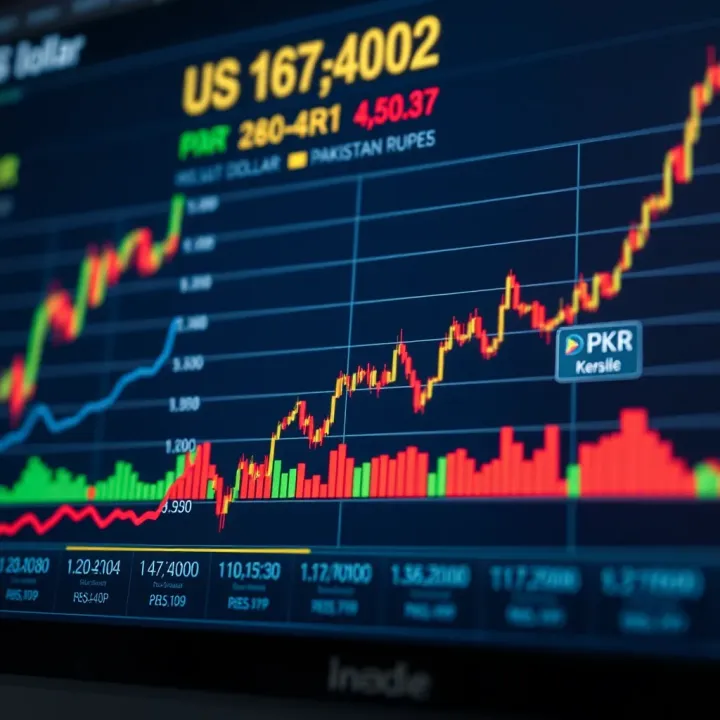
📈 Stay ahead with the USD to PKR forecast! Understand key economic drivers, govt policies, and risks shaping the rupee’s path. Tips for currency users in Pakistan.
Based on 13 reviews