
Understanding BGB Price Trends in Pakistan
Explore the key factors and trends shaping BGB prices 📊 in Pakistan 🇵🇰. Learn how market changes impact investors and businesses today and tomorrow.
Edited By
David Armstrong
Gold has a unique place in Pakistan’s economy and culture. It serves as both a store of value and a preferred form of investment for many households, especially during uncertain times. Predicting gold prices here involves carefully analysing several local and international factors that directly influence demand and supply.
Understanding gold price movements requires attention to economic indicators like the Pakistani rupee’s strength against the US dollar, inflation rates, and interest rate policies set by the State Bank of Pakistan (SBP). When the rupee weakens, gold becomes more expensive to import, often pushing prices higher. Similarly, rising inflation reduces the purchasing power of money, making gold a safer asset to hold.
Government interventions also play a significant role. Import duties on gold, customs regulations, and limitations on trade affect availability in domestic markets. For instance, hikes in import duties can restrict supply, causing price spikes. Additionally, Pakistan’s jewellery market and consumer behaviour during festive seasons such as Eid and weddings trigger periodic increases in demand, impacting short-term price shifts.
On the global front, gold prices in Pakistan remain sensitive to international trends. Gold’s value is largely set in global markets, influenced by geopolitical tensions, economic sanctions, inflationary pressures in major economies like the US and China, and decisions of central banks worldwide. Any instability abroad tends to drive investors to gold as a refuge, which can ripple down to prices in Pakistan.
Traders should keep a close eye on currency fluctuations, SBP monetary policy updates, and geopolitical news to make informed decisions.
Key points to watch for predicting gold prices in Pakistan include:
Rupee exchange rate movements against the US dollar
Inflation trends and SBP interest rate decisions
Changes in import duties and customs policies
Seasonal demand spikes during cultural and religious occasions
Global gold price trends affected by international investors and markets
Grasping these elements provides a solid foundation for anticipating gold price behaviour locally. Investors and traders alike can benefit greatly by tracking these factors continuously rather than relying on sporadic news or hearsay.
Understanding gold price trends in Pakistan is vital for traders, investors, and analysts aiming to make informed decisions. Local gold prices do not move independently; they reflect a mix of global factors and domestic economic conditions. By tracking historical patterns and comparing Pakistan’s gold prices with international rates, stakeholders can better predict future movements.
Over the last ten years, gold prices in Pakistan have seen several significant ups and downs. For example, during the 2013 economic slowdown coupled with a currency depreciation, gold prices surged as investors sought a safe refuge. Then in 2020, during the initial Covid-19 shock, prices hit new highs due to global uncertainty and local demand amid a weak rupee. Such fluctuations show how gold responds swiftly to shifts in economic stability and investor sentiment.
These patterns help investors identify periods of volatility and adjust their strategies accordingly. If an investor understands when gold tends to spike or drop in response to economic events, they can time their buys and sells to maximise returns.
Global economic events have a clear impact on Pakistan’s gold price, primarily because gold is traded worldwide in US dollars. For instance, US Federal Reserve policies often influence gold prices globally. When the Fed lowers interest rates, gold typically gains as lower yields make it more attractive. This effect eventually filters through to Pakistan’s gold market, raising local prices.
Similarly, geopolitical tensions, like trade disputes or conflicts, tend to boost gold demand as a safe haven. Pakistan’s gold price reflects such global shifts, amplified by local factors like exchange rate volatility.
Gold prices in Pakistan usually follow trends seen in international markets, especially London and New York, where major gold exchanges operate. The global gold price acts as a benchmark; any significant rise or fall overseas tends to be mirrored locally after factoring in exchange rates and import duties.
However, the correlation is rarely perfect. Local supply constraints, customs policies, and demand spikes during festivals or weddings can create short-term deviations. Still, watching global gold movements gives a reliable early indicator for Pakistani market participants.
The Pakistani rupee’s value strongly influences gold prices locally. When the rupee weakens against the US dollar, importing gold becomes more expensive, pushing prices higher. This effect is often visible during periods of external account stress or political uncertainty.
For example, a 5% drop in the rupee can translate into a comparable rise in gold price, independently of international prices. Traders and investors need to factor in these currency movements since they directly affect profitability and risk.
Tracking both international prices and local currency trends is essential to understand and predict gold price shifts in Pakistan accurately.
Understanding these elements equips finance professionals and investors with a practical toolset to navigate Pakistan’s gold market, reducing surprises and helping capitalise on emerging opportunities.
Gold prices in Pakistan respond to a mix of domestic and international factors. Understanding these helps traders, investors, and analysts anticipate market shifts and make informed decisions. This section breaks down the main influences shaping Pakistan’s gold market.

Inflation trends and purchasing power are significant drivers of gold demand in Pakistan. When inflation rises, the value of the Pakistani rupee falls, which erodes real purchasing power. Investors often turn to gold as a safe store of value during inflationary periods. For instance, in recent years, when inflation crossed double digits, demand for physical gold, especially jewellery, surged. This spike was largely because gold retains value better than cash in savings accounts losing ground due to inflation.
On the other hand, when inflation is stable or low, demand for gold can moderate as confidence in the currency strengthens. For consumers, inflation also affects their ability to buy gold regularly, pushing price sensitivity higher in rural and middle-income regions.
Interest rates and State Bank of Pakistan (SBP) policies play a crucial role in gold pricing dynamics. Higher interest rates tend to reduce demand for gold since fixed-income assets become more attractive by comparison. For example, when SBP raised its policy rate to curb inflation, some investors shifted funds from gold into bank deposits earning better returns.
Conversely, when SBP lowers interest rates, borrowing becomes cheaper and gold often benefits from increased liquidity and demand. This relationship helps explain why gold prices often rise in times of monetary easing. Traders must keep an eye on SBP announcements, as they affect both investment flows and Pakistan rupee value, indirectly influencing gold prices.
Domestic gold consumption patterns matter because Pakistan ranks among the world’s top consumers of gold, mainly for jewellery and wedding purposes. Seasonal demand spikes around festivals like Eid and wedding seasons can push prices higher locally. For example, during Ramazan and Eid, demand surges as families purchase gold gifts, boosting retail prices.
Besides consumer demand, Pakistani jewellers and manufacturers affect supply chain flows, often buying bulk gold when prices dip and selling in smaller quantities to consumers. This local behaviour makes gold prices somewhat sensitive to short-term market sentiment and consumer preferences.
Import regulations and customs duties significantly impact the cost of gold in Pakistan. The government often adjusts customs duties to manage trade deficits and local market stability. For instance, when duties were raised to nearly 12%, import costs rose sharply, causing retail gold prices to climb.
Import duties also encourage smuggling, which complicates official supply estimates. Smuggling not only erodes government revenue but also distorts price signals, making it harder for traders to predict market moves accurately. Therefore, monitoring changes in duty structures and enforcement effectiveness is vital for understanding gold price trends.
Political stability and security concerns in Pakistan influence gold prices mainly through investor sentiment. Times of political uncertainty or security challenges tend to increase demand for gold as a safe haven. For example, during election periods or significant unrest, gold buying often picks up, reflecting anxiety over national stability.
Moreover, disruptions in trade routes or economic activity tied to security issues can affect import logistics, adding volatility to gold pricing.
Impact of global crises and trade relations extends beyond Pakistan’s borders but strongly affects local gold prices. Global financial crises, wars, or pandemic-like situations often push international gold prices higher, pulling Pakistan’s market upwards too.
Trade relations, especially with bigger partners like China and the Gulf countries, affect supply chains and currency stability, which in turn influence gold pricing. For example, tensions in the Middle East can raise regional risk premiums, driving investors towards gold globally and in Pakistan.
Understanding these interconnected factors offers traders and analysts a clearer picture of how various pressures can sway Pakistan's gold market at any given time.
Government regulations significantly affect gold prices in Pakistan. These policies influence both the supply side, such as import controls, and the broader economic environment through monetary policies. By understanding these, investors and traders can better anticipate price movements and adjust their strategies accordingly.
Effect of duties on gold imports: Customs duties add a substantial cost to gold imports, often raising prices for consumers and traders. For example, the current import duty on gold bars in Pakistan is around 8%, which directly pushes up local gold prices beyond international rates. Traders must factor in these additional costs when evaluating gold investment returns or pricing jewellery. Government frequently adjusts these duties depending on fiscal needs or efforts to control imports, which can cause short-term price jumps or dips in the local market.
Smuggling challenges and enforcement: High customs duties encourage smuggling, which remains a persistent problem across Pakistan's borders. Smuggled gold bypasses official tariffs, allowing traders to sell at lower prices, but this unofficial trade hurts government revenue. Enforcement agencies often struggle to monitor all entry points, particularly in remote areas near Afghanistan and Iran. Despite increased surveillance, smuggling networks adapt quickly, and failures in enforcement can lead to price distortions. Practical implications include volatile price spreads between officially imported gold and smuggled products, which can confuse local buyers and impact market trust.
State Bank of Pakistan’s gold reserve policy: The State Bank of Pakistan (SBP) holds gold reserves as part of its foreign exchange assets, influencing confidence in the country’s currency. When SBP accumulates more gold, it signals trust in gold as a strategic asset against forex volatility, which can stabilise gold prices locally. Conversely, selling part of these reserves to boost liquidity can increase gold supply, potentially easing price pressures. Investors watch these movements closely as indicators of economic health and monetary policy direction.
Impact of currency devaluation on gold prices: Pakistan has seen repeated currency devaluations against the US dollar, which tend to push gold prices upward in rupee terms. As the rupee weakens, gold becomes more expensive for local buyers since it is priced in dollars internationally. This link makes gold a preferred hedge against currency risk for Pakistani investors. For instance, after the recent rupee slide in FY 2023-24, gold prices climbed sharply, reflecting this dynamic. Traders and analysts keep an eye on exchange rate trends, knowing that any serious decline usually triggers higher gold demand and a rise in prices.
Government actions around import duties, enforcement, and monetary policy shape Pakistan's gold market deeply. Staying updated on these is essential for sound investment decisions and market predictions.
Customs duties raise import costs
Smuggling disrupts market stability
SBP gold reserves affect monetary confidence
Currency devaluation drives up local gold prices
Understanding these factors gives traders and investors practical insight into how government policies influence gold pricing and availability in Pakistan.
Predicting gold prices helps investors and traders in Pakistan make informed decisions amidst the market’s unpredictable movements. Using reliable tools and techniques can highlight potential trends, aiding in timing purchases or sales more effectively. These approaches combine data analysis with real-world market signals, focusing on both price movements and underlying economic factors.
Chart patterns and trends play a major role in tracking gold prices. Traders observe recurring price formations, such as head and shoulders or double tops, to anticipate reversals or continuations. For example, if the gold price forms a ‘cup and handle’ pattern on the daily chart, it signals the possibility of an upward breakout. Identifying these recurring shapes gives a practical edge to spot turning points early.
Besides patterns, recognising price trends—whether bullish, bearish, or sideways—helps gauge market momentum. For instance, seeing a consistent upward slope of gold prices over several weeks suggests sustained demand, guiding investors to hold or increase positions.
Moving averages and indicators simplify trend analysis and reduce noise from daily price swings. A popular method is the 50-day and 200-day moving average crossover. When the short-term average crosses above the long-term average, it can signal a strong buying opportunity. This technique proves useful in Pakistan’s gold market, which can be volatile due to monetary policy changes or geopolitical events.
Other indicators like the Relative Strength Index (RSI) reveal whether gold is overbought or oversold. An RSI above 70 typically warns that prices might correct downward soon. By combining such indicators, analysts can minimise guesswork and make decisions grounded in market data.
Assessing economic data and news forms the backbone of fundamental analysis. Inflation rates, currency strength, and global gold demand figures directly impact gold valuation. For Pakistan, rising inflation or devaluation of the rupee often send investors rushing to gold as a hedge, pushing prices up. Similarly, major international events such as central bank policies in the US can shift global gold demand, influencing local prices indirectly.
Staying updated with news like changes in the State Bank of Pakistan’s interest rates or geopolitical tensions in the region helps anticipate price movements. For example, when Pakistan faces political uncertainty, gold prices usually rise due to increased demand for safe-haven assets.
Evaluating Pakistan-specific factors is crucial since local elements can diverge from global trends. These include import duties, gold smuggling levels, and shifts in domestic consumption patterns around festivals like Eid. For instance, if the government increases customs duties, it typically raises gold prices locally despite stable global rates.
Monitoring reserve holdings by the State Bank of Pakistan also offers insight, as their buying or selling affects market supply and investor sentiment. Additionally, exchange rate fluctuations between the Pakistani rupee and US dollar play a significant role because gold is priced globally in dollars. Appreciation or devaluation of the rupee can cause local gold prices to move differently from international markets.
Combining technical and fundamental analysis equips you with a clearer picture of Pakistan’s gold market dynamics, helping you make smarter investment choices aligned with both global trends and local realities.
Investors in Pakistan need to weigh several factors before committing to gold. The local market presents unique challenges and opportunities, influenced by economic conditions, government policies, and cultural preferences for gold. Understanding the types of gold investments and associated risks helps to make informed decisions that align with one's financial goals.
Physical gold remains the preferred choice for many Pakistani investors. Jewellery is deeply ingrained in cultural practices, especially during weddings and festivals like Eid and Diwali. It serves both as an ornament and a store of value. Investors also buy gold bars due to their purity and relative ease of resale. However, physical gold carries additional costs such as making charges for jewellery and storage expenses to keep gold safe from theft or damage.
For example, a bride's dowry usually includes substantial gold jewellery, which doubles as an investment. Buying gold bars can be economical for those focusing purely on investment, as they avoid high markups on craftsmanship but require secure storage, such as bank lockers.
Recently, gold exchange-traded funds (ETFs) and certificates have gained popularity among Pakistani investors. These options allow individuals to invest in gold without the need to hold physical assets. ETFs track the price of gold and can be traded on the Pakistan Stock Exchange (PSX) like other securities.
Gold certificates issued by financial institutions offer a paper or electronic proof of gold ownership, eliminating concerns over security and storage. These products provide liquidity and convenience, appealing especially to younger investors or traders who want exposure to gold price movements without the hassle of physical handling.
Gold prices often fluctuate due to international market forces, currency movements, and domestic economic policies. Investors in Pakistan must be aware that timing the gold market is challenging. Sudden changes in the rupee’s value, inflation rates, or political instability can cause rapid price shifts.
That said, gold tends to act as a hedge during economic uncertainty. For instance, during periods of rupee depreciation against the dollar, gold prices usually climb. Investors should monitor global trends alongside local economic indicators to optimise entry and exit points.
Timing the gold market carefully can enhance returns but requires constant attention to both international and Pakistani economic signals.
Physical gold investment involves risks related to safekeeping. In Pakistan, home burglaries and security challenges in certain areas make proper storage crucial. Many turn to bank lockers for secure storage despite the additional costs and access limitations.
Alternatively, gold held through ETFs or certificates bypasses these concerns but introduces reliance on the financial system. Investors need to balance convenience, security, and costs based on their specific circumstances. For those holding physical gold, choosing insured storage options or trusted custodians can reduce risk substantially.
Overall, weighing these investment considerations with personal risk tolerance can better position investors in Pakistan to benefit from gold’s unique role in their portfolios.
Explore the key factors and trends shaping BGB prices 📊 in Pakistan 🇵🇰. Learn how market changes impact investors and businesses today and tomorrow.
📈 Curious if gold prices will rise soon? Explore economic trends, currency shifts, and geopolitical factors shaping gold rates in Pakistan for smart investing decisions.
💰 Explore today's gold forecast in Pakistan and beyond! Understand economic, geopolitical factors and market trends shaping gold prices for smart investing.
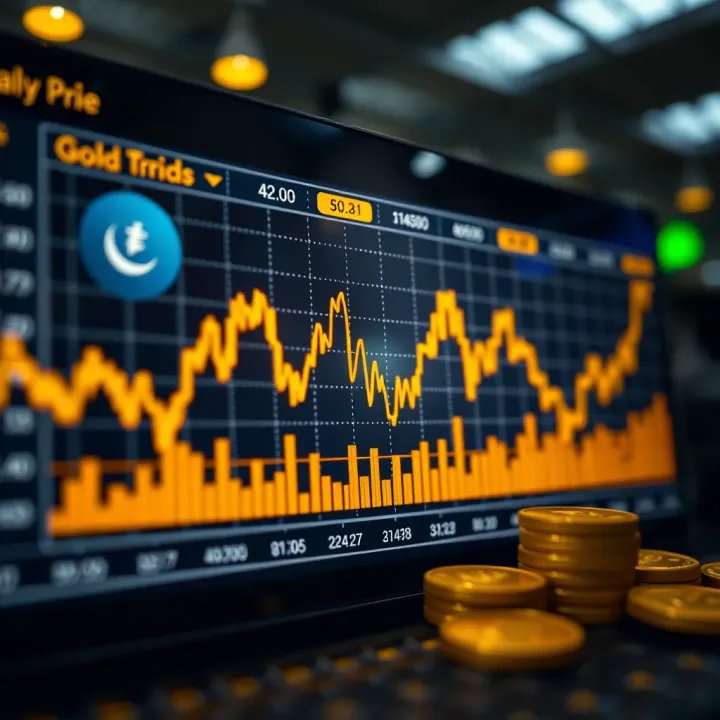
📈 Today's gold price prediction in Pakistan: key market trends, currency effects, and expert tips for smart investing in local gold markets.
Based on 6 reviews