
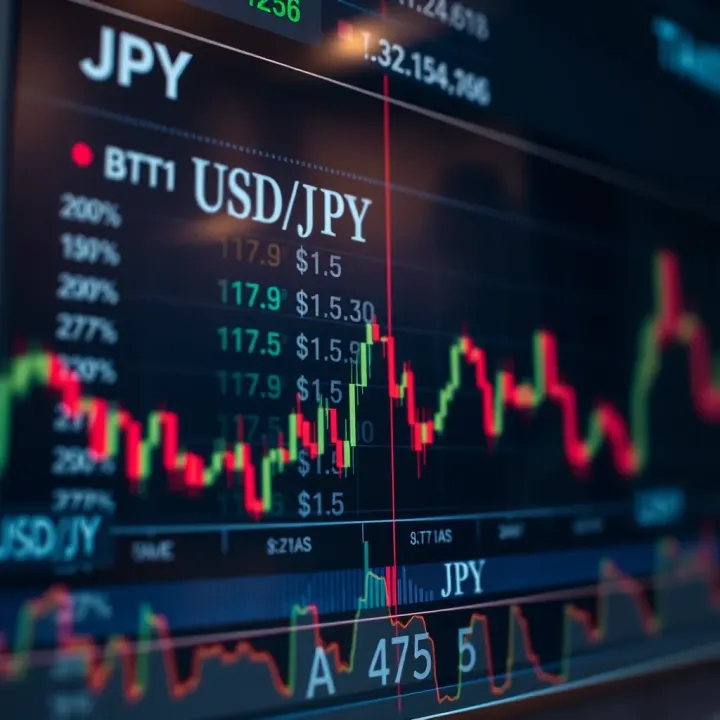
USD/JPY Forecast: Key Trends and Influences
Explore USD/JPY trends 📉 then analyze economic, geopolitical, and central bank influences. Get detailed insights & tech analysis for smarter trading in PK markets.
Edited By
Amelia Roscoe
Understanding the forecast for the US dollar (USD) to Pakistani rupee (PKR) exchange rate is vital for traders, investors, and businesses operating in Pakistan's volatile economic environment. The PKR's value fluctuates daily, reflecting factors like trade balances, foreign exchange reserves, government policies, and global market conditions.

Several essential elements shape the rupee's movement against the dollar:
Trade Deficit: Pakistan often imports more than it exports, causing a demand for foreign currency and putting downward pressure on the PKR.
Foreign Exchange Reserves: The State Bank of Pakistan's reserve levels directly affect its ability to stabilise the rupee during market stress.
Monetary Policy: Interest rate decisions by the SBP influence capital flows, impacting the currency.
Political Stability: Uncertainty or instability tends to weaken investor confidence, leading to PKR depreciation.
Global Factors: Shifts in the US dollar index, oil prices, and geopolitical tensions also play roles.
Forecasts help financial professionals and businesses plan ahead. For example, importers might hedge to avoid losses from rupee depreciation, while exporters could use predictions to price goods more competitively. Analysts rely on forecasts to interpret market trends and advise clients accurately.
Accurate exchange rate forecasts can save businesses significant sums and guide investment decisions effectively.
Hedging Strategies: Firms can use forward contracts or options to manage currency risk.
Budgeting: Knowing expected exchange rates aids in financial planning and cost management.
Investment Timing: Investors may decide when to enter or exit the market based on projected currency movements.
In this article, we will look closely at the factors influencing USD to PKR rates and explore reliable methods used to project these trends accurately. Understanding these dynamics is essential for anyone exposed to currency risk in Pakistan's economy.
Understanding the dollar to PKR exchange rate requires looking closely at key economic and policy factors shaping its movement. These variables influence currency demand and supply, directly impacting where the rupee stands against the dollar. For traders, investors, and finance professionals, grasping these drivers offers practical insights into potential market shifts and helps in making informed decisions.
Inflation in Pakistan tends to erode the purchasing power of the rupee, pushing the exchange rate higher (meaning the rupee weakens against the dollar). For example, if consumer prices rise sharply, businesses need more dollars to pay for imports, putting pressure on PKR. Interest rates set by the State Bank of Pakistan (SBP) play a balancing role. Higher interest rates can attract foreign capital looking for better returns, supporting PKR temporarily. However, if rates rise only to curb runaway inflation without boosting growth, the rupee may still depreciate.
Pakistan usually imports more than it exports, leading to a persistent current account deficit. This means more dollars flow out to pay for imports like oil and machinery than come in from exports such as textiles or rice. A widening trade gap increases demand for dollars, weakening PKR. For instance, when oil prices spike globally, Pakistan’s import bill balloons, straining foreign exchange and pressuring the rupee. Managing this deficit through export promotion or import substitution is key to exchange rate stability.
Pakistan’s foreign exchange reserves act as a buffer to defend the rupee in times of stress. Higher reserves allow the SBP to intervene by selling dollars to smooth rapid depreciation. If reserves fall below comfortable levels, confidence in the rupee drops, and the currency tends to weaken further. Recent declines in reserves due to external debt repayments or lower remittances have made the PKR vulnerable to sudden shifts.
The SBP actively shapes exchange rate dynamics through monetary policy and market interventions. By adjusting interest rates, managing liquidity, and occasionally entering the forex market, it tries to maintain external stability without derailing economic growth. For example, during times of rapid PKR depreciation, the SBP might tighten policy or sell reserves to calm the market. However, excessive intervention can deplete reserves or create market distortions, so the SBP balances these actions carefully.
Government spending, taxation, and borrowing all affect the exchange rate. Large fiscal deficits financed by borrowing from the central bank can cause higher inflation and undermine the rupee. Conversely, prudent fiscal management can enhance investor confidence and ease currency pressures. For instance, delaying payments or subsidies can temporarily ease forex demand, but longer-term budget reforms are necessary to support sustainable rupee stability.
A clear understanding of these factors helps traders and analysts anticipate dollar to PKR movements, enabling better risk management and strategic planning.
Understanding recent trends in the dollar to Pakistani rupee (PKR) exchange rate is key for traders, analysts, and investors aiming to anticipate market direction. These trends reflect how economic, political, and external factors are currently influencing the currency pair, shaping short- and medium-term outlooks. Tracking these movements closely helps in identifying patterns and preparing for volatility.

Historical performance in the last year: Over the past year, the PKR has generally depreciated against the dollar, driven by widening trade deficits and persistent inflationary pressures. For example, the rupee weakened from around Rs 162 to Rs 285 per US dollar between March 2023 and early 2024. These shifts impact import costs and inflation, affecting business planning and financial forecasting. Monitoring such historical trends allows analysts to gauge how Pakistan’s economic fundamentals and policies have influenced the PKR’s value.
Influence of external shocks: External events like fluctuations in global oil prices and geopolitical tensions have notably affected the PKR recently. Pakistan’s heavy reliance on imported fuel means that a sudden rise in global oil prices pushes up import bills, weakening the rupee. Similarly, regional instability can deter foreign investment and remittances, which traditionally support the PKR. Such shocks highlight how global factors outside local control can rapidly change exchange rates, emphasising the need for adaptable risk management.
Impact of political events: Political uncertainty is a major driver behind exchange rate swings in Pakistan. For instance, election announcements or cabinet reshuffles can fuel speculation on future economic policies, leading to rapid currency fluctuations. During politically turbulent periods, market participants often adopt a cautious stance, increasing rupee volatility. Traders and businesses should keep a close eye on political developments as they directly influence market confidence.
Role of remittances and foreign investment: Remittances from Pakistanis working abroad provide a vital cushion to the PKR by bringing in foreign currency inflows. For example, remittances hitting record highs of over $30 billion in a financial year have helped steady the currency amid economic challenges. On the other hand, foreign direct investment (FDI) tends to be less stable but important for long-term sustainability. Reduced FDI exits or delays can strain the exchange rate. Thus, tracking inflows from these sources offers practical insight into potential USD/PKR movements.
Keeping an eye on recent trends and their drivers equips stakeholders with the context needed for informed currency risk management and investment decisions in Pakistan’s fluctuating forex market.
Understanding the short-term forecast for the Dollar to Pakistani Rupee (PKR) exchange rate is essential for traders, analysts, and investors aiming to make timely decisions. This forecast reflects immediate market dynamics influenced by economic data releases, policy announcements, and external shocks. For businesses involved in import-export or those with foreign currency exposure, knowing the near-term direction of the exchange rate helps manage risks and optimise transaction timing.
Economic announcements such as inflation rates, trade data, and foreign exchange reserves statistics can swiftly influence the PKR’s value against the dollar. For example, when Pakistan’s inflation figures come out, they often signal the currency’s buying power. A higher inflation rate than expected could weaken the PKR, prompting traders to anticipate rupee depreciation. Similarly, updates on the current account deficit show how much more Pakistan is importing over exporting, affecting demand for dollars.
Monitoring these announcements lets market participants adjust their positions before or immediately after the data drop. Suppose the State Bank of Pakistan (SBP) announces foreign reserves have dipped below a critical level, it might spark fears of FX shortages, causing pressure on PKR. Hence, these short-term data releases act like checkpoints, shaping currency movements within days or weeks.
Government or central bank policy shifts have a direct impact on the rupee's performance over the short term. If the SBP signals an interest rate hike to curb inflation, it usually attracts foreign investors seeking better returns, which can strengthen the PKR. On the other hand, announcements about relaxation of capital controls or increasing fiscal spending without clear revenue plans may hurt confidence and put downward pressure on the currency.
For instance, rumours or confirmed reports of a change in monetary easing or tightening directly influence currency traders’ appetite for the rupee. Businesses and importers follow these policy cues carefully; a rate hike might increase borrowing costs but could stabilise the rupee, which might benefit forward contracts pricing.
Financial analysts closely track economic data and political developments to provide forecasts on the USD to PKR rate. Their predictions often incorporate technical analysis, market sentiment, and macroeconomic fundamentals. These estimates are significant as banks, Forex brokers, and corporate treasury teams rely on them to set budgets and hedge currency risk.
For example, Pakistan-based financial firms may predict the rupee will weaken to Rs 285 against the dollar in the next month, citing expected pressure from import payments and low remittance inflows. Traders use such insights to prepare their positions, while exporters may plan invoicing accordingly.
Currency market consensus reflects the aggregated expectations of investors, speculators, and institutions exchanging PKR and USD. This consensus provides a near real-time gauge of where the market believes the exchange rate is headed. It incorporates all available information including policy signals, geopolitical risks, and global market trends.
For instance, forward contract pricing and futures show the implied market forecast for the rupee’s value three months out. If there is strong demand for hedging against rupee depreciation, it suggests market participants expect a weaker PKR ahead. Monitoring these market signals allows investors and businesses to align their currency exposure with broader market trends, helping navigate short-term volatility.
Short-term forecasts offer crucial, actionable insights. They equip market players with the knowledge to respond swiftly to economic changes, ensuring decisions are based on current realities rather than outdated assumptions.
Understanding the long-term outlook and structural challenges is essential when analysing the dollar to Pakistani rupee (PKR) exchange rate. These factors shape the currency’s trajectory beyond short-term market fluctuations. They highlight systemic issues and opportunities that determine the rupee’s stability and strength over years, helping traders, analysts, and investors to strategise their positions with a broader perspective.
Pakistan's persistent balance of payments deficits remain a major hurdle for the rupee’s stability. When a country imports more than it exports, it leads to a foreign currency shortage, putting pressure on the PKR. For example, Pakistan consistently runs a trade deficit due to heavy import reliance on items like petroleum and machinery, while exports remain limited mostly to textiles and agricultural goods. This gap forces Pakistan to use its foreign exchange reserves or seek external borrowing, which can strain the economy.
A recurring deficit means the State Bank of Pakistan (SBP) has to spend reserves to stabilise the currency or allow depreciation to correct the imbalance. But reserves are limited, and external shocks or reduced foreign investment can worsen the situation. Hence, foreign exchange shortages linked to balance of payments issues contribute to downward pressure on the rupee in the long run.
High inflation erodes PKR’s purchasing power and complicates exchange rate management. Pakistan’s economy regularly faces inflation due to a mix of global commodity price shocks and domestic fiscal deficits. When inflation climbs, SBP may hike interest rates to control it, attracting foreign capital but raising borrowing costs domestically.
On the debt side, rising external and domestic debt servicing obligations can crowd out productive spending and reduce Pakistan’s ability to manage currency fluctuations. For example, debt repayment in US dollars forces the government to convert large PKR amounts, increasing demand for foreign currency. Without sustainable debt management, inflation and repayment burdens risk exacerbating the rupee’s depreciation trend.
Long-term currency stability hinges on addressing structural weaknesses in Pakistan’s economy. This includes reforming taxation, improving governance, and boosting energy efficiency to reduce circular debt — a significant fiscal strain. Reforms in export sectors and easing business regulations can also stimulate economic growth and foreign investment.
For instance, Pakistan’s efforts to improve tax collection under FBR and strengthen SBP’s autonomy aim to create a more predictable economic environment. These structural changes enhance investor confidence and can stabilise the PKR by reducing fiscal deficits and promoting sustainable growth.
Reducing dependence on a few export commodities is vital for the PKR’s long-term outlook. Expanding export bases into value-added products, IT services, and agricultural goods beyond textiles can enhance foreign exchange inflows. Pakistan is exploring trade diversification by engaging with regional partners under projects like the China-Pakistan Economic Corridor (CPEC) and leveraging agreements with countries in Central Asia.
Broadening export markets helps cushion against shocks in commodity prices or demand slumps in traditional sectors. Moreover, encouraging remittance growth through formal channels like JazzCash and Easypaisa ensures steady foreign currency supply, indirectly supporting the rupee.
Sustainable currency stability depends on fixing deep-rooted economic imbalances and broadening Pakistan’s export portfolio. Without these, short-term fixes only delay eventual pressures on the PKR.
In summary, Pakistan’s long-term currency outlook is intertwined with how effectively it manages macroeconomic imbalances and implements structural reforms that encourage trade diversification. These are essential to reduce volatility and build resilience against external shocks.
Understanding the practical implications of dollar to PKR fluctuations helps both businesses and individuals plan effectively and avoid surprises. Currency risk affects profits, pricing strategies, and costs, especially in Pakistan’s often volatile economic environment. Being aware of how exchange rate changes impact daily operations and finances allows for better decision-making.
Hedging strategies offer a direct way to shield businesses against sudden exchange rate swings. For example, an exporter locking in a forward contract with a bank can sell dollars at a predetermined rate, avoiding losses if the rupee weakens unexpectedly. This approach ensures financial predictability, which is crucial when managing tight margins.
Using derivatives like options also helps limit downside risk while allowing benefit from favourable currency moves. These tools are increasingly accessible in Pakistan, especially through major banks and financial institutions familiar with forex trading.
Using local financial instruments is another practical method for currency risk management. Products like PKR-denominated export refinance schemes or local currency trade financing help reduce dependence on fluctuating dollar rates. Banks often provide these tailored financing options to exporters and importers, promoting smoother cash flow.
For individuals, instruments such as National Savings Certificates indexed to inflation or rupee-linked deposits safeguard against dollar-led inflationary effects. These options support preserving value, especially when used as part of a diversified financial plan.
Timing of transactions plays a critical role in optimising gains or minimising losses. For exporters, selling dollars when the PKR is weaker means higher rupee receipts, improving profitability. Conversely, importers benefit from purchasing dollars when the rupee is stronger to reduce costs.
This timing demands close monitoring of forex trends, economic announcements, and political developments. Using reliable currency forecasts and active market engagement can give businesses a practical edge in deciding when to convert currencies.
Impact of exchange rate on competitiveness cannot be overstated. A weaker rupee makes Pakistani exports more price-competitive globally, helping businesses secure larger orders despite local inflation.
However, for import-dependent manufacturers, rising dollar rates increase input costs, squeezing margins and potentially pushing prices up domestically. Understanding these dynamics helps firms adjust strategies such as local sourcing or price revisions to stay competitive.
Effective currency management is not just about reacting to the market but preparing in advance to turn exchange rate movements into opportunities rather than risks.
By incorporating hedging and using local instruments wisely, alongside smart transaction timing, businesses and individuals can navigate dollar to PKR fluctuations with greater confidence and control.
Explore USD/JPY trends 📉 then analyze economic, geopolitical, and central bank influences. Get detailed insights & tech analysis for smarter trading in PK markets.
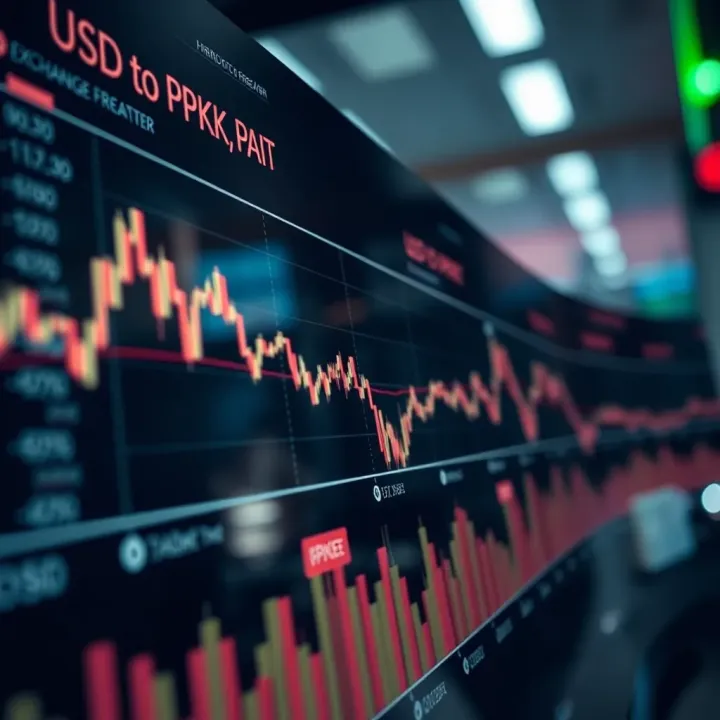
Explore key factors and trends shaping USD to PKR exchange rates 📉💹, including economic, political, and global influences, plus expert insights for Pakistan.
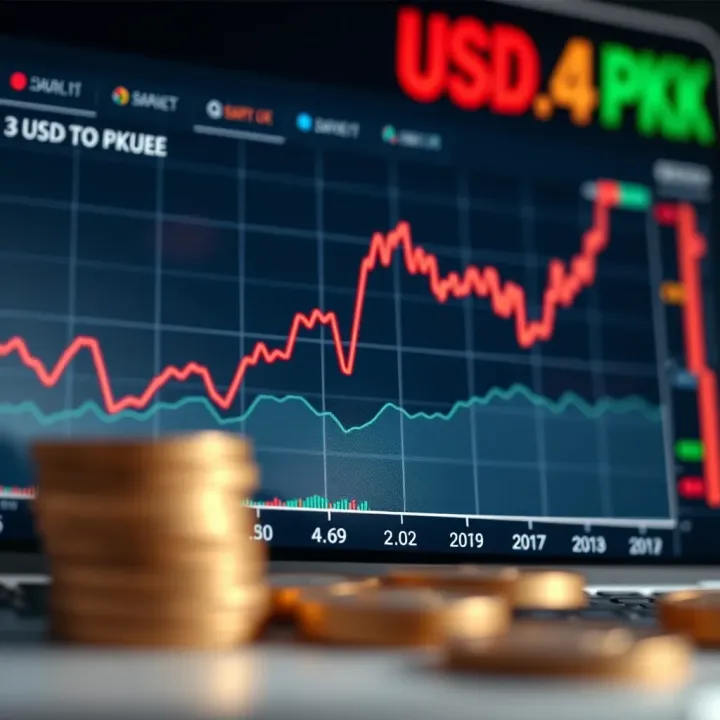
📉 Explore how economic indicators, politics, and global events shape the USD to PKR exchange rate. Stay informed on currency trends and forecasts.

📉 Get detailed USD to PKR open market forecast & analysis! Explore current trends, key economic factors, and trading insights for Pakistan's currency market.
Based on 9 reviews