
Understanding Trading PDFs: A Practical Guide
📊 Explore how to find, evaluate, and use trading PDFs effectively in Pakistan. Learn tips to extract key insights and organize your digital trading records.
Edited By
Charlotte Williams
Break of Structure (BOS) is a widely used concept in trading that marks a significant change in the price pattern of a financial asset. When the existing market trend shows signs of reversal or acceleration, BOS helps traders identify this shift early. It basically points out when a price level, which previously acted as support or resistance, no longer holds, indicating fresh momentum in the opposite direction.
For example, if a stock has been making higher highs and higher lows (an uptrend) but suddenly breaks below a prior swing low, traders consider this a bearish BOS, signalling a possible downtrend ahead. Conversely, a break above a previous high in a downtrend may suggest a bullish BOS.

Recognising BOS can improve your trading timing. It helps decide when to enter or exit trades, manage stops, or prepare for changing market conditions. BOS is seen across various asset classes, including shares on the Pakistan Stock Exchange (PSX), commodities like oil or gold, and currency pairs in the forex market.
A clear BOS doesn't just hint at a trend change — it often confirms it. Traders who understand how to spot these shifts can reduce guesswork and improve risk management.
In practice, BOS is identified through price charts using highs and lows, trendlines, and sometimes technical tools like moving averages or volume indicators. Knowing the common types of BOS and how to interpret them according to market context is key.
Below, we will explore how to spot BOS, the different patterns it forms, and strategies to use it effectively in your trading. This guide focuses on practical insights for traders in Pakistan and those interested in regional markets, ensuring relevance to local trading environments.
Understanding Break of Structure (BOS) is key for traders wanting to spot when markets are shifting direction. Unlike usual indicators that might lag or confuse with noise, BOS highlights clear turning points in the market's rhythm. This helps traders avoid false moves and make more confident decisions about entering or exiting positions.
Market structure refers to the way price trends and patterns organise themselves over time, showing highs, lows, support, and resistance levels. This structure reflects the battle between buyers and sellers. Familiarity with these patterns allows traders to anticipate future moves rather than just react.
A Break of Structure happens when price decisively crosses a previous high or low point, implying the existing trend may be ending. For example, if a bullish market consistently forms higher highs and lows, a BOS occurs once price breaks below a prior low, signalling a possible trend reversal or correction. Spotting this early allows traders to adjust strategies and reduce risk.
BOS differs from popular indicators like RSI or moving averages because it's price-action based, not derived from mathematical calculations. While indicators can give conflicting or lagging signals, BOS depends directly on price exceeding certain structural points, making it a more straightforward and often more reliable signal about market shifts.
Look for price breaking previous swing highs or lows combined with increased momentum or volume. For instance, a candlestick closing beyond a former resistance level confirms a bullish BOS. Traders also watch for breakouts following consolidation or chart patterns like triangles where the market structure is well defined.
Higher timeframes such as daily or 4-hour charts usually provide more reliable BOS signals because they filter out market noise common on 5-minute or 15-minute charts. However, intraday traders may use BOS on 1-hour charts for timely entries, balancing between responsiveness and reliability.
In the forex market, if USD/PKR consistently makes higher lows and then suddenly drops below the last low, it signals a bearish BOS, suggesting sellers may be gaining control. Similarly, on the Pakistan Stock Exchange (PSX), a stock like Habib Bank Limited breaking below its recent support on strong volume would indicate a BOS, warning traders of potential downtrend start.
Recognising BOS early helps traders act swiftly, cutting losses or capturing emerging trends in Pakistani and global markets alike.
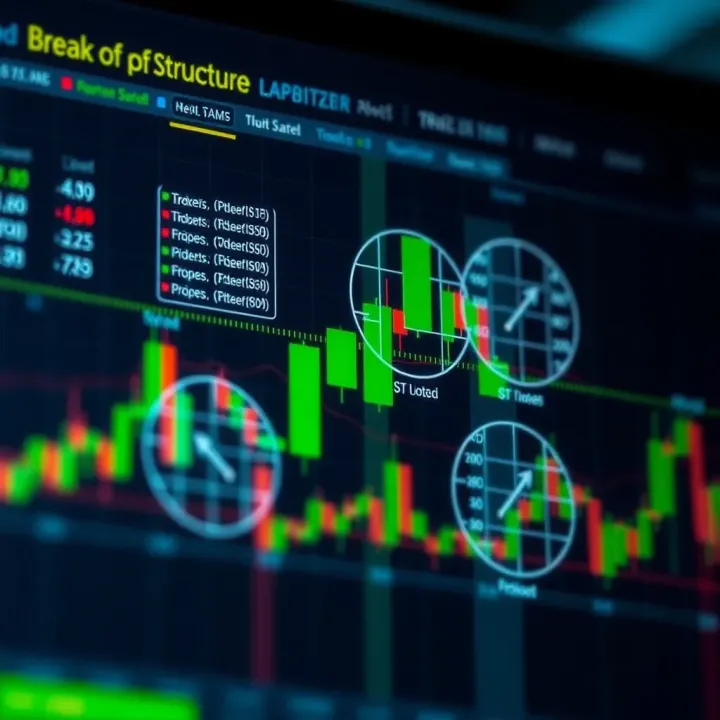
Break of Structure (BOS) helps traders identify shifts in market trends, which are usually grouped into bullish and bearish types. Recognising these types offers practical benefits: it improves timing for entry and exit points and provides clues about potential market direction. Understanding the implications of each BOS type allows traders to adapt their strategies accordingly, especially in markets like PSX and forex where price movements can be volatile and swift.
A bullish BOS occurs when price breaks above a previous swing high, suggesting that buyers are gaining control and an upward trend is likely starting. This signal often indicates the market sentiment is turning positive, creating opportunities for traders to buy or add to long positions. For example, when the KSE-100 index crosses a recent resistance with strong momentum, it signals increased buying interest.
For buyers, ideal entry points come just after the BOS is confirmed, preferably on a retest of the broken resistance which now acts as support. This retest offers a lower-risk entry and confirmation that the breakout is genuine rather than a false move. Say during a rally in the USD/PKR forex pair, traders might enter on a pullback after a break above a key resistance level, capturing the trend's early phase.
Traders need to avoid common pitfalls such as jumping in immediately without confirmation, which can lead to losses if the price reverses shortly. Overconfidence after a BOS can also cause excessive risk-taking or ignoring stop-loss orders. Staying patient and waiting for a clear close above the break level improves the chance of a successful trade.
Bearish BOS occurs when price breaks below a prior swing low, signalling sellers are dominating and the market may enter a downtrend. On charts, this is clear when support levels fail repeatedly, like a pivot low on a commodity chart cracking under selling pressure. Such breaks warn traders to prepare for falling prices and potential losses on long positions.
Short-selling strategies or protective measures become important at bearish BOS points. Traders can open short positions after confirmation of the break or tighten stops to manage risk on existing holdings. For example, if Pakistan's oil futures fall below a significant support line, short-sellers may enter while others use stop-loss orders to limit downside risk.
Volume and confirmation play a vital role in assessing the reliability of bearish BOS. High volume on the break suggests real selling interest and reduces the chance of a false signal. Without volume support, the break might fail, leading to price snapping back quickly. Pakistani traders should monitor local market volume and look for confluence with indicators like RSI to strengthen confirmation.
Recognising the type of BOS and its trading implications enhances decision-making, helping you respond effectively to market swings and protect your capital.
Key points to remember:
Bullish BOS points to upward trends and buying opportunities
Bearish BOS signals downtrends and calls for risk control
Validation through retests and volume confirms genuine breaks
Understanding how these BOS types function in real market conditions aids traders in navigating Pakistan's equity and forex markets more confidently. This knowledge forms the base to develop strategies tailored to current momentum and market sentiment.
Break of Structure (BOS) is a critical tool for traders seeking to make sense of market shifts and improve trade timing. When combined with well-established technical tools like support and resistance or momentum indicators, BOS can provide stronger confirmations for entry and exit points. This section explains practical ways BOS enhances strategy development, especially for markets like the Pakistan Stock Exchange (PSX) and forex platforms.
BOS often acts to validate or invalidate key support and resistance levels. For example, if a price breaks through a resistance line and a bullish BOS forms, it confirms that buyers have overcome sellers at that level, suggesting a potential upward trend continuation. Conversely, a bearish BOS breaking support indicates weakening buyer interest and possible downtrend initiation. This validation reduces guesswork around whether price will hold or reverse.
Practical examples from Pakistani equity markets show this clearly. Take PSX stocks like Engro Fertilizers or TRG Pakistan, where BOS around psychological whole numbers or prior highs often signals strong moves. Forex traders dealing with pairs like USD/PKR find BOS on daily or 4-hour charts near support or resistance levels helps time entries and exits more confidently.
Adding indicators such as moving averages, the Relative Strength Index (RSI), and volume can make BOS signals more reliable. For instance, a bullish BOS accompanied by price crossing above the 50-day moving average strengthens the case for upward momentum. RSI readings above 50 can further confirm trend strength, while increased volume during BOS validates genuine interest rather than false breakout.
Cross-checking BOS with these indicators helps reduce false signals. A BOS without supporting volume or with RSI entering overbought zones might suggest a weak or short-lived break. Traders can avoid entering too early or overtrading by waiting for alignment among BOS, moving averages, RSI, and volume.
Combining BOS with other technical elements makes your trading approach more robust by confirming signals and managing risks better.
In summary, integrating BOS with support/resistance and key indicators creates a more rounded strategy. This approach suits traders in Pakistan’s diverse markets, helping them make smarter decisions amid volatile or uncertain environments.
Break of Structure (BOS) is a valuable tool for traders, but understanding its limitations ensures better decision-making. Knowing when BOS signals are less reliable can save you from costly errors. This section highlights key challenges like common misinterpretations and market conditions that can affect BOS accuracy.
Traders often mistake short-term price pullbacks for true BOS, which leads to premature trades. For example, in the Pakistan Stock Exchange (PSX), a brief dip in a bullish trend might appear as a break of support. However, this is usually just a retracement, not a reversal. Such misreading can cause you to exit profitable positions too soon or enter against the trend.
To avoid this, wait for clear confirmation like a close beyond key price levels on a higher timeframe before acting. Checking volume and using other indicators (e.g. RSI or moving averages) helps differentiate a genuine break from a fake one.
Jumping into trades after spotting every minor BOS without proper confirmation can drain your capital fast. This is common in volatile markets like forex, where price swings may trigger frequent false breaks.
Traders in Pakistan often face this during economic news releases affecting the rupee exchange rate. Unconfirmed BOS during such events can mislead traders into opening positions prematurely. Limiting trades to those with multiple confirmations or waiting for retests of the broken level can reduce losses from overtrading.
Low liquidity periods, such as early morning sessions or holidays, can produce misleading BOS signals. Thin trading volume may cause price jumps that don’t reflect real market sentiment. For example, during Ramazan or Eid holidays, PSX or forex liquidity dries up, making BOS less reliable.
Similarly, major news announcements often cause erratic price moves that create false BOS signals. Sudden spikes due to Pakistan’s political updates or the State Bank of Pakistan's policy decisions can confuse standard analysis.
During periods of high volatility, adapt your BOS approach by tightening your entry rules. Avoid chasing every break and look for additional validation such as volume spikes or confluence with support/resistance zones.
Using wider stop-losses to manage risk and decreasing position size helps when trading in volatile sessions like the hours following significant economic data releases. This cautious style helps prevent being caught in fake breakouts and sudden reversals common in unstable markets.
BOS works best when combined with awareness of market conditions. Recognising its limits protects your trades and improves your chances for consistent profits in dynamic Pakistani markets.
Practical advice tailored for Pakistani traders is key to effectively using Break of Structure (BOS) signals in trading decisions. Local markets, such as the Pakistan Stock Exchange (PSX), currency pairs traded here, and commodity futures, each behave differently. Understanding suitable markets and timeframes can help avoid common mistakes and improve trade outcomes. Risk management and position sizing, grounded in BOS confirmation, protect capital against inevitable market uncertainties, including false breaks.
Applying BOS in PSX, forex, and commodity trading demands market-specific understanding. For example, PSX equities often show clearer BOS patterns on daily charts due to lower intraday volatility compared to forex pairs like USD/PKR, which can be quite volatile within minutes. Commodity markets such as crude oil futures, often traded by Pakistani investors, can also signal BOS, but external global factors tend to affect their reliability. Traders must watch how BOS forms in the context of their chosen market's behaviour.
Choosing higher timeframes for trend confirmation adds robustness to BOS signals. A break visible on a 4-hour forex chart usually holds more weight than a quick 5-minute candle break, reducing the chance of being caught in false moves during volatile hours, such as post-economic news releases. Pakistani traders often juggle daily commitments, so relying on daily or weekly charts for BOS confirmation can be more practical and less stressful than constant monitoring of short timeframes.
Setting stop-loss orders right after BOS confirmation is vital. Once a break occurs, placing a stop just beyond the recent structure point limits losses if the market reverses. For instance, when a bullish BOS happens on a PSX stock around Rs 100, a stop at Rs 97 may prevent a loss exceeding your risk tolerance. This discipline shields traders from emotional decisions in sudden market swings.
Allocating capital wisely considering potential false breaks ensures no single trade can derail your portfolio. Even strong BOS setups in Pakistani markets can fail unexpectedly due to news or liquidity gaps. Splitting your trading capital into smaller portions and committing only a fraction per trade ensures survival through choppy phases. A rule of thumb could be risking 1-2% of your total balance per trade, allowing you to trade several BOS signals patiently.
Successful trading with BOS doesn’t just rely on spotting breaks but using them within a disciplined, market-aware strategy fitting Pakistan’s trading environment.
This combined focus on market choice, timeframe discipline, and strict risk control helps Pakistani traders use BOS more effectively while protecting their investments from unpredictable market behaviour.
📊 Explore how to find, evaluate, and use trading PDFs effectively in Pakistan. Learn tips to extract key insights and organize your digital trading records.

📊 Explore how trading charts help analyze market moves, spot patterns, and use indicators for smarter decisions in Pakistan’s markets.

📊 Explore the trading book’s structure, role in managing risks, regulations, and how it differs from banking book in financial institutions.

📈 Learn how to read and use trading charts to spot trends and patterns. Stay ahead in Pakistan's markets with practical chart insights for better trades.
Based on 10 reviews