
Understanding Trading Charts for Better Market Decisions
📈 Learn how to read and use trading charts to spot trends and patterns. Stay ahead in Pakistan's markets with practical chart insights for better trades.
Edited By
Emily Carter
Trading charts aren't just fancy graphs; they're the backbone of making smart moves in the market. For anyone involved in trading or investing, especially in the fast-moving markets of Pakistan, knowing how to read and understand these charts is vital. They reveal patterns and clues about where prices might head next.
In this guide, we'll cover everything from the basics of different types of trading charts to spotting key patterns and using indicators that can sharpen your trading decisions. Whether you're a seasoned analyst or just dipping your toes into market waters, these insights will help you approach charts with confidence.
Understanding charts is like having a map in confusing terrain—without it, you’re navigating blind.
We'll explore practical examples drawing from real-world Pakistani market scenarios, highlight the most relevant chart types, and provide tips to make sense of the data without getting lost in jargon. By breaking down complex visual data, this guide aims to put market participants on a clearer path to informed and timely decisions.
Understanding the basics of trading charts is a stepping stone for anyone involved in financial markets. Whether you’re a trader in Karachi trying to catch the next big move on the Pakistan Stock Exchange or an analyst watching global commodities, knowing the fundamentals of these charts lets you read the market’s story. Charts simplify complex price movements into visuals you can interpret quickly.
Trading charts serve as a common language. By learning how to use them effectively, you gain an edge in decision-making and risk management. It’s like having a map before you set off — without it, you’re just guessing where to go.
At their core, trading charts are visual tools that represent the price movements of securities over time. Think of them as snapshots that show how a stock, currency, or commodity has behaved during a specified period. They don’t just present raw numbers but arrange these price changes in a way that's easier to digest.
The main purpose is to help traders spot patterns, trends, and potential turning points in the market. For example, a chart of the oil price over the past month helps a trader quickly see whether prices are climbing steadily, bouncing around, or dropping sharply.
Trading charts are the backbone for technical analysis across markets worldwide, including Pakistan’s own PSX. Investors use charts to make sense of market sentiment—whether buyers or sellers are running the show.
Charts enable market participants to:
Gauge momentum and strength of price moves
Identify support and resistance levels
Spot entry and exit points for trades
Without charts, decisions would rely heavily on guesswork or very limited data. They turn heaps of numbers into actionable insights.
The simplest of all, line charts plot the closing prices over time and connect them with a line. Imagine tracking the daily closing price of Nestlé Pakistan Limited over the past 30 days—the line chart would connect each day's closing price, giving a bird’s eye view of the trend.
Line charts are best for spotting the overall direction but don’t reveal intra-day moves or volatility. They act like a gentle trail through the trading forest.
Bar charts add more detail by showing open, high, low, and close prices in each time period with vertical bars. For instance, if you track Lucky Cement stock, each bar displays the highest and lowest price the stock hit that day, plus the prices where trading started and ended.
This extra information helps traders assess volatility and trading range, important for understanding daily price dynamics.
Candlesticks might be the most popular chart type due to their rich information and visual clarity. Originating from Japan, these charts use "candles" to show the same price info as bar charts but in a way that highlights buying and selling pressure more vividly.
Each candle has a body (the range between open and close) and wicks (the extremes of high and low). A green (or white) candle means the price closed above the opening, signaling bullishness, while a red (or black) candle means selling pressure.
For example, traders watching the forex pair USD/PKR can quickly judge whether buyers dominated a certain period just by glancing at candle colors and shapes.
Tip: Candlestick charts are especially useful when combined with volume and other indicators for confirming trends or spotting reversals.
In summary, getting familiar with these basic chart types helps traders start their technical analysis journey effectively, making sense of movements in the bustling Pakistani markets and beyond.
Trading charts are more than just squiggly lines and bars; they’re a snapshot of market behavior, showing the tug-of-war between buyers and sellers. To make sense of these charts, understanding their key components is essential. They form the backbone of all your analysis and trading strategies.
At the core, the most critical parts of any trading chart are the price axis (vertical) and the time axis (horizontal). Without these, you wouldn't know when prices soared or dropped, or how much the price changed at a given moment. Adding to this, volume indicators offer another layer of insight, telling you how much activity backs the price movement.
Let’s break these down so you can read charts like a pro, spotting opportunities or risks with confidence.
This is your vertical line running alongside the chart—usually at the right side—showing the price range of the trading asset. Think of it as your ruler, helping you gauge the value of the asset at a glance. The price axis isn’t just numbers slapped on; it reflects the current market value range and adjusts dynamically as prices move.
For example, on a Pakistan Stock Exchange (PSX) chart of MCB Bank, if the price axis shows values between 120 and 140 PKR, and the recent candle is near 138, that candle tells you the latest price is close to the top of this range. That insight is helpful when you’re weighing if a stock is near a recent high or low.
A key thing to note: some platforms allow you to choose between linear and logarithmic scales. For traders analyzing assets with wide price swings, a logarithmic scale better shows percentage moves, as equal vertical distances represent equal percentage changes. This can give a clearer picture when tracing long-term trends.
Running along the bottom, the time axis displays the timeline of price movements—be it seconds, minutes, days, or weeks. This scale is your calendar and clock combined.
Interpreting this axis helps you pinpoint exactly when certain price actions occurred. For instance, if you spot a big spike on Friday afternoon, time tells you whether it was due to an earnings report release or an unexpected news item.
Imagine you're day trading Pakistan Oilfields Limited (POL), and the chart shows a sudden jump in price around 10:30 AM. Knowing the time lets you correlate that jump with specific events or market opens.
Depending on your trading style, you may focus on different timeframes:
Intraday traders usually zoom in on minutes or seconds.
Swing traders lean on daily or weekly views.
Adjusting your time scale helps match the chart data with your trading approach.
Volume is, in simple terms, the number of units (shares, contracts, etc.) traded during a specific timeframe. It’s usually displayed as vertical bars below the price chart. Volume reflects real market activity—whether lots of traders are buying and selling or if things are quiet.
For example, when Hub Power Company (HUBC) reports strong quarterly earnings, you might see a surge in volume alongside rising prices, showing lots of buyers jumping in. This kind of activity gives more weight to price moves, signaling stronger conviction.
Volume serves as a heartbeat monitor for price action. Low volume usually signals hesitancy or lack of interest, making price changes unreliable or prone to reversals.
High or increasing volume often confirms a trend’s strength. Picture an upswing in the PSX index; if volume spikes as prices climb, it’s like many market participants agree on the rally. Conversely, if prices rise on thin volume, the trend might be weak and prone to a sudden reversal.
Volume also helps identify potential exhaustion points. For example, during a sustained downtrend in Oil and Gas Development Company Limited (OGDC), if you suddenly notice heavy volume with smaller price drops, the selling pressure may be loosening, hinting at a possible turnaround.
Volume is the silent whisper behind every price move—listen to it closely.
In short, volume acts like a referee, validating or questioning the price action you see. Ignoring volume is like reading a story missing half its chapters.
Understanding these basic components lays the groundwork for interpreting charts effectively. With the price and time axes framing the data and volume giving context, you’re better equipped to make informed decisions rather than guessing in the dark.
Reading and interpreting trading charts is a skill every trader, investor, or analyst needs to sharpen. These charts offer a visual snapshot of market history and potential future moves. Without knowing how to read them, you're basically flying blind. When done right, chart reading can help you spot opportunities, manage risks, and make decisions more confidently.
For example, if you're tracking the Pakistan Stock Exchange, understanding chart signals can tell you more than just prices. It reveals how market participants feel—whether they're bullish or cautious—and hints at possible turning points. Don’t just look at price movements; connect the dots between trends, support and resistance, and volume to get the full picture.
Trends show the general direction the market or a security is moving. Recognizing these can give you a leg up on timing your trades or investments.
An uptrend is when prices consistently make higher highs and higher lows. On a chart, this looks like a staircase climbing upward. For instance, if a stock like Engro Corporation shows this pattern over several weeks, it often signals strong buying interest. Conversely, a downtrend has lower highs and lower lows and indicates selling pressure. The key is not to jump in too soon but watch for confirmation, such as a break above the previous high in an uptrend or a break below the previous low in a downtrend.
Pro tip: Use trendlines connecting the lows in an uptrend or the highs in a downtrend to visually confirm these moves.
At times, prices neither climb nor fall significantly but instead move within a horizontal range—this is called sideways or range-bound movement. It usually means buyers and sellers are in a deadlock. For example, a major index like KSE-100 might hover between 40,000 and 42,000 points, showing indecision. Traders often wait for a clear breakout from this range before committing to a new position because sideways trends can last weeks or even months.
Sideways phases can also indicate consolidation, which often precedes a strong move. Learning to recognize such pauses is valuable because sudden price moves following these periods tend to be sharp.
Support and resistance levels are foundational concepts when reading charts. They help traders understand where prices might pause or reverse.
Support is the price level where demand tends to prevent the price from falling further. Think of it as the floor beneath price moves. Resistance, on the other hand, is where selling interest kicks in, acting like a ceiling that prices struggle to break above. These levels aren't set in stone but are psychological or technical zones where traders have historically stepped in.
For instance, if Pakistan Petroleum Limited’s price repeatedly falls to PKR 130 and bounces back, that price acts as support. Similarly, if it hits PKR 150 several times but fails to move past it, PKR 150 becomes resistance.
Look for price points where the market has changed direction multiple times. Horizontal lines drawn at these points often show areas of support or resistance. Volume spikes near these levels add weight—higher volume at support might mean strong buying interest, making the support more reliable.
One handy approach is to zoom on past price action across different timescales. Daily or weekly charts might reveal stronger support and resistance zones compared to intraday charts. Also, keep an eye on round numbers (like PKR 100 or PKR 200), as they tend to draw attention and act as natural barriers.
Remember: Support and resistance aren't just technical jargon—they're where real traders decide to buy or sell, so understanding them is key in your market plays.
Understanding common chart patterns is like having a map when you're navigating the market’s twists and turns. These patterns offer insights into what traders might expect next, helping to shape smart decisions rather than shots in the dark. Recognizing these patterns early can save you from costly mistakes and point to potential entry or exit points.
Traders, especially those active in Pakistan’s volatile markets, often rely on these visual setups to catch trends as they form or prepare for changes. In practice, chart patterns give you a way to read market sentiment without needing a crystal ball—they show what the crowd is doing.
The head and shoulders pattern is a strong signal that a current market trend—usually an uptrend—is nearing its end. Imagine a trader watching the price form three peaks: the middle peak—the "head"—stands taller than the two smaller peaks on either side—the "shoulders." This suggests buyers are losing momentum, and sellers might step in soon.
For practical use, observe that the price must break the "neckline" (a support level connecting the lows of the shoulders) for confirmation. For instance, if Pakistan Stock Exchange (PSX) shares show this pattern after a steady climb, it's a cue to consider selling or tightening stop-loss orders.
The head and shoulders pattern often marks a reversal but always wait for a break below the neckline to confirm before making a move.
Double tops and bottoms signal a tug-of-war between buyers and sellers that fails to push the price past a certain point twice. A double top looks like the price hitting a ceiling two times and falling back, indicating a possible trend reversal from up to down.
Conversely, a double bottom looks like the price hitting a floor twice and bouncing back, hinting at an upcoming upward move. These patterns are handy for traders wanting to catch the market turning point without relying solely on gut feel.
Imagine you’re tracking a local commodity like sugar futures; spotting a double bottom after a slump could mean the worst is over, offering a good chance to enter before prices rise.
Flags and pennants are short pauses in the market that usually signal the trend will continue in the same direction. Picture a flag flapping in the wind or a small triangle (the pennant) forming after a strong price move.
For example, if a stock on the Karachi Stock Exchange (KSE) zooms up sharply, then forms a flag, most traders expect the upward run to continue once the pattern is complete. These patterns help avoid jumping the gun during brief consolidations.
Recognizing these can be particularly useful for day traders or short-term investors who want to stay on board during minor market pauses.
Triangles come in different flavors: ascending, descending, and symmetrical. Each signals the market compressing into a tighter range before a breakout. For example, an ascending triangle, with a flat top and rising bottom, suggests buyers are gaining strength and a breakout upward is likely.
Traders watching the oil market or currency pairs like USD/PKR can use triangle formations to time entries. Wait for the price to break out of the triangle with volume confirmation before deciding, as fakeouts can occur.
Triangles serve as a visual cue that a significant price move might be brewing, allowing traders to position themselves accordingly.
In essence, the key to using these chart patterns in Pakistan’s financial markets lies in patience and confirmation. Always combine pattern recognition with other indicators like volume or moving averages to back up your trading moves. This helps avoid getting caught in false signals, commonly seen in highly volatile environments.
With practice, spotting these patterns becomes second nature, offering a practical edge that goes beyond just guessing market direction.
Technical indicators add depth to trading charts, helping traders make better decisions by interpreting price action beyond just the raw data. These indicators are especially useful in markets like Pakistan’s, where volumes can fluctuate and news impacts prices rapidly. They help filter out market noise and highlight trends, momentum, or possible reversals, making charts more actionable.
By combining indicators with chart patterns, traders reduce guesswork and get clearer signals for entry or exit points. For instance, a simple uptrend on the chart may become more convincing when supported by a momentum indicator showing strength. The key is selecting indicators that complement your trading style and market environment, rather than overloading your chart with every tool under the sun.
Moving averages smooth out price data by averaging prices over a set period, but not all moving averages are created equal. The simple moving average (SMA) takes the closing prices over a period and divides by the number of periods—giving equal weight to all points. Meanwhile, the exponential moving average (EMA) puts more emphasis on recent prices, making it more responsive to current market moves.
For example, a 20-day SMA on Pakistan Stock Exchange (PSX) shares might lag behind the EMA during sudden price jumps caused by earnings announcements. Traders often use EMA for short-term decision-making due to its sensitivity, while SMAs help identify longer-term trends. Knowing when to use each can prevent late entries or premature exits.
Imagine the price fluctuating wildly daily—this noise can confuse any trader. Moving averages smooth out this volatility by creating a single flowing line that captures the general direction without the erratic bumps. For instance, applying a 50-day moving average on an oil sector stock helps see if prices are generally trending up or down, avoiding knee-jerk reactions to every small blip.
This smoothing effect is crucial when spotting trends or potential reversals. When prices cross above a moving average, it might indicate a bullish move, whereas crossing below suggests a downturn. This simple visualization lets traders confirm patterns they spot through other means.
The RSI is a popular oscillator that measures momentum by comparing recent gains to recent losses over a set period, usually 14 days. It gives a number between 0 and 100, helping traders identify overbought or oversold conditions. An RSI above 70 often signals a stock might be overbought and due for a pullback, while below 30 suggests oversold and potentially primed for a bounce.
For instance, if a Punjab-based textile company's stock RSI climbs above 70 but the price keeps rising, a savvy trader might pause and look for confirmation before jumping in, avoiding being caught by a sudden reversal. Conversely, an RSI dropping below 30 during a market correction could signal a good buying opportunity.
The Moving Average Convergence Divergence (MACD) is a momentum indicator that shows the relationship between two EMAs—usually the 12-day and 26-day. The difference between them creates the MACD line. A separate nine-day EMA of this line, called the signal line, is plotted to identify buy or sell signals.
When the MACD line crosses above the signal line, it suggests increasing bullish momentum, and vice versa. This straightforward crossover strategy helps traders avoid getting stuck holding on to a falling stock or missing an early rally.
For example, in Pakistan's oil and gas sector, a rising MACD crossing above its signal line during steady trading volumes might confirm that a recovery phase is underway, encouraging traders to position themselves accordingly.
Using technical indicators smartly can greatly improve the odds of successful trades. They are not magic bullets but tools that, when combined with price action and volume analysis, make charts far more insightful and reliable.
In the end, indicators should fit your trading rhythm—whether you’re day-trading KSE-listed stocks or swinging positions in currency pairs. Start simple, test what works, and stay disciplined.
Understanding chart timeframes is a fundamental skill in trading because the choice of timeframe directly influences how you view market data and make decisions. Timeframes determine the granularity of price movements you analyze—from the quick ticks in seconds or minutes, up to longer periods like days or weeks. Each timeframe offers unique insights and suits different trading styles, affecting risk management and strategy execution.
For example, a day trader might rely on minute charts to capture short-term price swings, while a swing trader looks at daily or weekly charts to uncover broader trends. Thus, picking the right timeframe is not just a technical choice, but a strategic one that aligns with your goals and trading style.
Intraday charts display price movements within the trading day, typically in intervals like 1-minute, 5-minute, or 15-minute bars. These charts are invaluable for traders who need quick insights, such as scalpers and day traders. The key benefit is the ability to spot immediate trends, reversals, and volume spikes as they unfold, allowing for rapid decision-making.
For example, during volatile news events, a sudden volume surge on a 5-minute chart can hint at a strong price move, giving traders a chance to enter or exit positions timely. In markets like the Pakistan Stock Exchange, where liquidity and volatility can peak around opening or closing hours, intraday charts help spot short-term opportunities that daily charts might miss.
Daily and weekly charts smooth out the noise inherent in shorter timeframes. This makes them ideal for investors and traders looking at the bigger picture. Daily charts show the price action for each trading day, while weekly charts aggregate longer spans, highlighting longer-term trends and key support/resistance levels.
Using these charts helps identify enduring trends and prevents getting shaken out by minor spikes or dips. For instance, a weekly chart can reveal a consistent uptrend in a stock like OGDC or Habib Bank, which might not be as evident in intraday charts. This approach is better suited for swing or position traders focused on medium to long-term horizons.
Scalpers thrive on the smallest timeframes—think 1-minute or even tick charts—to snatch tiny profits from minor price fluctuations. They rely heavily on volume, order flow, and quick execution. Day traders might use 5-minute or 15-minute charts to balance detail with a clearer trend view.
The speed of decision-making here is critical. For example, a scalper on the PSX might watch the 1-minute chart during the first 30 minutes after the market opens to capitalize on the morning volatility. The downside? These fast-paced charts can be noisy and require quick reflexes.
Swing traders aim to capture price moves over several days to weeks, making daily charts their bread and butter. Position traders, holding for weeks or months, often lean on weekly charts to avoid reacting to short-term swings.
For example, a swing trader analyzing the daily chart of MCB Bank might use moving averages and RSI to time entry and exit points for trades lasting a few days. Position traders might look at broader economic trends and weekly charts to hold quality stocks through rough patches, focusing on strong support zones.
Choosing the right chart timeframe ensures your trading aligns with your risk tolerance and strategy, helping you avoid the pitfalls of overtrading or missing critical trend signals.
In short, timeframes shape your market perspective. Understanding their impact helps tailor your approach whether you're hunting quick gains or planning for the longer haul in Pakistan’s diverse market environment.
Trading charts are invaluable for market participants, but missteps in reading and interpreting these charts can lead to costly errors. This section sheds light on the common pitfalls traders often face, helping you avoid them by sharpening your chart-reading skills and boosting your confidence in market decisions.
Volume reflects the number of shares or contracts traded during a given period. It acts as a kind of market voice, confirming or casting doubt on price movements. For instance, if a stock price rises on low volume, this move may lack conviction, suggesting it's not supported by widespread buying. On the contrary, a price jump with high volume can indicate genuine interest and potential continuation of the trend.
Neglecting volume can lead to mistaking a fleeting spike for a solid breakout. Imagine Reliance Industries Ltd sees a price surge late in the day, but volume is thin — a cautious trader might hold off, suspecting a ‘false breakout’ that won’t last.
Volume pairs with price action to paint a fuller picture. While price shows what the market is doing, volume reveals the intensity behind those moves. Without volume, a sideways trend might look like a calm pause, but increasing volume during this phase could suggest an impending sharp move.
Other indicators like the Moving Average Convergence Divergence (MACD) or Relative Strength Index (RSI) add layers of insight by showing momentum or overbought/oversold conditions. Ignoring these could be like driving blinders on; you only see part of the road. Use volume alongside these indicators to confirm signals and reduce false alarms.
One trap many traders fall into is confirmation bias — seeing only what supports their existing belief and ignoring conflicting signals. For example, spotting a “double top” pattern may make you certain a trend reversal is coming, but if the overall market momentum or volume doesn’t back this up, betting entirely on a reversal could be premature.
Check your assumptions by questioning every pattern you see. Are other metrics supporting this view? If not, it’s wise to stay cautious and wait for more evidence before making decisions.
Relying on a single pattern or indicator often leads to premature conclusions. Successful traders blend multiple confirmations before taking action. For example, pairing a trendline break with increased volume and an RSI shift can provide a stronger case than any one signal alone.
Think of it as assembling a puzzle: one piece is rarely enough to see the full picture. Use multiple timeframes, patterns, and indicators together to increase the odds of accurate readings and sound trades.
Remember, trading charts offer clues, not crystal balls. Avoid these common mistakes by paying attention to volume, consulting multiple signals, and keeping your bias in check. This practical approach will serve you well in Pakistan's dynamic markets and beyond.
For traders and market participants, choosing the right charting software can make all the difference. These tools bring price data, volume, and indicators to your screen, helping you spot trends and patterns without squinting at spreadsheets or scouring multiple data sources. The software you pick should fit not just your tech preferences but also your trading style and the markets you're observing. In Pakistan, where markets can move quickly and information access varies, having dependable and user-friendly charting tools is key.
When selecting desktop or web-based charting software, load speed, reliability, and a variety of chart types are critical. The program should support multiple timeframes, allow customization of indicators, and offer tools for drawing trend lines or marking support and resistance levels. Another important feature is the availability of real-time data, especially for active intraday traders. Also, look out for platforms that provide alerts and notifications, which can save you from missing key trade setups.
Ease of use matters too. You don’t want to waste time wrestling with complicated menus. Interfaces like those offered by TradingView or MetaTrader 5 strike a good balance between powerful features and user-friendly design. Plus, having access to backtesting features to simulate your strategies against historical data is a huge bonus.
Several charting platforms have gained traction among Pakistani traders. TradingView is well-loved for its highly interactive web platform and social community where traders share ideas. It supports Pakistan Stock Exchange (PSX) data with good accuracy and easy accessibility.
MetaTrader 5 (MT5) continues to be popular, especially among forex and commodities traders. Its robust charting and automated trading options make it a go-to choice for many.
Another tool catching attention is Investing.com’s web platform, which combines global and local market data in one place and is appreciated by many due to its straightforward interface.
Remember, the best charting software is not always the most expensive or flashy but the one that gets you fast, reliable info with minimal hassle.
Modern trading doesn't wait for you to be at your desk. Mobile apps bring charts and market data to your pocket, allowing quick checks and trades wherever you are—whether at a meeting, commuting, or even waiting in line for chai. In the Pakistani context, where internet speed can be variable, apps that work well on slower connections and limited data plans are particularly valuable.
Apps like MetaTrader's mobile version or TradingView’s app deliver a seamless experience that closely mirrors their desktop counterparts. This means you don’t lose out on essential features while away from your workstation.
Good mobile charting apps offer zooming and scrolling on charts, various chart types (candlestick, bar, line), and access to indicators like RSI, MACD, and moving averages. Alerts and push notifications keep you posted on price levels or trend changes in real-time. The ability to place and manage orders directly from the app adds a layer of convenience for active traders.
Moreover, user-friendly interfaces that allow saving chart layouts and syncing them across devices help maintain continuity. This way, you can start your analysis on a desktop and continue it on a phone without missing a beat.
Mobile apps also often include news feeds and economic calendars, helping traders keep fundamentals in view alongside technical charts.
Having robust charting software and tools that match your trading needs streamlines your workflow and heightens market awareness. Whether on a desktop or a phone, the right tools put vital market data where you can act on it swiftly and confidently.
Merging trading charts with your overall strategy isn’t just a nice extra; it’s a necessity for anyone serious about making consistent decisions. Charts help visualize market movements, while a well-crafted strategy outlines the when, why, and how of trading actions. Together, they offer a clearer roadmap in tricky markets.
For example, many traders rely purely on chart signals without considering external factors—this is like driving blindfolded during heavy rain. By blending charts with a strategy, you let the data inform your moves, but you also control your risk and set goals geared toward your personal trading style.
Balancing technical and fundamental views means not putting all your eggs in one basket. Technical analysis gives you a snapshot of market sentiment through chart patterns and indicators. Fundamental analysis, on the other hand, digs into company health, economic indicators, or sector performance. Both perspectives together offer a fuller picture.
Take the case of a Pakistani textile company whose stock charts show an upward momentum, but recent news reveals supply chain hiccups. Ignoring fundamentals here might lead to a surprise downturn. So, by combining both, you protect yourself from purely chasing patterns and improve your odds of success.
There are times when price and volume on charts speak louder than fundamental news—especially in volatile or short-term trading scenarios. For day traders in Pakistan’s KSE100 index, real-time chart signals might be the most relevant input. When markets move fast, waiting for fundamental confirmations can cost you the trade.
Therefore, prioritize chart signals during:
Rapidly changing market conditions
When trading highly liquid assets with strong volume
Shorter-term strategies like scalping or swing trading
But, for long-term investments, fundamentals should take more weight; charts just help with timing your entry or exit.
Having a plan based on charts means setting clear rules before you even click buy or sell. It takes emotion out of the equation and helps avoid those knee-jerk reactions that can kill profits.
A solid trader knows exactly where to jump in and where to get out. Using charts, you can spot support and resistance levels, moving averages, or signal crossovers that define these points.
For instance, if a stock breaks above a well-tested resistance on high volume, that’s a potential entry. Conversely, setting a stop-loss just below the recent support protects you if the trade doesn’t go your way. Without these clear markers, you’re basically guessing.
Good traders never risk more than they can afford to lose. Chart information helps quantify that risk easily. By measuring the distance between your entry and stop-loss, you can calculate risk per trade. This ties directly into position sizing—how many shares or contracts to buy.
For example:
If you’re willing to risk 2% of your trading capital on a single trade
And your stop-loss is 5 rupees below the entry
You can calculate how many shares to buy to stay within risk limits.
Always remember: Risk management is your safety net in unpredictable markets. Charts give the data, but you decide the safety threshold.
Incorporating charts seamlessly into your strategy isn’t a one-time task—it’s continual refinement. Watch how markets respond, learn from each trade, and adjust your plans accordingly. This makes you not just a chart reader but a thoughtful, disciplined trader.
As technology keeps evolving, trading charts are becoming more than just static images. They’re moving toward real-time insights and automation that can seriously change how traders make decisions. In the context of Pakistan’s markets, where volatility and fast-moving events can be the norm, staying updated with these trends isn’t just convenient — it’s becoming essential to stay competitive.
More than just fancier visuals, future charting tech is about giving traders tools that can handle vast amounts of data instantly and with precision, all while adapting to new market conditions faster than traditional methods. This section explores how improvements like faster data updates and interactive features, plus the rise of AI-driven analysis, are reshaping market participation and strategy.
Faster data updates are one of the game changers for traders today. Unlike older systems that might have a delay of a few seconds or more, modern platforms can offer updates within milliseconds. This speed means traders spot opportunities or risks the moment they arise, not minutes later when the moment has often passed. For example, while day trading stocks listed on the Pakistan Stock Exchange, a delay of even a few seconds in price updates can mean the difference between a profitable trade and a loss.
With brokers like IG or MetaTrader implementing such fast updates, not only does it reduce the risk of slippage, but it also allows users to react to economic news immediately. This immediacy is crucial during events like SBP’s monetary policy announcements, where market reactions happen fast and furious.
Interactive chart features play a huge role too. Today’s users expect more than just viewing price movements. They want to play around — zoom in on specific hours, apply personalized indicators, or even compare multiple asset classes within one chart window. Platforms like TradingView popularized these options, offering drag-and-drop features, customizable timeframes, and real-time alerts straight from the charts.
Interactivity means traders can spot trends, support/resistance levels, and volume spikes more intuitively. If you’re watching a currency pair like USD/PKR, being able to toggle between a 15-minute and a daily chart swiftly without changing screens can help you confirm short-term moves versus long-term trends faster.
Automated pattern recognition has taken a load off traders who once had to spend hours eyeballing charts. AI systems now scan through millions of candlesticks, spotting key patterns like head and shoulders, double tops, or pennants without human bias or fatigue. This isn’t just a neat trick — it’s a practical aid that highlights potential trading setups the moment they form.
For instance, a trader monitoring Pakistan’s equities can receive notifications when AI identifies a bullish engulfing pattern on Habib Bank Limited’s chart, suggesting a potential buy opportunity. The system’s quick flagging helps traders act before the wider crowd notices, an edge that manual analysis sometimes misses.
Algorithmic trading assists extend beyond pattern spotting. They include programs that can execute trades based on predefined chart signals automatically or semi-automatically, removing emotional decisions from the process. This means a well-designed algorithm can place a stop-loss or take-profit orders right after a price touches a certain moving average or breaks out from a resistance level.
In Pakistan’s markets, where liquidity can be thinner compared to global giants, algorithmic execution helps manage risks more tightly and ensures entry and exit points happen as planned. Platforms such as MetaTrader 5 support these automated strategies, allowing traders to combine technical chart signals with strict risk management rules.
Staying updated with these technologies doesn’t mean you throw out the basics — rather, it empowers you to blend traditional chart skills with modern tools for sharper, faster trading.
By embracing faster real-time data, interactive charts, and AI-driven analysis, traders and analysts in Pakistan can elevate their game to meet the demands of today's volatile and fast-moving markets.
📈 Learn how to read and use trading charts to spot trends and patterns. Stay ahead in Pakistan's markets with practical chart insights for better trades.
📊 Explore the trading book’s structure, role in managing risks, regulations, and how it differs from banking book in financial institutions.
📊 Explore how to find, evaluate, and use trading PDFs effectively in Pakistan. Learn tips to extract key insights and organize your digital trading records.
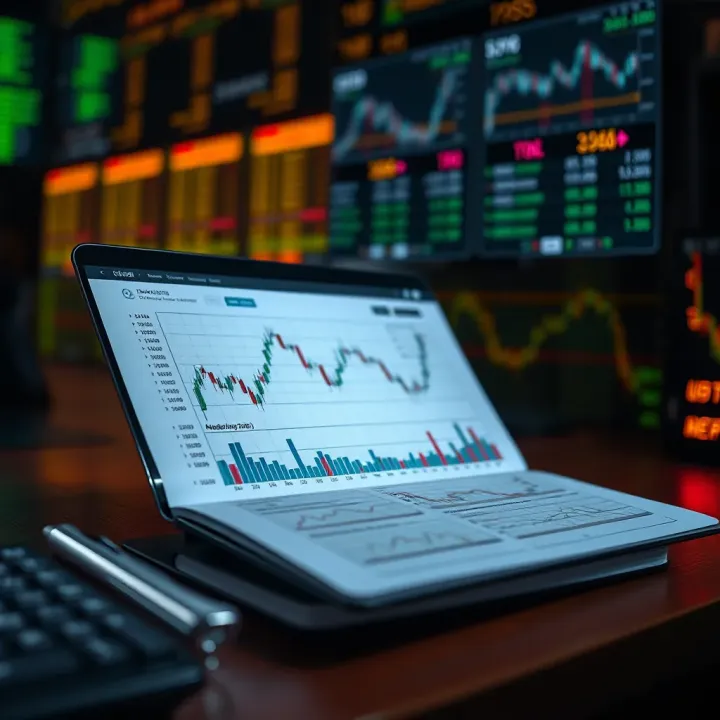
📚 Understand trading books in depth! Learn types, management, and analysis with handy PDF resources to boost your trading skills effectively.
Based on 15 reviews