
USD to PKR Forecast: Key Factors and Trends
📉 Explore how economic indicators, politics, and global events shape the USD to PKR exchange rate. Stay informed on currency trends and forecasts.
Edited By
Oliver Green
The US Dollar to Pakistani Rupee (USD to PKR) exchange rate is something traders, analysts, and investors watch closely. It's a figure that doesn't just sit on a screen—it affects everything from the cost of imported goods to the profits of exporters, and even the everyday expenses of regular Pakistanis. In simple terms, when the dollar strengthens against the rupee, imports get pricier and inflation can creep up.
Understanding the possible shifts in this exchange rate helps businesses plan ahead, investors make informed choices, and policy makers shape economic strategies. This article will lay out the main economic, political, and global factors driving this currency pair, tapping into expert forecasts to show what might be coming around the corner.
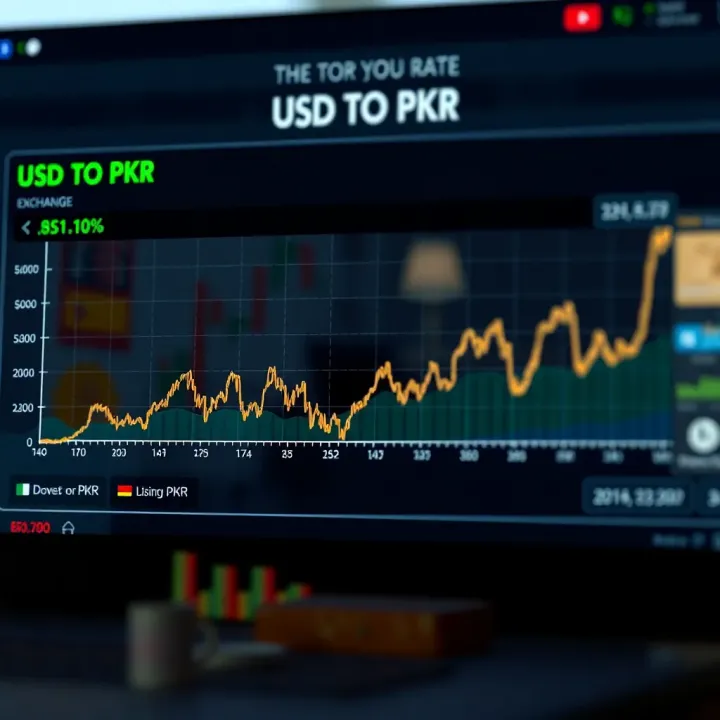
Exchange rates aren’t just numbers—they are reflections of a country's economic health and global standing. Grasping what moves these numbers gives you a solid footing in the financial game.
Throughout the article, you'll find clear examples and analysis tailored to the Pakistani market and its unique position in global economics. Whether you're a trader looking to hedge risks or just curious about how the USD to PKR rate could affect your wallet, this guide aims to cut through the clutter and present a well-rounded picture.
Understanding the current status of the USD to PKR exchange rate is the starting point for any analysis or forecast about future movements. This rate is not just a number; it reflects the economic health, investor confidence, and political climate in Pakistan compared to the United States. For traders and investors, knowing where the exchange rate stands today determines the baseline for decisions on currency trades, imports, exports, and investment strategies.
Over the past few months, the Pakistani Rupee (PKR) has experienced fluctuations against the US Dollar (USD) due to various pressures such as inflation spikes, shifts in monetary policy, and external financial assistance. Keeping a finger on the pulse of these movements helps businesses and policymakers make informed decisions to manage risks effectively.
The USD to PKR exchange rate in the recent term has shown some interesting swings. For example, during early 2024, the rupee depreciated steadily, hitting a near-record low against the dollar. This was mainly driven by increased inflation rates in Pakistan and a tighter interest rate environment in the US, which attracted capital flows away from emerging markets.
However, mid-year reports suggested some stabilization as the State Bank of Pakistan intervened with currency support measures and better-than-expected export figures came through. This sorta back-and-forth action is typical in emerging markets, where external shocks and domestic policies constantly influence the currency.
For practical purposes, importers noticed higher costs for US-made goods during depreciation phases, while exporters began to benefit from improved competitiveness abroad.
Looking back over the last decade, the USD to PKR exchange rate has gone through cycles linked to political events, economic reforms, and global market conditions. For instance, the sharp depreciation seen in 2018-2019 arose from balance of payments issues and the Pakistani government's move to seek assistance from the International Monetary Fund (IMF). These patterns are crucial to understand because they provide a baseline for predicting how similar factors might affect the exchange rate in the future.
Past trends tell us that the PKR tends to respond strongly to inflationary pressures, political unrest, and shifts in US economic policy. The rupee has sometimes bounced back quickly after interventions but at other times faced prolonged weakness during political instability.
Knowing the history helps investors and businesses anticipate possible shifts rather than react when it’s too late. For example, the appreciation post-2013 reform period shows the potential upside when economic stability is restored.
In summary, keeping tabs on the current exchange rate and its historical context equips finance professionals and investors with the insight necessary to navigate the unpredictability of USD to PKR movements. Effectively, it’s the foundation upon which further analysis and decision-making rest.
Understanding the economic indicators that influence the USD to PKR exchange rate is critical for anyone involved in trading, investment, or policymaking related to Pakistan’s economy. These indicators serve as barometers of economic health and help predict currency movements by reflecting shifts in economic fundamentals. This section walks you through the main economic factors that directly affect the USD to PKR rate, highlighting inflation, interest rates, and trade balance patterns.
Inflation is often the first thing that comes to mind when talking about currency value fluctuations. In Pakistan, when inflation runs high—say jumping from 5% to over 10% in a year—the purchasing power of the rupee weakens. This usually means it takes more PKR to buy one USD because the dollar is seen as more stable and reliable. For example, after the sudden hike in food and fuel prices in 2023, the PKR faced significant downward pressure against the USD.
High inflation also scares off foreign investors who fear their returns might get eroded, causing capital flight and further weakening the rupee. Conversely, if Pakistan manages to keep inflation low and stable, like how Malaysia maintained around 2-3% inflation before the pandemic, the rupee tends to hold its ground better against the dollar.
Interest rates set by central banks in both countries play a big role in shaping the exchange rate. When the State Bank of Pakistan raises its benchmark interest rate, it becomes more attractive for investors to park their money in PKR-denominated assets to earn higher yields. However, if the US Federal Reserve hikes its rates, often to tamp down inflation, the USD tends to strengthen as capital flows back to US markets seeking better returns.
An illustrative case is late 2022, when the Fed increased rates aggressively, drawing some investors away from emerging markets like Pakistan. As a result, the PKR experienced depreciation against the stronger USD. However, if Pakistan’s rates rise but inflation remains unchecked, the positive effect may be short-lived.
The trade balance—the difference between exports and imports—is a key driver of currency demand. If Pakistan imports way more than it exports, it needs to buy more foreign currency to pay for those imports, pushing the rupee down.
Take 2023 as a recent example when Pakistan’s imports of machinery, petroleum, and food items surged while exports lagged, widening the current account deficit. This imbalance forced the country to tap into foreign reserves and seek international funding, putting pressure on the PKR.
On the other hand, a narrower trade deficit, or even a surplus, tends to support a stronger rupee since demand for USD falls relatively. Initiatives to boost textile exports or remittances from abroad can improve this balance and dampen the PKR’s volatility.
These economic indicators don’t operate in isolation—they intertwine, affecting each other and the currency in ways that traders and analysts must monitor carefully. Understanding these moving parts helps stakeholders make more informed decisions about their exposure to USD/PKR fluctuations.
Political and geopolitical events often cast a long shadow on currency exchange rates, and USD to PKR is no exception. This section explores how factors beyond mere economic metrics can dramatically sway the rupee's value against the dollar. Recognizing these influences helps traders, investors, and analysts anticipate shifts that numbers alone can’t predict.
Political stability in Pakistan is a cornerstone affecting the USD to PKR exchange rate. When the government is stable, investor confidence typically rises, leading to a steadier rupee. On the flip side, political unrest or uncertainty can scare away foreign investors, pushing the rupee downward. For instance, during the political upheaval in 2018, Pakistan saw a spike in exchange rate volatility as markets reacted swiftly to shifting power dynamics. Investors and currency traders watch parliamentary sessions, election outcomes, and policy changes closely because even a hint of instability tends to raise the risk premium associated with the PKR.
The nature of US-Pakistan ties directly influences USD to PKR movements. Aid packages, trade agreements, and diplomatic cooperation can inject much-needed foreign currency into Pakistan’s reserves, often strengthening the rupee. Conversely, diplomatic tensions could result in aid cuts or trade restrictions, rattling the PKR. For example, in 2018-2019, when some US military and economic aid was withheld, the rupee fell sharply due to concerns over Pakistan's external financing. Keeping an eye on official communiques and policy talks between the two governments helps in gauging the potential impact on currency flows.
Regional politics—particularly involving neighbors like India, Afghanistan, and China—also cast a big influence on PKR’s performance. Geopolitical tensions or cooperation in South Asia can shift investor sentiment quickly. Border clashes or heightened conflict typically lead to a risk-off attitude among investors, weakening the rupee. On the other hand, initiatives like the China-Pakistan Economic Corridor (CPEC) tend to bolster confidence and attract foreign investment, stabilizing the currency. Traders who track news on regional security, trade partnerships, and infrastructural projects gain an edge in forecasting the exchange rate’s trajectory.
Political and geopolitical factors act as a barometer for currency volatility; they can either soothe or shake market confidence, influencing USD to PKR in ways economic data alone cannot.
Understanding these political layers offers a practical advantage for anyone involved with USD to PKR trading or investment decisions in Pakistan. Staying informed on domestic political shifts, US-Pakistan diplomatic developments, and broader regional dynamics is essential for anticipating currency movements and managing risk effectively.
When considering the USD to PKR exchange rate, it's impossible to overlook how global market conditions weigh heavily on this dynamic. Economic events, trade shifts, and financial trends worldwide often ripple through the Pakistani economy, affecting the rupee's valuation against the dollar. For investors and analysts alike, understanding these broader market currents is more than just academic—it’s vital for spotting risks and opportunities.
The dollar's global status influences how easily it strengthens or weakens against currencies like the PKR.
Commodity fluctuations, especially in oil and metals, intimately tie into Pakistan’s import costs and currency stability.
International financial bodies and foreign aid inject liquidity or tighten it, altering currency pressure points.
By breaking down each piece, we get a clearer grasp of the outside forces shaping the USD to PKR exchange rate.
The US Dollar's global muscle is a key driver behind exchange rate moves. Its status as the world’s main reserve currency means movements in the dollar's value can have a domino effect.
For example, when the dollar rallies against a basket of currencies due to US economic growth or interest rate hikes by the Federal Reserve, commodities priced in dollars become more expensive for other countries. This usually causes currencies like the PKR to weaken as Pakistan's import bills rise.
On the flip side, a pullback in the dollar, perhaps due to political instability or softer US data, can provide some breathing space for emerging market currencies. But this isn’t always straightforward—other factors like Pakistan's domestic economic conditions also play a role.
A practical scenario: In early 2023, the dollar’s climb against global currencies tightened Pakistan’s import costs, pushing the PKR downwards alongside inflationary pressures.
Pakistan is a heavy importer of commodities, especially oil, which makes the PKR sensitive to global commodity price shifts. When crude oil prices spike, Pakistan faces higher import costs, which often leads to a higher demand for dollars, putting pressure on the PKR.
Take the Brent crude price jumps in 2022, which translated to increased import bills for Pakistan and contributed to rupee depreciation. On the flip side, when commodity prices cool off, it eases the pressure on foreign reserves and the currency.
Similarly, fluctuations in the prices of key agricultural imports or metals can nudge Pakistan’s trade balance, influencing currency movements.
Therefore, tracking commodity markets is a must for anyone trying to puzzle out future USD to PKR trends.
Pakistan’s relationship with bodies like the International Monetary Fund (IMF), World Bank, and Asian Development Bank can significantly sway the rupee’s stability.
When these institutions provide financial aid or agree on bailout packages, it often bolsters foreign exchange reserves and strengthens confidence in the PKR. For instance, the IMF’s Extended Fund Facility support has historically helped Pakistan navigate currency crises by stabilizing the macroeconomic environment.
Conversely, delays in aid disbursement or tough conditionalities can spark market jitters, causing the rupee to slide.
For businesses and investors, watching the pipeline of international aid and policy reviews is key to anticipating short- and medium-term currency shifts.
In summary, the global market environment forms a complex backdrop that shapes the USD to PKR exchange rate. Recognizing how dollar strength, commodity swings, and international financial support interplay helps in forming a grounded, practical outlook on what lies ahead for Pakistan’s currency outlook.
Forecasts from financial experts and institutions play a vital role in shaping expectations about the USD to PKR exchange rate. These predictions guide investors, traders, and policymakers by providing an informed view on how currency values might move in the near to medium term. Understanding these forecasts helps stakeholders make smarter decisions—whether it's timing currency trades or planning cross-border business operations.
Experts use a mix of economic data, political developments, and global market trends to render their predictions. For instance, if a leading bank gives a bearish forecast on the PKR, businesses might consider securing funds now rather than waiting for more depreciation. On the other hand, confident central bank guidance signaling monetary stability can encourage foreign investment inflows, supporting the local currency.
Banks and financial analysts are among the most watched sources for exchange rate forecasts because they have access to detailed market data and sophisticated models. They typically issue regular reports that factor in variables like inflation trends, interest rate changes, balance of payments, and geopolitical risks.
For example, in mid-2023, Standard Chartered projected a gradual weakening of the PKR against the USD due to Pakistan's widening current account deficit and high inflation. Such forecasts often ripple through trading floors, influencing how currency pairs are priced in the spot and forward markets. Traders who follow these insights can adjust their hedging strategies accordingly, minimizing exposure to sudden swings.
Moreover, analysts sometimes use scenario-based forecasting, which considers best-case and worst-case economic developments. This approach helps investors gauge not just the most likely outcome but also the risks if situations like political unrest or policy shifts intensify.
The State Bank of Pakistan (SBP) holds considerable sway over the PKR's value through its monetary policy decisions, currency interventions, and public statements. When the central bank signals changes in interest rates or foreign exchange regulations, markets react swiftly.
For instance, in 2023, the SBP's hints at tightening monetary policy to combat inflation were followed by a temporary PKR appreciation. Conversely, unclear communication or unexpected easing can unsettle investors, triggering selling pressure on the currency.
Central bank guidance is especially important for setting market expectations. It often provides a glimpse into future policy moves before official data releases, giving traders and businesses an advantage in planning.
Monitoring SBP announcements is essential for anyone dealing with PKR exposure, as these statements frequently lead to immediate shifts in exchange rate sentiment.
Beyond concrete data and official guidance, the USD to PKR exchange rate is heavily influenced by market sentiment and speculative activity. Sentiment reflects the collective mood of traders and investors, which can sometimes drive currency movements away from fundamental values.
For example, rumors about a potential IMF bailout or political upheaval can cause swift swings in the PKR, as speculators rush to buy or sell ahead of anticipated news. Platforms like Reuters and Bloomberg often capture this sentiment through market commentary and trading volume patterns.
Speculative trading can amplify short-term volatility but also offers clues about where the market believes the exchange rate is headed. Recognizing these patterns can be useful for traders looking to enter or exit positions at advantageous times.
In summary, forecasts from financial experts and institutions are indispensable tools when navigating the USD to PKR exchange market. While predictions are not foolproof, combining bank analyses, central bank commentary, and market sentiment offers a more rounded picture, helping stakeholders to mitigate risks and seize opportunities.
The fluctuations in the USD to PKR exchange rate have far-reaching consequences for Pakistan's overall economic health. Currency movements don’t just shift numbers in forex markets—they directly affect businesses, consumers, and investors. Pakistan’s economy, being import-reliant and sensitive to external shocks, feels these changes acutely. Understanding these impacts helps traders, analysts, and investors make smarter decisions and anticipate market challenges.
When the rupee weakens against the dollar, importers face higher costs since they pay more PKR to buy the same amount of USD needed to settle their invoices. For example, a textile company importing raw materials from China priced in dollars will immediately see increased expenses. They often pass these costs onto customers, which can squeeze profit margins or increase consumer prices.
On the other hand, exporters benefit from a weaker rupee because their goods become cheaper and thus more competitive internationally. A Pakistani rice exporter selling to Europe might see a surge in orders as their prices undercut competitors. That said, exporters with dollar-denominated debts might find servicing loans tougher.
Conversely, a stronger rupee makes imports cheaper, helping industries relying heavily on foreign components, but dampens export competitiveness. Businesses need to closely watch these dynamics to strategize pricing and contracts accordingly.
Currency fluctuations have a direct and indirect effect on Pakistan’s inflation. A depreciation in the rupee tends to push up prices of imported goods—fuel, electronics, machinery—which increases production costs across various sectors. These elevated costs often trickle down to consumer goods, leading to higher inflation.
For example, when the PKR dipped sharply in late 2023, the cost of imported petroleum products surged, impacting transportation costs and subsequently food prices in the local markets. This chain reaction shows how a depreciating currency can stoke inflation pressures.
Conversely, a strong rupee can ease imported inflation, but if it signals weakening exports and slower growth, the economy might face other challenges like job losses or slower wage growth.
Foreign investors closely monitor currency stability before committing capital to Pakistan. Sudden or volatile changes in the USD to PKR rate raise uncertainty, often discouraging investment in local markets or projects. Stable or appreciating rupee values tend to boost investor confidence.
For instance, Foreign Direct Investment (FDI) in sectors like telecommunications or manufacturing is sensitive to exchange rate risks. Unexpected devaluation can wipe out expected returns in home currency terms. Conversely, if the rupee shows resilience amid global uncertainties, it can attract portfolio investments in equities and bonds.
Therefore, policymakers aiming to attract and retain foreign investment prioritize managing currency volatility and ensuring a predictable economic environment.
Currency shifts are not just a number game for Pakistan—they ripple through every level of the economy, from factories to households. Understanding these impacts is essential for traders and investors navigating this market.
In summary, the USD to PKR exchange rate affects Pakistan’s economy by:
Changing costs and competitiveness for importers and exporters
Driving inflation through shifting import prices
Shaping foreign investment decisions based on currency stability
These links underline why currency movements deserve close attention from finance professionals and policymakers alike.
When it comes to dealing with the USD to PKR exchange rate swings, having solid strategies in place isn’t just helpful—it's essential for minimizing risk and safeguarding profits. Businesses operating in Pakistan face constant exposure to currency risk, especially those that rely heavily on imports and exports. Similarly, investors need to be sharp about exchange rate shifts to protect their portfolios and make informed decisions.
Taking a practical approach towards managing currency fluctuations means not just reacting to market moves but planning ahead. By adopting effective strategies, companies and investors can reduce uncertainty, control costs, and even capitalize on favorable rate movements. In this section, we’ll explore key methods like hedging and risk management, and how to navigate the unpredictability of exchange rates with smart planning.
Hedging is essentially an insurance policy against currency risk. Businesses and investors use financial instruments to lock in exchange rates or offset potential losses. For example, a Pakistani textile exporter expecting payment in US dollars in three months might use a forward contract to fix the exchange rate today, protecting against any PKR depreciation.
Common hedging tools include:
Forward Contracts: Agreements to buy or sell a currency at a predetermined rate on a future date.
Options: Contracts that give the right, but not the obligation, to exchange currency at a set rate.
Futures: Standardized contracts traded on exchanges to buy or sell currencies at a future time.
Each tool has its pros and cons concerning cost, flexibility, and complexity. For instance, forward contracts are straightforward and cost-effective but lock you into a rate even if the market moves in your favor. Options provide more flexibility but at a premium cost.
In Pakistan, firms dealing with USD payments often rely on forward contracts offered by banks such as Habib Bank or MCB. These allow them to avoid nasty surprises when sending or receiving payments. Proper risk assessment is vital here; firms must evaluate their exposure carefully to avoid over-hedging, which can be costly.
Even with hedging tools available, exchange rates can be unpredictable, so businesses and investors should prepare for volatility through solid planning. This means:
Regularly Monitoring Market Trends: Keeping an eye on economic indicators like inflation, interest rate changes, and geopolitical news helps anticipate potential currency movements.
Maintaining Flexible Pricing and Cost Structures: Businesses, especially exporters, may adjust pricing or sourcing strategies to stay competitive amid fluctuating rates.
Diversifying Currency Exposure: Investors can spread risks by holding assets or operating in multiple currencies.
Maintaining Adequate Reserves: Companies might hold foreign currency reserves or liquid assets to cover short-term liabilities during swings.
For example, a Pakistani tech firm outsourcing some development work to the US may plan its budgeting considering worst-case exchange rates and build buffers into contracts. Similarly, investors looking at stocks or bonds linked to the US dollar should be ready for PKR swings by diversifying part of their portfolio locally.
Staying ahead of currency shifts isn’t about perfect prediction; it’s about making smart, informed choices that lessen surprises and keep your finances steady.
In short, combining hedging techniques with thoughtful planning helps mitigate risks linked to USD to PKR fluctuations. In doing so, businesses and investors can focus more on growth and less on worrying about the next currency twist.
Wrapping up, it’s clear that keeping an eye on the USD to PKR exchange rate is more than just watching numbers on a screen. It’s about understanding how these currency shifts tug at various parts of Pakistan’s economy — from imports and exports to inflation and foreign investment. For anyone working in finance, trading, or even a business relying on cross-border transactions, staying informed can make a real difference.
Consider a Pakistani export business owner who suddenly faces a spike in the dollar's value. Without a plan, that sudden change could eat into profits overnight. Having some tools and strategies in place beforehand can mean the difference between smooth sailing and scrambling for damage control.
To keep your finger on the pulse, focus on a few essentials. First, don't just rely on daily headlines — details matter. Follow reports from central banks like the State Bank of Pakistan and financial institutions such as the IMF and World Bank, which often offer deeper insights on currency movements and economic outlooks.
Second, market sentiment can shift quickly. Watch how traders react to political developments or global commodity prices, since these often impact the USD to PKR rate overnight. For example, a sudden drop or rise in oil prices can quickly ripple through the currency markets given Pakistan's dependency on oil imports.
Third, it's smart to track specific economic indicators regularly, like inflation data, trade deficits, and interest rate moves from both Pakistan and the US. These give clues on where the exchange rate might head.
Staying ahead isn’t about predicting the future perfectly but about staying prepared and adapting as changes unfold.
Several reliable sources can help you keep tabs on USD to PKR exchange rate movements:
State Bank of Pakistan: Their official reports and press releases often signal monetary policy shifts.
Reuters and Bloomberg: For real-time updates and detailed analysis, these platforms are go-to for professionals.
Economic Times Pakistan and Dawn Business: These local news sources provide context on political and economic developments affecting the market.
FXStreet and Investing.com: Useful for charting tools and currency forecasts that can give visual insight into trends.
Financial Social Media: Twitter accounts of economists and analysts like Dr. Farrukh Iqbal or reputable banks can offer quick takes and commentary.
By combining these resources, you build a well-rounded view rather than relying on one perspective. For example, if Bloomberg reports on Federal Reserve interest rate moves, checking Pakistan's local news helps you understand the currency impact from both ends.
Ultimately, currency awareness is a continuous process. The USD to PKR rate dances to many rhythms, so keeping several information streams open and being prepared with practical strategies is the best bet. That way, whether the rupee strengthens or weakens, you’re ready to make smart moves and avoid surprises.
📉 Explore how economic indicators, politics, and global events shape the USD to PKR exchange rate. Stay informed on currency trends and forecasts.
Explore key factors and trends shaping USD to PKR exchange rates 📉💹, including economic, political, and global influences, plus expert insights for Pakistan.
📉 Explore the USD to PKR forecast with expert insights on market trends, economic factors, government policies, and global events shaping Pakistan's currency future.

📉 Explore what drives the USD to PKR exchange, key economic trends, and how this affects markets, consumers, and policies in Pakistan's economy.
Based on 7 reviews