
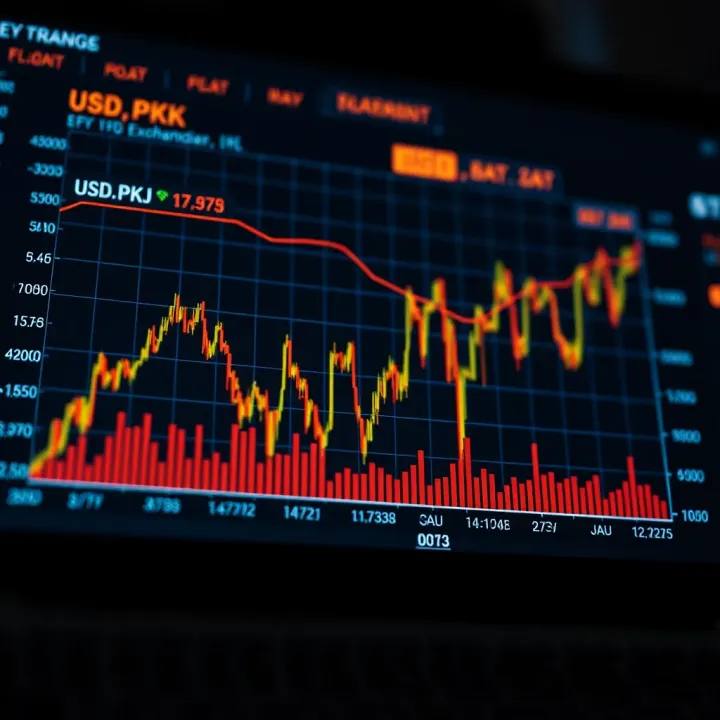
USD to PKR Exchange Rate Forecast for Next 30 Days
📊 Get a 30-day USD to PKR forecast with in-depth economic and geopolitical insights to help with your trading and financial planning decisions.
Edited By
Oliver Green
Understanding the near-term movement of the US Dollar against the Pakistani Rupee is essential for a variety of stakeholders — traders, investors, financial analysts, and even everyday businesses dealing with imports or exports. With economic shifts happening both globally and locally, the exchange rate can wobble in unexpected ways over just a handful of days.
This article dives into the USD to PKR exchange rate forecast for the next ten days. We’ll unpack what costs or gains might be in store, the economic factors influencing these changes, and what experts are saying based on recent data. The goal here isn’t just to throw numbers at you; we want to offer practical insights to help you make smarter decisions, whether you’re managing foreign currency risk, planning investments, or simply budgeting for upcoming expenses.
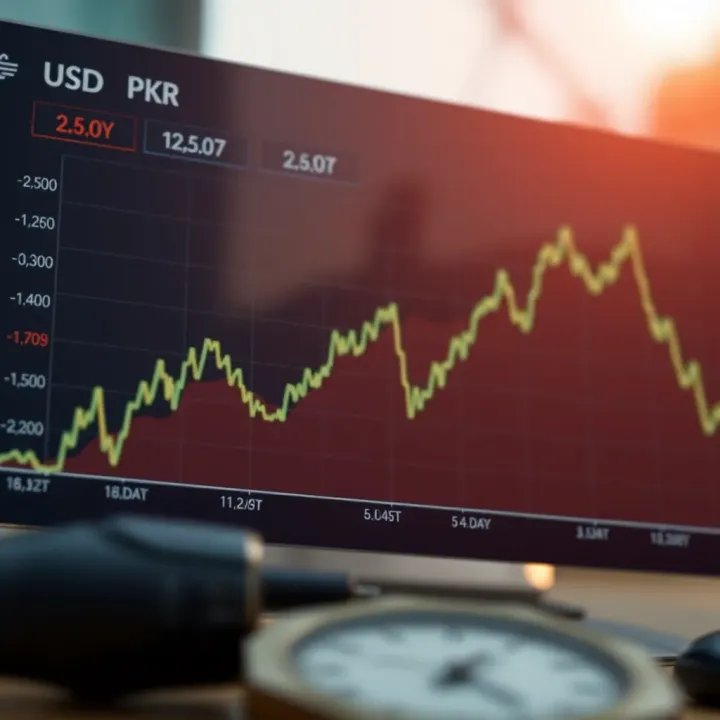
By the end of this read, you’ll have a clearer picture of the likely trends, potential market surprises, and the broader context shaping the USD/PKR pairing. This can help you navigate the volatility without shooting in the dark, minimizing risks, and seizing opportunities where they exist.
Understanding the recent trends in the USD to PKR exchange rate offers vital clues for traders, investors, and businesses aiming to navigate the currency markets effectively. This section lays the groundwork by highlighting how the rate has shifted lately, why these fluctuations matter, and what they might signal for the near future.
Currency exchange rates reflect a tug of war between economic forces, market sentiment, and policy decisions. Tracking recent movements provides context for making informed predictions rather than guesswork. For example, a steady uptick in USD to PKR could hint at increased demand for dollars due to import pressures or capital outflows, which directly affects costs for importers in Pakistan.
By examining day-to-day or week-to-week changes, one can spot patterns or anomalies—say, sudden jumps after policy announcements or dips following remittance surges. Despite sometimes seeming small, these shifts impact profits for exporters, remittance value for overseas Pakistanis, and inflation through import costs.
As of today, the USD to PKR exchange rate hovers around 285 to 287 PKR per USD, reflecting a mild depreciation of the rupee against the dollar compared to last quarter. This level is a result of various intersecting factors including persistent inflation in Pakistan and a comparatively stronger US dollar.
For context, the State Bank of Pakistan recently reported that the PKR has weakened by roughly 2% against the USD since the start of the month, a noteworthy movement for businesses budgeting their foreign currency needs. The central bank's intervention measures and international aid inflows often help temper this volatility but can’t always prevent short-term swings.
This current rate is crucial because even minor rate changes can mean significant differences in import costs, foreign loan repayments, and overall economic confidence. For example, a Pakistani business importing machinery might see a sudden 2% cost rise, squeezing their margins if prices can’t be passed on immediately.
Looking back over the past 30 days, the USD to PKR rate didn't move in a straight line. Instead, it showed some choppiness—rising sharply in the first two weeks, followed by a mild correction toward the end. This roller-coaster pattern largely mirrors the uncertainty around Pakistan's trade deficits and periodic capital inflows from remittances.
One practical takeaway from this recent performance is how external shocks affect the exchange rate quickly. For instance, a sudden announcement of renewed IMF talks or changes in US Federal Reserve's interest rate outlook swiftly influenced USD demand. Traders who caught these signals early managed to position themselves advantageously, while others got caught flat-footed.
Exchange rate rhythms can’t be ignored — staying alert to recent shifts helps in timing currency trades or hedging decisions better.
In sum, the last month’s tug between economic data releases and geopolitical news has kept the USD to PKR exchange rate on its toes. Understanding these shifts helps finance professionals and businesses prepare strategies rather than panic when the unexpected hits.
Understanding the economic landscape is key when analyzing the USD to PKR exchange rate. The currency's value doesn't exist in a vacuum; it reflects the health of both nations' economies and their monetary policies. When we zoom in on economic factors, we get a clearer picture of what might nudge the exchange rate up or down over the next ten days. For investors and traders, this means turning attention to specific indicators like inflation, trade balance, and foreign reserves in Pakistan, alongside interest rates and growth data from the US. These elements are not just numbers—they tell a story about confidence, demand, and financial stability which directly influence the rupee-dollar dance.
Inflation plays a critical role in currency valuation. Simply put, when Pakistan experiences high inflation, the buying power of the rupee weakens domestically and internationally. This usually pressures the USD to PKR rate to rise, meaning more rupees are needed to buy one dollar. For example, if inflation jumps to 12% within a month, it signals declining domestic currency value, prompting traders to sell PKR in favor of USD as a safer store of value. On the flip side, controlled inflation under 7% usually steadies the rupee and narrows fluctuations in the exchange rate, which is what banks and businesses hope for when planning expenses or contracts.
Pakistan’s trade balance—the difference between exports and imports—has a direct impact on the supply and demand for foreign currency. When imports significantly outweigh exports, Pakistan needs more dollars, putting additional strain on the rupee. Consider if Pakistan imported machinery and raw materials worth $5 billion but only exported $3 billion in textiles and goods in the same period. That $2 billion gap means more dollars needed to pay for imports, pushing the USD demand up and potentially weakening PKR. Conversely, a shrinking trade deficit through export growth can ease pressure on the currency.
Foreign reserves, mainly held in US dollars, act like the central bank’s buffer to stabilize PKR during volatility. High reserves give the State Bank of Pakistan room to intervene by selling dollars to meet demand and support the rupee. For instance, if foreign reserves dip below $10 billion, it limits intervention ability, often spooking investors and traders, leading to sharper depreciation of PKR. Recent figures show fluctuating reserves, so watching these is a practical way to anticipate sudden currency moves.
The Federal Reserve’s interest rate decisions ripple across global currencies, including the rupee. When the Fed raises rates, dollar-denominated assets become more attractive, drawing global capital toward the US. This increases demand for the USD and often results in a stronger dollar against the rupee as investors shift funds away from emerging markets like Pakistan. Recently, incremental hikes by the Fed have pressured many emerging currencies, illustrating this effect clearly. For businesses dealing with USD payments, understanding this link helps plan budgeting and hedging strategies.
Data on the US economy's strength—like GDP growth and employment figures—also affects USD performance. A robust US economy tends to support a stronger dollar, as investors gain confidence. For example, if quarterly GDP growth beats expectations at around 3%, it could cause a surge in dollar buying, putting upward pressure on the USD to PKR rate. Conversely, signs of slowing US growth might ease dollar strength, potentially offering some relief to the rupee. Keeping an eye on these numbers offers a practical edge, especially for currency traders who need to gauge short-term trends.
Economic fundamentals aren't just background noise—they're the main act in shaping the USD to PKR exchange rate over any period, including the next ten days. Recognizing how Pakistan’s economic indicators and US conditions interplay helps traders and businesses anticipate shifts and make informed decisions.
Political events often throw a wrench in currency markets. For the USD to PKR exchange rate, these developments hold a significant sway because they can quickly shift investor confidence, affect economic policies, and trigger changes in market expectations. When the political scene gets shaky or when key decisions loom, the Pakistani Rupee can experience sudden jolts against the US Dollar. This section breaks down how local and international political factors play into currency movements, helping traders and businesses spot potential market shifts early.
The political atmosphere within Pakistan can heavily influence the USD to PKR rate, especially in the short term. For example, any instability like protests, government reshuffles, or legislative gridlocks tends to spook investors, leading them to seek safer havens like the US Dollar. Take the recent government changes earlier this year — these events led to increased volatility, with the PKR slipping from about 285 to 290 against the USD in just a few trading sessions.
Moreover, fiscal policies announced by the government, such as new taxes or subsidies, directly affect market confidence. Political decisions regarding foreign loans or IMF negotiations also come under the spotlight. If talks with international lenders appear rocky, the PKR can weaken as investors anticipate more economic strain.
The diplomatic ties between the US and Pakistan also cast ripples over the exchange rate. When relations are cordial and trade ties are strong, it usually steadies the PKR. For instance, agreements that boost US aid or enhance bilateral trade typically bolster local currency confidence and may ease pressure on the rupee.
On the flip side, any tensions—whether due to geopolitical issues or policy disagreements—can lead to a flight from the PKR, pushing the exchange rate upwards. For example, talks of reduced US military aid or sanctions often prompt immediate market reactions. Investors quickly recalibrate their risks, leading to an uptick in demand for the Dollar.
Understanding these political triggers provides a practical edge for traders and analysts anticipating short-term currency moves. Being aware of upcoming political events, statements from key leaders, or shifts in diplomatic relations can help in making informed decisions rather than reacting to surprises.
In essence, keeping a pulse on both Pakistan’s internal political scene and its interaction with the US can significantly improve one’s ability to predict the USD to PKR movements over the coming days.
Market sentiment and investor behavior play a significant role in shaping the USD to PKR exchange rate, especially over short periods like the next ten days. These factors often reflect how traders, businesses, and investors perceive the current economic and political climate, which can sometimes move the market more sharply than fundamental data alone. Understanding sentiment provides insight into potential volatility and helps predict whether the rupee might gain ground or face pressure against the dollar.
Local investor enthusiasm or caution can heavily sway the PKR's value. For example, if Pakistani investors start pulling back from foreign currency investments due to expectations of rupee weakening, this can increase demand for USD and push the exchange rate up. On the other hand, a surge of confidence, say from new government policies encouraging foreign investment in sectors like technology or manufacturing, may lead to increased inflows of foreign currency, providing support to the PKR.

Foreign direct investment (FDI) also matters. When multinational companies announce expansions or fresh investments in Pakistan, it signals economic stability which tends to strengthen local currency sentiment. Conversely, any delays or cancellations of foreign projects can fuel concern and speculation, potentially spiking the USD to PKR rate. An example from recent months is the cautious stance many foreign investors took during heightened political uncertainty, which coincided with sharper PKR depreciation.
Speculation is another critical driver often fueled by trader expectations regarding upcoming events like central bank decisions, political announcements, or global economic reports. For instance, if speculators anticipate the State Bank of Pakistan to raise interest rates to control inflation, there might be a temporary buying spree of PKR before the actual policy change, which can briefly strengthen the currency.
Similarly, if rumors circulate about impending currency interventions by the central bank or fresh IMF support packages, market players might react swiftly, adjusting their positions in anticipation. This behavior can create noticeable short-term swings in the exchange rate that do not always align perfectly with fundamentals.
Keep in mind: Market sentiment can be fickle, often influenced by headlines and rumors. So while analyzing investor behavior, it’s essential to differentiate between speculative noise and genuine shifts rooted in economic realities.
In summary, monitoring local investor trends and the pace of foreign investment, alongside understanding speculative activity and market expectations, offers a comprehensive view of how the USD to PKR exchange rate might behave. These elements serve as early warning signs or confirmations for traders and analysts trying to anticipate currency movements in the short term.
Technical analysis plays a key role when trying to predict short-term movements in the USD to PKR exchange rate. Unlike fundamental analysis, which looks at economic data and political events, technical analysis focuses on price charts and market patterns to give traders clues about where the rate might head next. For professionals dealing in forex or currency trading, this type of analysis offers practical insights that can be put into action quickly.
One of the biggest advantages of technical analysis in currency markets, including USD to PKR, is that it can help identify entry and exit points with more confidence. For example, spotting recurring price levels where the rate tends to bounce (support) or fall from (resistance) can guide traders to make better, informed decisions. This is especially useful in a volatile market where economic news or political developments rapidly affect price.
Moreover, technical analysis can be combined with other data, such as economic indicators and market sentiment, to form a fuller picture. Think of it like reading the curve of a river to understand where the current might push your boat. By using tools like trend lines, moving averages, and volume, one can detect momentum shifts or potential reversals that aren't immediately obvious from economic reports alone.
Support and resistance levels refer to specific price points on the USD to PKR chart where the exchange rate has consistently found a floor (support) or ceiling (resistance). These levels arise because lots of traders place buy or sell orders nearby, causing the price to hesitate or reverse direction. Recognizing these levels helps traders avoid costly mistakes like buying at a peak or selling at a dip.
For instance, if the USD to PKR exchange has been hovering around 280 PKR for a few days but drops sharply every time it approaches 282 PKR, 282 would be a key resistance level. Similarly, if the rate rarely goes below 277 PKR over the last ten days, then 277 acts as a support level. These aren’t just random numbers; they are battle lines drawn by market participants.
Traders often watch these levels closely, and breaking them meaningfully (with high volume) might signal a trend continuation or reversal. To illustrate, if USD/PKR breaks through the resistance at 282 PKR and holds above it, the next resistance levels around 285 or higher can become new targets.
Short-term price patterns in the USD to PKR exchange rate offer clues about what might happen over the next few days. Patterns like "flags," "head and shoulders," or "double bottoms" can indicate potential reversals or continuation of trends. Though no pattern is foolproof, they provide a lens through which traders can interpret market psychology and probable moves.
For example, a "bullish flag" pattern could appear if the USD/PKR rate rallies sharply, then consolidates sideways in a narrow range before breaking out upwards again. This suggests momentum built up and might lead to further gains in the coming days. On the other hand, a "head and shoulders" pattern may warn of a potential drop if it forms after a steady rise.
These patterns are best confirmed with other indicators like volume spikes or moving averages crossovers. The goal here is to reduce guesswork and improve the odds. Since the next ten days’ outlook involves many unpredictable factors, paying attention to short-term technical signals helps traders flex and adapt quickly.
Simply put, technical analysis offers a way to understand the USD to PKR’s recent behavior through these price patterns and levels — serving as a practical toolkit for those who want to navigate the currency market with greater precision.
In sum, technical analysis doesn’t replace the need to monitor fundamental factors, but it provides an extra layer of insight that can be critical when timing trades or managing risk within a short horizon, especially in a currency as sensitive as PKR amid economic and geopolitical shifts.
Getting a clear picture of where the USD to PKR exchange rate is headed in the short term is more than just financial trivia—it’s a practical tool for traders, businesses, and investors who need to make informed decisions quickly. Forecasts and predictions help cut through the noise of daily volatility by focusing on key indicators and expert insights, giving a clearer sense of potential risks and opportunities just around the corner.
Knowing what to expect in the next ten days allows businesses to better time imports or exports, manage payrolls for overseas staff, or hedge foreign currency exposure more effectively. For investors and forex traders, it’s about spotting moments to capitalize on fluctuations or avoid losses. The short-term outlook also offers policymakers a glimpse into market sentiment, which can inform timely interventions or adjustments.
Financial experts leverage a blend of economic data, market trends, and geopolitical developments to predict the USD to PKR exchange rate. For instance, analysts at institutions like Standard Chartered or the State Bank of Pakistan often release reports that consider inflation trends, commodity prices, and global dollar strength. These reports often point out that rising inflation in Pakistan could put downward pressure on the rupee, while strong US economic data might boost the dollar further.
A practical example: If the US Federal Reserve signals a pause or cut in interest rates within the next week, experts anticipate the dollar might weaken slightly against the PKR, softening the exchange rate. Conversely, unexpected political unrest in Pakistan might trigger a rapid decline in confidence, prompting experts to warn of sharper PKR depreciation.
These expert projections don’t promise certainty but provide a well-informed starting point. Traders frequently cross-reference multiple forecasts to spot consensus or divergences, helping them anticipate potential surprises.
Examining the current economic indicators and political climate allows us to sketch out plausible scenarios for the USD to PKR rate over the next ten days:
Scenario 1: Stable but Slight Rupee Depreciation
If Pakistan’s foreign reserves remain steady and inflation shows signs of easing, the PKR might hold relatively steady or weaken slightly, hovering between expected support and resistance levels.
Scenario 2: Sharp Depreciation Triggered by Political Uncertainty
Any sudden political turmoil or delays in IMF funding could spark sell-offs, pushing the PKR down more rapidly against the USD.
Scenario 3: Temporary Rebound on External Support
If Pakistan secures a new aid package or foreign investment inflows spike, the rupee could gain temporarily, even amid broader weakness.
Each scenario rests on real data points observed today—like inflation hitting 23% or foreign reserves holding around $8 billion—but they unfold differently based on upcoming news or policy actions.
Staying aware of these scenarios helps businesses and traders prepare for shifts instead of reacting after the fact, which often costs money or opportunities.
By combining expert opinions with a scenario-based evaluation, readers can develop a nuanced understanding and avoid getting blindsided by sudden exchange rate moves. This approach underscores the value of forecasts that balance numbers with real-world unpredictabilities.
The fluctuations in the USD to PKR exchange rate directly influence various aspects of daily business operations and consumer spending in Pakistan. For businesses, especially those heavily involved in international trade, even small shifts in currency value can alter profit margins significantly. Consumers, on the other hand, feel the impact through prices of imported goods, foreign travel costs, and remittance values. Understanding these effects helps stakeholders make smarter decisions amid the changing forex environment.
Importers face immediate challenges when the Pakistani Rupee weakens against the US Dollar. Costs for raw materials, machinery, and finished goods priced in USD increase, leading to higher operating expenses. For instance, a textiles manufacturer importing synthetic fibers from the US might see a sudden 3-4% rise in input costs if the exchange rate moves unfavorably over a short period.
Exporters are also affected but in a different way. A weaker PKR can make Pakistani goods more competitive abroad, potentially boosting export volumes. However, if exporters rely on imported inputs priced in USD, cost increases might erode this advantage. Take the case of a rice exporter who imports packaging materials from the US; the gain from a favorable exchange rate might be offset by higher input costs.
Remittances from overseas Pakistanis contribute significantly to the country's foreign exchange reserves. Exchange rate swings influence both senders and recipients. When the PKR weakens against the USD, recipients get more rupees per dollar sent, which can help families cope with rising local expenses.
However, this advantage may be short-lived if the exchange rate is unstable. Frequent volatility complicates planning for households relying on remittances. Furthermore, individuals and businesses engaged in foreign exchange transactions, like students paying international tuition or companies settling overseas invoices, must monitor the rate carefully to avoid unexpected costs.
Sudden shifts in the USD to PKR rate can ripple across the economy, affecting everything from profit margins to household budgets. Staying informed allows businesses and consumers to cushion against unpredictability.
Increasingly, savvy traders and business people are adopting strategies to mitigate currency risk, such as forward contracts or using more stable payment arrangements. Being aware of how exchange rate trends impact your operations or finances is an important step toward making more informed decisions in Pakistan’s forex landscape.
Managing currency risk is a must for anyone dealing with USD to PKR exchange, especially given how volatile the market can get in a short span. For businesses and individuals alike, having a game plan helps avoid nasty surprises when exchange rates swing unexpectedly. Beyond just preventing losses, solid strategies allow traders, investors, and companies to plan cash flows and budgeting with more confidence.
This section digs into concrete methods that serve as shields against the ups and downs of the dollar-rupee rate in the coming days. It zeroes in on what works practically, highlighting tools and tips relevant to current market conditions.
Businesses coping with imports or exports often face headaches from the march of exchange rates between the USD and PKR. To keep things steady, hedging instruments act like an insurance policy against currency fluctuations. Here are a few tactical options:
Forward Contracts: This is a straightforward way to lock in a rate now for a transaction that will happen in the next ten days or later. For example, a textile exporter expecting to receive payment in USD can fix the rate today to avoid losing out if the rupee weakens.
Currency Options: These give the right but not the obligation to exchange currency at a certain rate before a specified date. It’s a bit like buying a ticket that lets you pay what’s called a premium, but you get to benefit if the rates move in your favor later. It’s useful if a business wants to avoid downside risk but remain open to favorable swings.
Swap Agreements: Particularly useful for companies with longer-term exposure, swaps allow exchanging one currency for another at an agreed rate and date. Though more complex, they provide flexibility and help smooth out currency cost variations.
Clear contracts and timely decisions are the backbone of effective hedging—without them, companies may ironically expose themselves to greater risk.
For individuals, managing currency risk might seem less formal than business hedges but no less important, especially those who regularly remit money or pay for education, healthcare, or foreign travel.
Monitoring the Market: Staying updated with reliable sources like the State Bank of Pakistan reports or trusted financial news outlets can help spot trends and decide when to convert currency.
Using Limit Orders: Banks and exchange platforms in Pakistan often allow placing limit orders, where you set a target exchange rate and your order only executes if the market hits that rate. It’s a simple way to avoid selling or buying at a bad rate.
Diversifying Exchange Times: Rather than converting large sums at once, breaking the transaction into smaller portions over several days can average out rate fluctuations and reduce risk.
Avoiding Impulsive Trades: Emotional reactions to sudden exchange rate news can lead to poor decisions. A steady, informed approach goes a longer way.
Ultimately, whether a business or individual, the goal is to minimize the financial uncertainty tied to currency moves. Having these practical strategies in place turns unpredictability into manageable risk, making the next ten days less daunting on the USD to PKR front.
Central bank decisions play a significant role in shaping the USD to PKR exchange rate, especially in short-term outlooks like the next ten days. The State Bank of Pakistan (SBP) uses its monetary tools to either stabilize or adjust the currency value depending on economic demands. These policies matter because they directly affect liquidity, inflation expectations, and investor confidence, which in turn influence how the Pakistani rupee trades against the US dollar.
When the SBP adjusts interest rates, it prompts almost immediate reactions in the exchange market. For example, a hike in policy rates tends to attract foreign capital seeking better returns, which can strengthen the PKR. On the flip side, lowering rates might encourage borrowing but could put downward pressure on the rupee if it triggers inflation fears.
In the last quarter, the SBP increased the benchmark rate to combat rising inflation. This move caused the PKR to briefly gain some ground against the USD before external factors, like worsening trade deficits, erased those gains. Market participants watch these rate announcements like hawks, adjusting their positions quickly, which means traders and businesses need to stay alert to such changes.
Beyond rate changes, the SBP sometimes steps into the market directly, buying or selling dollars to smooth out sudden swings. Such intervention can prevent panic-driven spikes that hurt importers and exporters who rely on predictable exchange rates. For instance, during volatile days earlier this year, the central bank sold dollars from its reserves, calming excessive depreciation pressures on the rupee.
Another tool is regulatory adjustments, like controlling capital flows or setting limits on currency speculation. These measures are often aimed at maintaining overall financial stability. For example, when rumors about political instability caused wild swings earlier this month, the SBP's intervention calmed nerves by ensuring enough foreign currency availability.
Understanding how these central bank measures operate helps businesses and traders make informed decisions. Prudently anticipating policy moves can allow them to hedge risks or capitalize on expected changes in exchange rates.
In sum, central bank policies do not just operate in isolation—they create ripple effects throughout the financial markets that can alter the USD to PKR exchange path in very tangible ways over days and weeks.
Understanding how the Pakistani Rupee (PKR) stacks up against currencies of neighboring countries gives a much richer context to its performance against the US Dollar. It's kind of like checking out your local team's score alongside others in the league — it tells you more than just isolated numbers. This comparison helps traders and investors spot broader regional trends or anomalies influencing PKR, and provides insights into risks or opportunities tied to geopolitical or economic factors specific to South Asia.
By looking at nearby currencies, you can gauge whether PKR's volatility is part of a larger regional pattern or something unique from domestic factors. For businesses and investors, knowing this helps in decision-making — for example, if the Indian Rupee (INR) and Bangladeshi Taka (BDT) are both steady or strengthening against the USD, but PKR is weakening, that raises questions about domestic conditions causing that divergence.
When we glance at USD to INR and USD to BDT exchange rates over the last ten days, we notice some noteworthy differences. The Indian Rupee has seen modest appreciation against the US Dollar recently, partly due to strong foreign investment inflows and a more stable political backdrop. Bangladesh's Taka has remained relatively stable, supported by steady export growth and improved foreign exchange reserves.
In contrast, the Pakistani Rupee has experienced more fluctuations, partly due to ongoing domestic political uncertainty and fluctuating foreign aid discussions. This contrasting behavior illustrates how country-specific factors can diverge regional trends. A sharp example is when India’s central bank tightened interest rates recently, bolstering the Rupee, while Pakistan’s State Bank kept its rates relatively unchanged, adding pressure on the PKR.
Comparing these neighboring currency trends highlights how macroeconomic policies and political stability influence exchange rates differently, even within the same region.
Several factors set the Pakistani Rupee apart from other regional currencies. First off, Pakistan's trade deficit and reliance on external financing tend to put more pressure on the PKR, especially during periods of economic or political uncertainty. Unlike India, Pakistan’s export base is narrower and more concentrated, making its currency more sensitive to shifts in global commodity prices like cotton and energy.
Secondly, Pakistan’s foreign exchange reserves are generally slimmer compared to neighbors like Bangladesh or India. This lower cushion limits the central bank's ability to intervene in currency markets aggressively, which traders tend to watch closely.
Moreover, Pakistan's heavy dependence on remittances means shifts in migrant workers’ earnings abroad can have outsized effects on PKR supply and demand. Political instability and unpredictable policy moves also add to the currency’s vulnerability, whereas countries like India have enjoyed more policy continuity and investor confidence recently.
In short, the PKR’s unique mix of economic structure, external vulnerabilities, and domestic politics often makes it behave quite differently compared to INR or BDT. For traders and analysts, keeping these factors in mind helps avoid oversimplifying PKR movements by just looking at broad regional patterns.
Through this regional lens, one can better grasp the real drivers behind USD to PKR fluctuations and better anticipate what might come next in the coming days.
Access to accurate and timely information is the backbone of making informed decisions about the USD to PKR exchange rate. For traders, analysts, and investors watching this pair closely, having the right updates at hand means they can adjust strategies on the fly and avoid costly mistakes. Exchange rates can shift rapidly due to various global and local factors, so staying ahead depends largely on where and how you get your information.
Reliable data helps not just in understanding current market conditions but also in anticipating future trends. Without trusted sources, one risks chasing rumors or outdated reports, which could lead to poor financial decisions. For instance, during political upheaval or unexpected economic announcements, those equipped with genuine, real-time insights can navigate volatility with more confidence. This makes cultivating a go-to list of dependable information channels a priority for anyone dealing with currency exchange.
When looking for exchange rate information, not all sources carry the same weight. Official financial institutions, such as the State Bank of Pakistan, provide daily updates that form the baseline for market rates. Similarly, international platforms like Bloomberg and Reuters offer comprehensive data that include live and historical exchange values along with contextual financial news.
Banks like Habib Bank Limited or MCB Bank often release their own exchange rates, which reflect their local business operations and forecasts. These rates can vary slightly from interbank rates but give a realistic picture of what customers might get when exchanging currency. Moreover, networking with experienced traders through forums or financial groups adds a layer of market sentiment that data alone cannot provide.
It’s important to cross-verify rates from multiple trusted sources to get a holistic view, especially in a fast-moving market.
Modern tools and applications make tracking the USD to PKR exchange rate far more accessible and efficient. Mobile apps like XE Currency and OANDA provide real-time updates and customizable alerts that notify users of significant rate changes. This proves invaluable for those who need to act quickly, such as exporters or businesses reliant on foreign imports.
Online platforms often include charting tools that let users analyze trends and fluctuations over different periods—ranging from minutes to months. These visualization capabilities help break down complex data into understandable formats, making it easier to spot potential entry or exit points.
For professionals, software like MetaTrader or TradingView integrates live currency data with technical analysis tools, which support decision-making based on patterns or signals. Even simple spreadsheets connected to live feeds can assist small businesses or individual users in managing their currency exposure more effectively.
In brief, combining trusted data sources with modern tracking tools equips anyone involved in the USD to PKR market to respond swiftly and wisely to exchange rate movements.
📊 Get a 30-day USD to PKR forecast with in-depth economic and geopolitical insights to help with your trading and financial planning decisions.
📉 Explore the USD to PKR forecast with expert insights on market trends, economic factors, government policies, and global events shaping Pakistan's currency future.

🔍 Explore the USD to PKR outlook for the next 3 months! Understand key economic trends, govt policies & global shifts impacting the exchange rate. 💹
📊 Get insights into the AUD to PKR exchange rate, including economic factors, political impacts, and market trends for smarter trading and business decisions in Pakistan.
Based on 13 reviews