

Is Trading Halal or Haram? An Islamic Viewpoint
Explore whether trading is halal or haram in Islam 🕌. Learn about Islamic finance rules, trading types, and practical advice for Pakistan's Muslim traders 📈.
Edited By
Sarah Mitchell
Future trade, commonly referred to as futures contracts, involves agreements to buy or sell assets at a predetermined price on a specified future date. This financial practice plays a significant role in global markets, helping investors and businesses manage risks and speculate on price movements.
In Pakistan, many traders and investors are increasingly involved in future trading through platforms regulated by the Securities and Exchange Commission of Pakistan (SECP) and operate within frameworks set by the Pakistan Mercantile Exchange (PMEX). However, questions arise over its Islamic legitimacy, especially among traders adhering strictly to Shariah law.
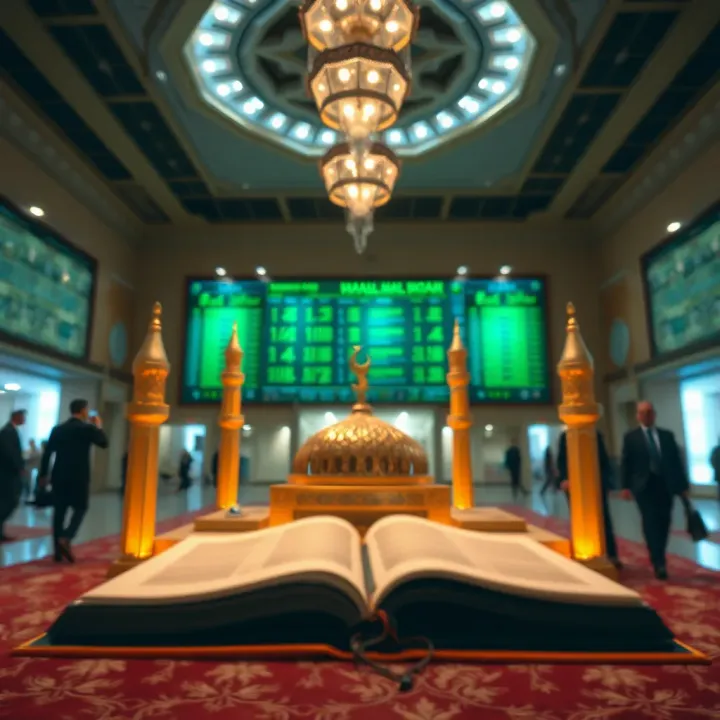
Islamic finance principles prohibit riba (interest), gharar (excessive uncertainty), and maysir (gambling). Since future contracts often involve deferred delivery and price uncertainty, scholars debate whether these trades align with Shariah.
Islamic jurists generally evaluate future trade based on its compliance with contract clarity, certainty in price and delivery, and avoidance of speculative behaviour akin to gambling.
Opinions vary:
Some scholars view standard future contracts as haram due to high levels of gharar and maysir.
Others consider them permissible if conditions such as actual ownership transfer at maturity and avoidance of excessive speculation are met.
Understanding these nuances is crucial for traders who want to ensure their investments conform to Islamic ethics while benefiting from market opportunities.
This article examines the concept of future trade within Islamic jurisprudence, highlighting key concerns and conditions set by scholars. It also considers practical implications for Pakistani traders navigating regulatory and Shariah compliance challenges.
By unpacking this topic, readers can make informed decisions about their trading strategies in accordance with Islamic law and local financial regulations.
Having a clear understanding of future trade is fundamental before discussing its Islamic ruling. In simple terms, future trade involves agreeing today to buy or sell an asset at a specified price on a set date in the future. This mechanism allows traders and investors to manage price risks or speculate for profits. For example, a wheat farmer in Punjab might lock in a price with a buyer three months ahead, protecting against price drops caused by market fluctuations or weather.
Such contracts provide liquidity and price discovery in markets, but they also come with complexities and risks. Understanding these helps to put the halal or haram debate into perspective, especially when evaluating whether such transactions comply with Shariah principles concerning fairness and certainty.
Future trade is a financial arrangement where two parties agree to exchange an asset at a future date, but fix the price today. Unlike spot trading where delivery and payment happen immediately, future contracts delay the actual exchange. The asset could be commodities like cotton, financial instruments, or currencies.
Take, for example, a Karachi-based textile mill buying raw cotton futures to ensure stable input costs despite market volatility. The main point in future trade is the contractual commitment made today for future settlement, which introduces specific risks and benefits missing in spot deals.
Future contracts typically trade on regulated exchanges like the Pakistan Mercantile Exchange (PMEX). These contracts standardise quantity, quality, and delivery dates to ensure fairness. Traders deposit margin— a security deposit—to cover potential losses, which helps reduce default risk.
Prices fluctuate with supply, demand, and market sentiment. Traders may close positions before expiry by entering offsetting trades or settle in cash. For example, an investor betting on currency movements may not want the physical currency but profits or losses depending on exchange rate changes at contract expiry.
In Pakistan, future trading mainly covers:
Commodity Futures: Products like wheat, sugar, and cotton form the bulk of traded contracts. Farmers, millers, and processors use these to hedge against price swings.
Currency Futures: Traded by exporters, importers, and speculators to manage foreign exchange risks, these contracts reflect rates of currencies like USD/PKR and EUR/PKR.
Interest Rate Futures: Though less common, they help manage risks linked to changes in SBP policy rates affecting loans and bonds.
Understanding the practical workings of future trade in such contexts lays the groundwork for assessing Shariah compliance and guiding ethical trading choices.
Understanding the core Shariah principles related to future trade is essential for Muslim traders and investors. These principles guide the permissible conduct in financial dealings and help ensure transactions comply with Islamic law. At the heart of this examination are concepts like the prohibition of riba (interest), avoidance of gharar (excessive uncertainty), and adherence to the rules distinguishing spot transactions from forward contracts.
Islamic law strictly forbids riba, which generally means any guaranteed interest or profit that comes without effort or risk. Future trading often involves price agreements set today for delivery at a later date, and this can lead to earnings that resemble interest, making it controversial. For example, if a person buys a future contract to sell wheat three months from now at a fixed price, any profit purely from price difference without owning the underlying asset or bearing risk may be considered riba.
Next is gharar, the uncertainty or ambiguity in a contract that could cause injustice. Excessive uncertainty is harmful because it leads to disputes and exploitation. Future trading can involve high uncertainty about delivery, price, and contract terms. In practice, Islamic scholars examine whether the contract has clear terms on quantity, quality, and timing to rule on its permissibility.
Clarity and transparency in contracts are central to ensuring transactions avoid riba and gharar, making them more aligned with Shariah.
Islamic jurisprudence makes a clear distinction between spot sales and forward sales. In spot transactions (bay' salam), exchange happens immediately or within a very short time, with delivery and payment settled fast. Forward contracts, however, involve delay in delivery or payment. Islamic law permits forward contracts in some cases, like salam and istisna, which are specially designed to facilitate trade in goods not immediately available, provided conditions are met.
For example, a farmer agreeing to sell wheat to a buyer before harvest (a salam contract) is allowed under Islamic law with upfront payment and clearly specified terms. But future contracts traded like commodities for speculative gain without ownership are mostly discouraged because they resemble gambling (maysir) or uncertain dealings.
Sale in Islamic finance means transferring ownership of a tangible asset with agreed terms. Speculation or excessive gambling on price movements without underlying asset ownership is generally prohibited. Future trading sometimes blurs this line since many contracts are not backed by physical assets at the time of agreement.
In practical trading terms, if a trader buys or sells futures as a genuine hedging tool—covering risks on actual goods or investments—this use is closer to permissible trade. But if the purpose is mere speculation to profit from price swings without intent to take delivery or bear risk, it conflicts with Islamic principles.
Traders in Pakistan should carefully evaluate the nature of their futures transactions considering these Shariah principles, seeking moderation and clarity to stay within Islamic guidelines.
Understanding scholarly opinions on future trade is key for any Muslim trader or investor aiming to align their portfolio with Shariah guidelines. Scholars interpret Islamic principles differently, especially regarding transactions involving uncertainty (gharar) and deferred payment. This section lays out the main arguments that declare future trade haram, the conditions under which some scholars permit it, and how Islamic finance authorities contribute to these discussions.
Many scholars argue that future trade is haram due to the inherent uncertainty and speculation involved. Since future contracts often do not involve immediate delivery or ownership transfer, these deals resemble gambling (maysir) more than genuine sale contracts. For example, in Pakistan’s stock markets, a trader might buy a futures contract on a commodity without intent to physically receive it; this speculative behaviour conflicts with the Islamic requirement that sale must involve actual possession or immediate exchange.
Other objections point to the presence of riba (interest) risks hidden in margin accounts or leverage used in futures trading. Islamic jurisprudence strictly prohibits any kind of guaranteed return or interest, which complicates conventional futures where margin trading is common.
Still, a number of scholars allow future trade if certain conditions are met. They argue that if the contract guarantees possession of the item on the delivery date and avoids excessive gharar, it may be permissible. For instance, agricultural futures where farmers sell crops before harvest to secure a fixed price can be halal if the contract ensures actual delivery.
Some Islamic finance practitioners suggest that futures trading with real assets and clear terms can be structured to comply with Shariah. The emphasis is on removing elements of gambling, uncertainty, and interest. This nuanced stance gives traders practical avenues to engage in future contracts without breaching Islamic principles.
Scholars and organisations like the Accounting and Auditing Organisation for Islamic Financial Institutions (AAOIFI) and local Islamic finance boards in Pakistan play a vital role in clarifying these matters. They provide guidelines and fatwas that help financial firms design Shariah-compliant contracts. Their input shapes educational content for investors and informs regulatory frameworks.
In Pakistan, Shariah advisors attached to Islamic banks and financial institutions assess futures products’ compliance regularly. Their evaluations assist traders to make informed decisions aligned with Islamic ethics, rather than leaving individuals to navigate the complex rules alone.
The views of scholars are not merely theoretical but guide everyday practice and ensure finance remains ethical, transparent and within Islamic values.
Through these diverse opinions and rigorous oversight, Pakistani investors can better judge the permissibility of future trade and choose suitable instruments accordingly.
Understanding the practical side of future trading is vital, especially for investors and traders in Pakistan. This section sheds light on the real-world impact of engaging in future contracts, considering both the risks and opportunities. Given Pakistan’s growing financial markets and increasing interest in Islamic finance, clarity on future trade’s implications is directly relevant.
Future trading carries considerable risk due to price volatility and leverage. In Pakistan’s context, where many traders use margin accounts, sudden shifts in commodity or currency prices can lead to heavy losses. For example, a wheat futures contract can become worthless if policy changes affect supply unexpectedly.
Ethically, the major concern is whether speculation involved in futures imposes uncertainty (gharar) or unfair advantage. Islamic law cautions against transactions filled with excessive ambiguity, as they conflict with transparency and justice. Traders must carefully examine whether their futures dealings venture into gambling-like speculation rather than genuine hedging or trade facilitation. This is especially relevant in local markets where speculative behaviour sometimes distorts real economic signals.
Ethical trading aligns with risk management and transparency, helping maintain market integrity and individual peace of mind.
For traders wary of conventional futures due to Shariah concerns, Islamic finance offers alternatives. Salam contracts, for instance, allow advance payment for goods to be delivered later, removing uncertainty about price. Similarly, Istisna contracts enable customised manufacturing or asset delivery on agreed terms, fitting industries like textiles or construction.
These alternatives focus on real assets and immediate possession concepts, reducing speculation and gharar. They provide Muslims in Pakistan a way to protect against price fluctuations without engaging in potentially forbidden elements of conventional futures.
Pakistan’s regulatory bodies, including the Securities and Exchange Commission of Pakistan (SECP) and State Bank of Pakistan (SBP), have started aligning with Islamic financial principles. Several Islamic financial products are available under SECP’s guidelines, yet regulated Shariah-compliant futures markets are still evolving.
Local institutions like Meezan Bank and Al Meezan Investment Management offer Shariah-compliant investing options, but future contracts remain under scrutiny. Traders should keep updated on SECP circulars, guidance from the Shariah Advisory Boards, and avoid dubious derivatives not formally approved in Pakistan.
In short, Pakistani investors must understand regulatory frameworks and ensure their trading practices comply with both Islamic principles and legal requirements.
The key takeaway: Traders and investors in Pakistan need to weigh risks carefully, prefer Islamic alternatives when possible, and monitor regulatory guidance closely to trade ethically and safely.
Understanding whether future trade is halal or haram requires clear insight into Islamic finance principles and practical aspects faced by traders today. This conclusion ties together key points from earlier discussions, focusing on guiding Muslim investors in Pakistan about how to engage ethically and lawfully with future contracts.
Future trade involves contracts to buy or sell assets at a predetermined price on a set future date. Islamic law emphasises the avoidance of riba (interest), gharar (excessive uncertainty), and speculation that resembles gambling. Many scholars consider conventional futures trading problematic because it often violates these principles by promoting undue risk and deferred payment without actual possession.
However, some Islamic finance authorities suggest conditions where future trading might be permissible—for example, when transactions involve actual underlying assets, meet clear contractual terms without ambiguity, and avoid interest-based financing. Islamic alternatives such as salam (forward sale with full payment upfront) and istisna (contract for manufacturing goods) offer lawful options that satisfy Shariah.
Regarding Pakistan’s market, traders must stay aware of the regulatory framework governed by institutions like the Securities and Exchange Commission of Pakistan (SECP) and Pakistan Stock Exchange (PSX), which increasingly encourage Shariah compliance while balancing market efficiency.
Muslim traders should prioritise understanding the nature of their contracts fully before participation. This includes:
Ensuring clarity in agreements: Avoid agreements with ambiguous terms that cause uncertainty or disputes later.
Checking asset possession: Only engage in futures where there is a clear linkage to actual goods or commodities to avoid pure speculation.
Consulting Shariah-compliant financial advisors: Seek guidance from recognised Islamic finance scholars or institutions to verify contract permissibility.
Using Islamic alternatives: Where possible, prefer salam and istisna contracts, which comply with Islamic trade rules and reduce ethical risks.
In practical terms, a cotton trader in Faisalabad could use salam contracts to secure future supplies, paying upfront without interest and avoiding conventional futures markets. Similarly, agricultural businesses can adopt Istisna contracts for manufacturing farm equipment, helping align trade practices with Islamic principles.
Islamic guidelines aim to protect traders from unjust losses and unethical gains while promoting fairness. Navigating future trade with these rules reduces potential harm and aligns business with faith.
In short, Muslim traders in Pakistan should approach future trading cautiously, armed with proper knowledge and expert advice, ensuring their activities satisfy both regulatory requirements and Shariah principles.
Explore whether trading is halal or haram in Islam 🕌. Learn about Islamic finance rules, trading types, and practical advice for Pakistan's Muslim traders 📈.
Learn how to trade cryptocurrency safely in Pakistan 🇵🇰. From basics to risk management and legal tips, get practical steps for smart trading 📈💡.
Learn how to trade cryptocurrency in Pakistan 🇵🇰 with this practical guide. Explore essential tools, strategies, legal tips, and risk management techniques for all levels 🚀.

📈 Learn how to trade online in Pakistan with our practical guide covering brokers, platforms, risks, regulations, taxes, and payment options for best results.
Based on 10 reviews