

Guide to Trading Chart Patterns PDF for Traders
📈 Discover how to spot and use trading chart patterns with a practical PDF guide. Perfect for Pakistani traders wanting clear, reliable strategies for success.
Edited By
Laura Green
Understanding forex chart patterns plays a vital role in currency trading, especially for traders looking to make informed decisions in the fast-moving foreign exchange market. These patterns emerge from price movements on charts and often suggest potential future trends, allowing traders to anticipate price actions rather than reacting blindly.
Forex chart patterns divide broadly into two categories: continuation and reversal patterns. Continuation patterns indicate that the current trend is likely to carry on, while reversal patterns signal a possible change in direction. For instance, the 'head and shoulders' pattern is a classic reversal sign, often used by traders to predict a trend turning from bullish to bearish or the other way round.
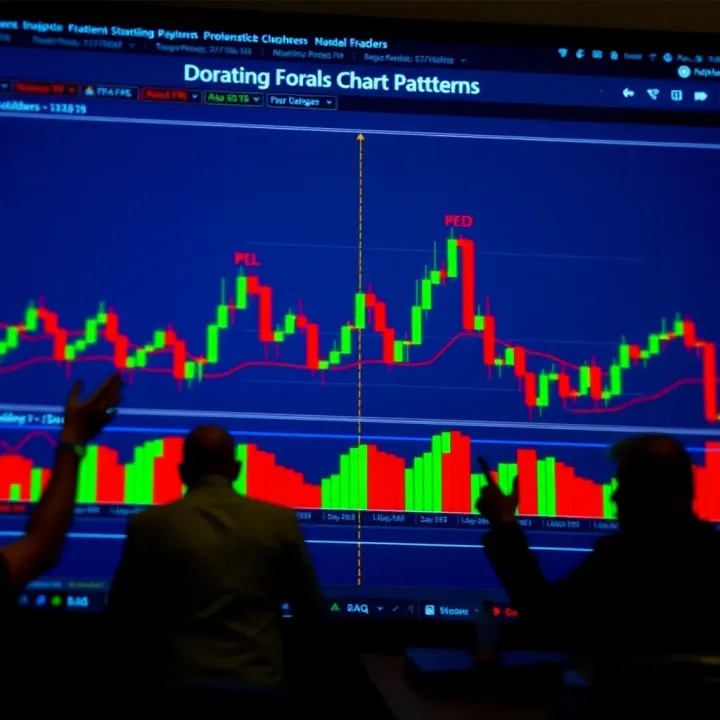
Practical knowledge of these patterns helps traders not only in spotting trade entry and exit points but also in managing risks better. For Pakistani traders dealing with volatile currency pairs like USD/PKR or EUR/PKR, timely recognition of these patterns can protect capital especially during fluctuations caused by political or economic developments.
Remember: No pattern guarantees success, but using them alongside other technical indicators and fundamentals improves your trading edge significantly.
To identify chart patterns effectively, focus on:
Price formations: Look out for formations like triangles, double tops/bottoms, and flags that hint at market sentiment shifts.
Volume confirmation: Increased trading volumes during breakout points strengthen the reliability of the pattern.
Timeframes: Short term patterns may look different from long term; Pakistani traders should align pattern study with their trading style—whether intraday or swing trading.
To assist with learning and application, downloadable PDF guides compiling detailed chart patterns and their interpretations can be invaluable. These resources often contain annotated charts specific to forex and explain pattern statistics, success rates, and entry strategies. Traders can use these PDFs offline for revision and quick reference during live trading sessions.
Mastering forex chart patterns demands consistent practice and observation. Leveraging clear guides and reliable PDF materials gives traders in Pakistan and beyond a practical edge to decode market behaviour more confidently, helping turn analysis into profitable actions.
Forex chart patterns are visual formations on price charts that traders use to predict future market movements. These patterns are not just random shapes but signals reflecting collective trader behaviour. For anyone involved in forex trading, recognising these patterns is essential to making smarter entries and exits. Without this understanding, one may miss profitable opportunities or enter trades at the wrong moment.
Chart patterns describe the shapes created by price movements over time on a forex chart. They capture the interaction between buyers and sellers, often hinting at whether a currency pair will continue its current trend or reverse direction. For example, a "head and shoulders" pattern tends to signal a reversal, meaning the price might change direction after completing the formation. Recognising these patterns enables traders to forecast price moves more reliably.
In practical terms, chart patterns act like signposts—they provide clues that help traders anticipate what could happen next. For instance, spotting a "triangle" pattern forming on the USD/PKR chart can suggest a breakout, giving the trader a chance to position themselves early.
Every forex chart pattern reflects underlying market psychology. When a price consolidates into a specific shape, it reveals shifts in the balance between supply and demand. In a bullish triangle, for example, buyers gradually push prices higher despite resistance, reflecting growing optimism.
Conversely, patterns like double tops indicate hesitation or exhaustion in the market, where sellers begin to outweigh buyers, often leading to price declines. Understanding these signals helps traders interpret the sentiment driving price and adapt their strategies accordingly.
Timing is everything in forex trading. Recognising chart patterns improves your ability to decide exactly when to enter or exit a trade. For example, entering a trade right after the breakout from a pennant pattern can yield better returns than jumping in too early or too late.
By interpreting patterns early, traders can also avoid false signals that might lead to losses. If on the daily chart for EUR/USD, you notice a confirmed reversal pattern forming, you can prepare to exit a position or set tighter stop-loss orders, ensuring better control over your trades.
Using chart patterns provides a clearer picture of potential price directions, reducing guesswork and emotional trading. This helps limit risk, as traders can set stop-loss levels based on the pattern’s structure. For instance, when trading a wedge formation, the lowest point of the pattern can serve as a stop-loss to protect against unexpected drops.

Moreover, recognising patterns gives insight into possible market volatility. In Pakistan’s forex market, where currency swings can be unpredictable due to economic events, these visual clues help traders anticipate and manage risks effectively.
Chart patterns are more than shapes on a screen—they're an essential tool that conveys market sentiment and guides better trading decisions. Recognising and correctly interpreting these patterns can make the difference between profit and loss in forex trading.
Recognising common forex chart patterns is key to improving your trading strategy. These patterns offer clues about whether the market will continue in the same direction or reverse, helping you make well-timed decisions. By understanding these formations, you can better predict price moves and manage risk in Pakistan's often volatile forex markets.
Flags and Pennants are short-term continuation patterns that signal a brief pause before the prevailing trend resumes. A flag looks like a small rectangle slanting against the trend, while a pennant forms a small symmetrical triangle. For example, if the USD/PKR pair rallies strongly and then consolidates within a flag, traders expect the uptrend to continue once the price breaks out above the consolidation. These patterns provide clear entry points after the pause, offering a chance to ride the next leg of the trend.
Triangles (ascending, descending, symmetrical) represent periods of consolidation before a price breakout. An ascending triangle forms when the price hits a resistance level repeatedly but has higher lows, indicating buyer strength. Descending triangles show lower highs against a stable support level, hinting sellers are gaining control. Symmetrical triangles narrow with lower highs and higher lows, signalling a potential breakout in either direction. These patterns help traders prepare for significant moves, especially on currency pairs like EUR/USD or GBP/USD.
Head and Shoulders is a classic reversal pattern signalling a shift from an uptrend to a downtrend. It comprises three peaks—the middle one (head) is higher than the other two (shoulders). When price breaks below the neckline connecting the two troughs, it typically marks a trend reversal. For example, spotting this on the USD/JPY chart could alert traders to sell before a downtrend starts.
Double Tops and Bottoms indicate trend reversal after two price peaks or troughs at roughly the same level. A double top suggests the asset failed twice to break above resistance, signalling a drop soon after. Conversely, a double bottom forms when price tests support twice and rebounds, implying an uptrend ahead. These patterns are useful for spotting turning points on major pairs like AUD/USD.
Triple Tops and Bottoms are rarer but stronger reversal signals formed by three unsuccessful attempts at breaking resistance or support. For instance, a triple top at a critical level on the EUR/PKR pair might mean a sustained fall, while a triple bottom hints at a solid base before price rises. Their reliability helps traders make confident exit or entry moves.
Rectangles are sideways consolidation patterns where price bounces between parallel support and resistance levels. This pause often precedes continuation of the prior trend. Traders watch breakout direction carefully; breaking above resistance signals buying opportunity, while a drop below support suggests selling. Rectangles offer clear risk levels for stop-loss orders.
Wedges are slanting patterns that can indicate both continuation and reversal depending on the slope. Falling wedges, where price narrows downward, usually signal bullish reversal; rising wedges suggest bearish reversal. For example, if the USD/CAD shows a falling wedge during a downtrend, traders might expect a reversal and prepare to buy. Understanding wedge patterns improves entry timing and risk management in fluctuating markets.
Mastering these common forex chart patterns can sharpen your market reading skills and help you respond more effectively to Pakistan’s unique trading conditions.
Using forex chart patterns effectively is about more than spotting shapes on a screen. It’s about confirming those patterns with other tools, managing risk smartly, and adjusting your approach based on the timeframe you trade. This way, you avoid false signals and build a solid foundation for your trading decisions.
Volume is often the silent confirmation behind a pattern. When a breakout happens, higher volume than usual suggests genuine market interest, boosting the chance the move will hold. For example, a breakout from a triangle pattern without increased volume might be a fake-out. Watching volume alongside price gives you that extra edge.
Along with volume, technical indicators like RSI (Relative Strength Index), MACD (Moving Average Convergence Divergence), and moving averages help validate patterns. RSI can tell if the market is overbought or oversold, complementing a reversal pattern. MACD crossing its signal line around a pattern breakout adds confidence. Moving averages give trend context, so a flag pattern above a rising 50-day moving average feels stronger than one below it.
Setting stop-loss points anchored to the pattern’s structure limits potential losses. For instance, after a head and shoulders pattern breaks down, placing a stop-loss just above the right shoulder’s peak helps control risk if the market reverses suddenly. This approach stops losses from ballooning and protects your capital.
Position size also matters. If the distance from your entry to stop-loss is large, reduce your trade size to keep risk manageable—say, risking only 1-2% of your trading account on any trade. This balance between position size and stop-loss distance ensures no single trade can hurt your account significantly, allowing you to trade with confidence and discipline.
Patterns don’t have the same impact on every timeframe. A head and shoulders on a daily chart might signal a strong, reliable reversal, suitable for holding trades over days or weeks. The same pattern on an hourly chart could mean a short-term move lasting a few hours. Knowing this helps you avoid misjudging the signal strength.
Short-term traders often focus on hourly or 15-minute charts, seeking quick entries and exits based on smaller patterns. Long-term traders lean on daily or weekly charts, using bigger patterns that signal sustained moves. Aligning your pattern analysis with your trading style is key. For example, a Pakistani trader using daily charts for swing trades would monitor patterns differently than one day-trading intraday on Karachi’s volatile forex pairs.
Effective use of chart patterns means combining confirmations, managing risks properly, and tailoring your approach to the timeframe that fits your trading strategy. This practical blend turns pattern spotting into a real trading tool.
Access to well-structured Forex chart pattern PDFs gives traders a concrete reference for understanding complex formations and practising recognition. These documents often include illustrations, detailed pattern explanations, and tips which help deepen market analysis skills beyond what casual browsing can offer. For traders in Pakistan, who may not always find structured courses locally, PDFs serve as a dependable study aid.
PDF guides on Forex chart patterns can be found both for free and through paid services. Free resources from reputable trading websites or educational portals offer a good starting point, often containing foundational patterns and usage strategies. Paid PDFs, typically offered by established trading educators or professional platforms, provide more comprehensive material, including advanced patterns, case studies, and step-by-step strategies.
Locally, Pakistani platforms like Pak Forex Academy or trading communities sometimes share PDFs aimed at regional market conditions. Internationally, websites like Babypips, Investopedia, and the Chartered Market Technician Association provide high-quality materials consistent with global standards. Combining both local and international PDFs can expand your understanding while tailoring it to Pakistan’s unique market volatility and currency pairs.
Studying Forex chart pattern PDFs offline allows focused learning without online distractions. This method helps traders absorb concepts at their own pace, revisiting tricky sections repeatedly. For example, printing key pages or annotating PDFs can enhance retention of pattern shapes and their typical behaviours in different market phases.
Using charts alongside PDFs is crucial. Traders should apply the material by comparing live or historical charts with PDF illustrations. This interplay between theory and practice sharpens the eye for spotting patterns in real-time, trains pattern recognition skills, and builds confidence before placing actual trades.
Organising your notes on key chart patterns and rules consolidates learning. When you summarise trading rules—like entry points, stop-loss placements, or confirmation signals—in your own words, the information becomes more accessible during fast market decisions. Structured notes also make it easier to review and update your strategies over time.
Integrating PDF insights into your daily trading routine is vital for improvement. For instance, maintain a routine of reviewing a couple of pattern examples from your PDFs each day alongside your trading journal. This keeps pattern recognition sharp and ensures that lessons from PDFs translate into practical trading decisions. Such habits make pattern learning an active, ongoing process rather than one-off reading.
Consistent use of Forex chart pattern PDFs, combined with practical chart application and personal notes, equips traders with reliable tools to enhance decision-making and manage risks effectively. For Pakistani traders, this process supports adaptation to local market dynamics and builds a disciplined trading mindset.
Understanding forex chart patterns is one thing, but applying them effectively in Pakistan's unique trading scene requires adapting to local conditions and continuous effort. This final section highlights how traders can make forex chart patterns work for them, considering Pakistan’s economic factors and practical trading aspects.
Pakistan’s market often shows higher volatility due to local economic shifts, political events, and currency interventions by the State Bank of Pakistan (SBP). This means forex chart patterns might form or break differently compared to global standards. For instance, a pattern that signals a reversal in a stable market may react faster or with a sudden spike when applied to the Pakistani rupee (PKR) pairs. Traders should keep an eye on key indicators like market sentiment around major economic announcements or changes in the SBP policy rate to time trades better.
Using local currency pairs such as USD/PKR, EUR/PKR, or GBP/PKR also makes a difference. Liquidity and spreads vary from international pairs like EUR/USD or USD/JPY, which affects how chart patterns develop. Pakistani traders often choose brokers regulated by the Securities and Exchange Commission of Pakistan (SECP) or those offering transparent trading conditions suited to local laws. Picking a trustworthy local broker can also minimise risks related to fund withdrawals or regulatory compliance, making it easier to follow patterns faithfully without unexpected interruptions.
Regular chart analysis sharpens the skill of recognising valid patterns amidst market noise. Keeping a trading journal helps track decisions and outcomes, turning immediate wins or losses into valuable learning points. For example, a trader might note how a double top pattern worked on the USD/PKR pair during a period of political uncertainties, improving their understanding of pattern reliability in similar future situations.
Besides solo practice, joining Pakistani forex trading communities and online forums provides timely updates on market trends and insights from experienced traders. Groups on platforms like Facebook, Telegram, or dedicated forums often discuss how regional events affect forex, share PDF study resources, and warn about scams. Such interaction helps traders stay informed beyond textbook examples, adapting strategies to the real-time Pakistani market.
Mastering forex chart patterns goes beyond memorising shapes—it demands contextual awareness, disciplined practice, and learning from peers, especially in a dynamic market like Pakistan's.
With consistent effort and local market attention, Pakistani forex traders can turn chart patterns into a reliable tool, making smarter, informed trades with a practical edge.
📈 Discover how to spot and use trading chart patterns with a practical PDF guide. Perfect for Pakistani traders wanting clear, reliable strategies for success.

📊 Master trading chart patterns with our essential guide & PDF resources! Learn key patterns, practical tips & strategies for traders in Pakistan & globally.

📈 Learn to spot key trading chart patterns with our essential guide! Get practical tips and download free PDFs to boost your trading game confidently.

📈 Learn seven key chart patterns to improve your trading in Pakistani markets. Get practical tips & download a handy PDF guide for easy reference!
Based on 10 reviews