
Best Trading Websites in Pakistan: A Practical Guide
Explore key factors 👀 to choose the best trading website in Pakistan 🇵🇰—features, security, fees, markets, support—to fit your goals perfectly 📊.
Edited By
Amelia Price
Cryptocurrency trading in Pakistan has gained significant interest recently, thanks to growing internet access and a young population eager to explore digital assets. However, the market here comes with its own set of challenges, including legal uncertainties and limited access to foreign exchanges. Understanding these particular conditions is key before diving into crypto trading.
Crypto trading means buying and selling digital currencies like Bitcoin, Ethereum, or USDT through an exchange platform. Unlike stock markets, crypto trades run 24/7, offering flexibility but also volatility. Pakistani traders must stay aware of the government's stance and the State Bank of Pakistan's regulations, since cryptocurrencies are not officially recognised as legal tender, yet many still trade using peer-to-peer platforms or interfacing with international exchanges.

Some popular exchanges that Pakistani traders use include Binance, Coinbase, and local P2P options like LocalBitcoins or Binance P2P. These platforms provide ways to convert PKR into crypto and vice versa, often through JazzCash or Easypaisa wallets, helping bypass traditional banking hurdles somewhat. However, due diligence is necessary as scams and fraud are common in unregulated environments.
Always remember: protect your private keys and use two-factor authentication. Security breaches can wipe out your digital assets instantly.
Before starting, consider these practical points:
Know the risks: Crypto markets are highly volatile. Prices can swing wildly within minutes.
Start small: Invest amounts you can afford to lose without impacting your finances.
Stay updated: Follow Pakistani financial news and SBP announcements on crypto regulations.
Use trustworthy sources: Choose exchanges with good reputations and strong security.
Pakistan's fluctuating rupee and economic pressures make crypto trading tempting, but it’s far from straightforward. Being informed about local factors, keeping trading disciplined, and starting cautiously can help you make better decisions in this fast-moving market.
Understanding cryptocurrency trading is essential for anyone stepping into this fast-moving market. It allows you to grasp both the opportunities and risks, especially within Pakistan's unique economic and regulatory environment. Without a solid base, even experienced traders can lose money or run into legal troubles.
Crypto trading means buying and selling digital currencies like Bitcoin, Ethereum, or others to profit from price changes. Unlike holding these coins as a long-term investment, trading involves actively monitoring the market and making short-term moves. For instance, a trader might buy Bitcoin at Rs 40 lakh and sell it a week later at Rs 43 lakh to book a quick gain.
Crypto trading works through online platforms known as exchanges where buyers and sellers meet to trade. You don’t actually handle physical coins; transactions happen via secure digital wallets tied to your account.
Key differences from traditional trading come down to market hours, volatility, and asset nature. Pakistani stock markets close at set times and observe holidays, whereas crypto markets run 24/7 without any breaks. Also, crypto prices can swing wildly within hours due to supply-demand imbalances or news events — far faster than typical stock movements. Moreover, cryptocurrencies are decentralised and not tied to any single bank or government, which means factors influencing them differ from traditional assets like equities or commodities.
Spot trading involves buying or selling cryptocurrency for immediate delivery. When you purchase Bitcoin on a spot market, you own the actual coin and can transfer it to your wallet right away. This is the simplest form of crypto trading and suits newcomers who want to own coins outright and avoid leverage risks.
Margin trading lets you borrow funds to amplify your trading position. For example, using 10x leverage means with Rs 100,000 of your own capital, you can open a trade worth Rs 1 million. While profits multiply if the market moves favorably, losses do too and can exceed your initial capital, especially in volatile markets. Pakistani traders should be cautious here due to the added risk and the need for strict risk management.
Futures and derivatives trading involves contracts betting on the future price of cryptocurrencies without owning the asset itself. You can take long (buy) or short (sell) positions to profit from price rises or falls respectively. These instruments offer advanced strategies like hedging but require in-depth understanding. Due to regulatory uncertainty in Pakistan, futures trading is usually done via international exchanges that support Pakistani users.
Before diving into complex strategies, mastering spot trading and understanding your risk tolerance go a long way in preserving capital and building confidence.
Understanding these basics gives you a firm footing to explore crypto trading confidently while avoiding common pitfalls seen among new traders in Pakistan.
Accessing cryptocurrency exchanges is fundamental for anyone in Pakistan aiming to trade or invest in digital assets. These platforms provide the marketplace where buyers and sellers meet, enabling smooth and secure transactions. For Pakistani traders, understanding the choice between international and local exchanges, as well as funding options, plays a critical role in successful trading.
Binance, Coinbase, and Kraken are among the most widely used international cryptocurrency exchanges for Pakistani traders due to their vast range of available cryptocurrencies and robust security. Binance is particularly popular because it offers a user-friendly interface and supports multiple pairs with PKR trading pairs through indirect means. Coinbase and Kraken provide strong regulatory compliance and transparency, suiting traders who prioritise trust and ease of use. However, these platforms often require account verification and have limited direct Pakistani rupee support, which means users generally must convert PKR to USD or other major currencies first.
Local exchanges like Binance P2P or platforms specialising in peer-to-peer (P2P) trading have gained traction in Pakistan due to restrictions on international transfers and limited banking integration for crypto. P2P networks connect buyers and sellers directly, allowing them to trade using local payment methods. This approach bypasses some of the challenges faced by international platforms, such as funding issues with Rupees or strict KYC requirements. Still, traders must exercise caution, as P2P platforms carry higher counterparty risks, and trustworthiness of users varies.
Funding crypto accounts from Pakistan commonly happens via bank transfers or mobile wallets like JazzCash and Easypaisa. These local payment methods offer convenience and wide accessibility, especially for small to medium transactions. Many P2P sellers prefer receiving payment through these wallets because of their instant transfer times and minimal transaction charges. However, direct deposits on international exchanges using such wallets remain largely unsupported, so traders often rely on selling crypto in local networks to move funds.
Some Pakistani traders use international payment methods like PayPal, Skrill, or wire transfers to fund their accounts. These can bridge the gap when local services fall short but are not hassle-free. For instance, PayPal is not fully operational in Pakistan for all functions, and wire transfers can be slow and expensive. Prepaid international cards linked to foreign bank accounts are a way some manage to bypass these limitations, albeit with added complexity.
One major hurdle is the difficulty in transferring Pakistani rupees directly to international exchanges due to banking regulations and currency controls. This often forces traders to convert PKR to USD or other stronger currencies outside the exchange ecosystem, adding cost and delay. On top of that, fluctuating exchange rates and occasional banking restrictions on crypto-related transactions contribute to unpredictability for traders. Consequently, many remain reliant on peer-to-peer transactions and informal networks to inject liquidity into their crypto holdings.
Navigating payment methods and exchange access in Pakistan requires flexibility and awareness of the country’s financial ecosystem. Choosing the right platform and funding method is key to efficient, secure trading experiences.
Understanding the legal and regulatory environment is vital for crypto traders in Pakistan to avoid pitfalls and trade confidently. With evolving rules and some ambiguity, knowing the current stance of main regulators like the State Bank of Pakistan (SBP) and the Federal Board of Revenue (FBR) can save you from unexpected issues and help you comply with the law.
State Bank of Pakistan's stance
SBP has taken a cautious approach regarding cryptocurrencies. Officially, it does not recognise cryptocurrencies as legal tender, warning the public about high risks including fraud, scams, and price volatility. Trading cryptocurrencies directly with Pakistani banks remains restricted, which means converting crypto to rupees often requires workarounds like peer-to-peer networks or using foreign bank accounts.
This has practical effects: for example, you won't be able to directly deposit or withdraw crypto funds via most local banks without extra verification or intermediary platforms. However, SBP has hinted at observing digital assets closely and might introduce formal regulation in the future to control risks while encouraging innovation.
FBR rules on taxation and reporting
The FBR treats cryptocurrency profits as taxable income under the Income Tax Ordinance. Traders must declare gains from crypto trading in their annual tax returns, whether those are from selling coins or trading derivatives. Although clear guidelines and standardised valuation methods for crypto taxation are still developing, failure to report can lead to penalties or scrutiny during audits.
For practical guidance, traders should keep detailed records of all transactions, including dates, amounts, purchase price, and sale price. This is necessary not just for tax calculation but also to comply with FBR's record-keeping requirements. Traders often use spreadsheets or specialised crypto tax software adapted for Pakistani users.
Potential legal risks
Working with cryptocurrencies in Pakistan carries some legal uncertainties. Since cryptocurrencies lack explicit legal status, traders risk accusations of money laundering or illegal financial activities if their transactions are not transparent. There have been cases where law enforcement has investigated crypto users based on suspect fund flows or lack of proper documentation.
Another risk comes from exchange closures or freezes. If a foreign exchange suddenly stops withdrawals or is blacklisted, you might lose access to your funds. The lack of clear protection or insurance makes it important to use reputable platforms and keep funds secure.
Ensuring compliance with reporting standards
To stay on the safe side, traders should adopt best practices for compliance. This includes:
Maintaining full records of crypto trades and transactions
Reporting profits accurately in tax returns to FBR
Using verified exchanges and wallets with KYC (Know Your Customer) checks
Avoiding anonymous or unregulated platforms
Following these steps helps show good faith to regulators and reduces the risk of legal complications. For example, registering with an exchange like Binance or Kraken that complies with international standards adds a layer of transparency. Regularly reviewing FBR notifications on crypto ensures you are updated about new rules.
Establishing clear legal awareness protects you from penalties and helps build trust with authorities, which is crucial in a market still finding its regulatory footing.
This legal and regulatory overview is not just bureaucracy — it offers practical guidance for you to trade smartly, stay compliant, and avoid costly setbacks in Pakistan's crypto scene.
Crypto trading in Pakistan demands solid strategies to navigate its ups and downs efficiently. Given the volatile nature of cryptocurrency markets, combining technical insights with fundamental research helps traders minimise losses and spot opportunities better. Whether you are managing a small portfolio or handling large sums, understanding key trading strategies enhances your chances of consistent returns while keeping risks in check.
Using charts and indicators is central to technical analysis. Traders look at price charts to identify trends and patterns that suggest future price movements. Common indicators include Moving Averages to smooth out price fluctuations, Relative Strength Index (RSI) to spot overbought or oversold conditions, and Bollinger Bands to understand volatility. For example, in Pakistan where market news can be less frequent, relying on technical signals helps you make timely trades without always waiting for external triggers.
Evaluating cryptocurrency projects involves assessing the quality and potential of the crypto asset beyond just the price charts. This means checking the project's whitepaper, development team, technology, community support, and use case. For instance, a coin linked to a robust blockchain platform with active developers, like Ethereum or Cardano, generally presents better long-term prospects compared to purely speculative tokens. This approach guards against hype-driven pumps common in crypto circles.
Stop-loss orders and position sizing are practical tools to protect your capital. A stop-loss order automatically sells a crypto asset at a predetermined price, limiting losses if the market moves against you. Position sizing means carefully deciding how much capital to allocate per trade based on your risk tolerance. For example, a trader might risk only 2% of their total portfolio on a single trade, ensuring no one trade can cause heavy damage. Pakistani traders facing local currency fluctuations should be especially cautious with these techniques to avoid sudden shocks.
Diversification within crypto portfolios reduces the risk of large losses from any one asset. This means spreading investment across different types of cryptocurrencies—such as stablecoins, utility tokens, and established coins—to balance reward and risk. For example, holding Bitcoin, Ethereum, and a few emerging coins can smooth out the portfolio's performance during market turbulence. Diversification also includes varying entry points and not putting all funds into a single trade at once.
Successful crypto trading mixes technical signals with solid research and disciplined risk management. This strategy not only protects your money but also builds confidence for long-term growth.
Traders in Pakistan should take care to adapt these strategies to the country's unique market challenges, such as regulatory uncertainties and limited access to certain exchanges. Sticking to these principles helps build a resilient approach for effective crypto trading.
Starting crypto trading in Pakistan requires a clear plan and understanding of practical steps. This section focuses on hands-on tips that help traders avoid common pitfalls while building a secure and efficient trading routine. Pakistan's unique financial and regulatory environment makes certain preparations essential, from account setup to staying informed on the latest market trends.
Most reputable cryptocurrency exchanges require a clear verification process known as KYC (Know Your Customer). In Pakistan, this typically means submitting your CNIC (Computerised National Identity Card) along with a selfie for facial recognition. Some platforms may also ask for proof of address, such as a utility bill or bank statement. Completing these steps is important because it helps prevent fraud and secures your trading privileges.
Securing your account is not just about creating a strong password. Two-factor authentication (2FA) should be enabled immediately on your exchange account to add an extra layer of protection. Using authenticator apps like Google Authenticator or Authy is safer than SMS codes, given potential SIM swap risks. Also, avoid logging into your account from public Wi-Fi or shared devices to minimise exposure to hacking attempts.
Hot wallets connect to the internet and are convenient for frequent trading but come with higher security risks. For example, keeping funds on a Binance wallet allows instant trading but exposes you to online threats. Cold wallets, like hardware devices (Ledger or Trezor), store your crypto offline. These are better for holding significant amounts safely over time, making them suitable for Pakistani traders who plan to HODL and avoid daily price swings.
Besides wallet choice, keeping your private keys secure is crucial. Never share your keys or backup phrases with anyone. Regularly update your device’s software and scan for malware. Avoid clicking dubious links or downloading unverified apps claiming to boost your crypto gains; they often turn out to be scams. Use password managers for creating and storing strong, unique passwords for your crypto accounts.
Keeping track of market changes is key to crypto success. Pakistani traders can rely on international platforms such as CoinMarketCap, CoinGecko, and CryptoCompare for price updates and analytics. Locally, fintech news portals and WhatsApp groups focusing on crypto provide timely information. Tools like TradingView offer charts and indicators that help analyse market trends and plan trades effectively.
Engaging with dedicated communities on Reddit (e.g., r/CryptoCurrency), Telegram channels, and Twitter keeps traders updated on real-time developments. Pakistani crypto groups on Telegram allow discussions around local exchanges and regulatory updates, helping traders stay aware of risks and opportunities. However, it’s important to verify information instead of following rumours or hype blindly.
Successful trading in Pakistan depends heavily on thorough preparation, strong security measures, and continuous learning. Following these practical tips makes the trading experience safer and more rewarding amid a challenging environment.
Explore key factors 👀 to choose the best trading website in Pakistan 🇵🇰—features, security, fees, markets, support—to fit your goals perfectly 📊.
Discover top trading platforms in Pakistan for stocks, forex, and crypto. Get tips on features, reliability, and user-friendly tools 📈💰🇵🇰
Find your ideal trading platform in Pakistan with our practical guide 📊. Learn about fees, security, accounts & user experience to trade confidently.
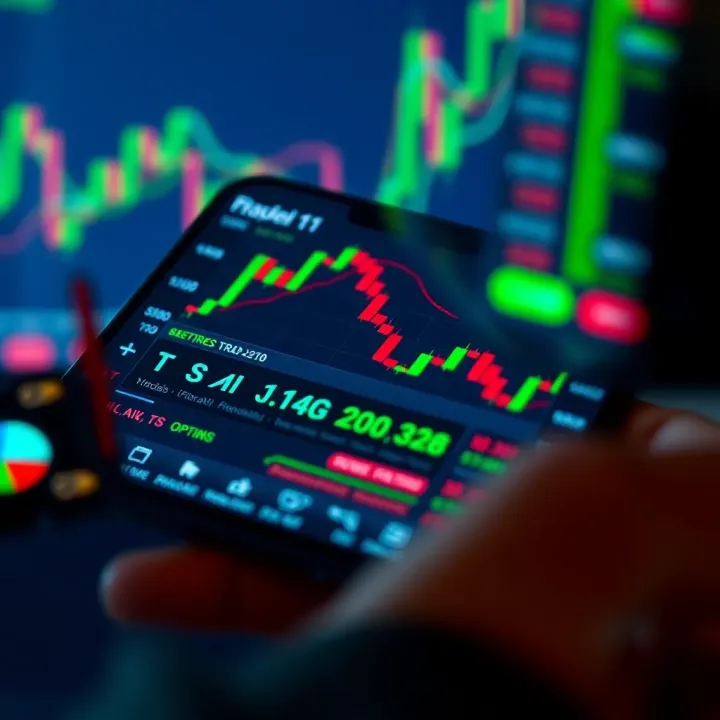
📱Discover how to pick the best trading app in Pakistan, focusing on fees, ease of use, features, and regulations for safe, confident trading!
Based on 7 reviews