
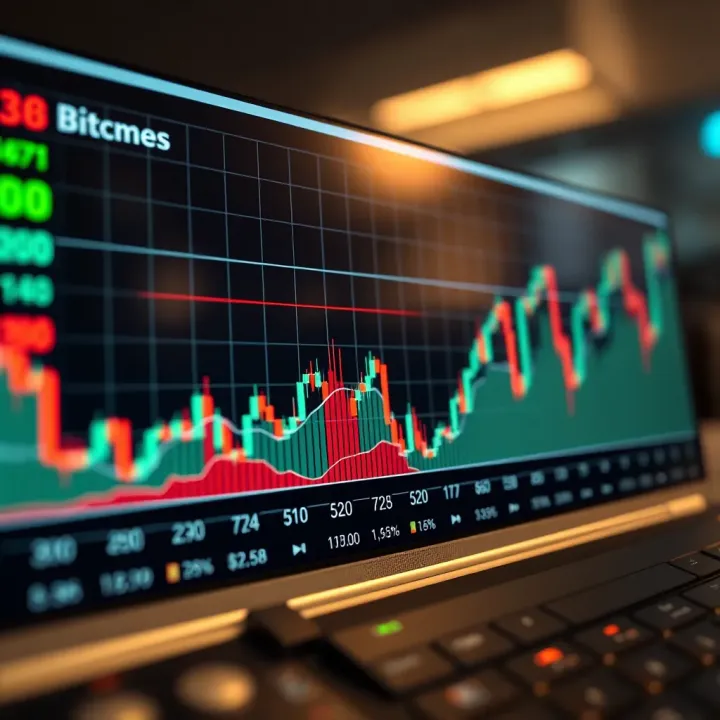
Bitcoin Price Today: Market Trends & Analysis
📊 Get today's Bitcoin price prediction and market analysis focusing on key trends, technical signals, and investor insights in Pakistan's crypto scene.
Edited By
Henry Mitchell
Bitcoin keeps throwing curveballs at investors and analysts, especially here in Pakistan where the crypto scene is still finding its feet amidst regulatory changes and economic shifts. Understanding the current price forecast and market trends isn't just helpful—it's necessary for anyone seriously thinking about investing or trading.
This article walks you through what’s really happening with Bitcoin's price right now. We’ll cover key trends driving its value, how local and global factors intertwine, and what the experts are saying. More importantly, we’ll break down what these predictions mean in practical terms, especially if you’re considering jumping into the market.

By the end, you’ll have a clearer picture of whether Bitcoin fits your financial plans and how to interpret the often-confusing signals the market sends out. This isn’t about hype; it’s about giving you solid info so you can make smarter choices.
Grasping how Bitcoin behaves in the market is the cornerstone of making savvy investment decisions or analysis. This section unpacks the patterns and drivers behind Bitcoin's price changes, giving you solid ground to interpret future movements. Whether you’re a trader or just keeping an eye on the market, knowing what shapes Bitcoin's market behavior helps separate guesswork from educated expectations.
Bitcoin's price history is a wild ride that reflects its evolving place in global finance. Starting from mere cents back in 2009, the price has seen both meteoric rises and steep falls. Take the 2017 surge when Bitcoin hit nearly $20,000 before crashing, or the recent bouncing between $30,000 to $40,000 levels. Understanding this history gives context — for example, it shows Bitcoin's cycles can last months or years, not just days. Knowing the past helps identify whether a current dip is just a blip or possibly the start of a longer trend.
Sharp price jumps or drops often happen suddenly and affect traders deeply. Big moves usually tie back to significant events like regulatory announcements, hacking incidents, or a famous investor jumping in or out. For example, when Tesla announced accepting Bitcoin in early 2021, prices surged swiftly. On the flip side, China's repeated crackdowns have triggered rapid sell-offs. Recognizing triggers behind these fluctuations can help investors prepare and avoid knee-jerk reactions.
Bitcoin’s well-known volatility stems from several things acting together: limited liquidity compared to traditional assets, speculative trading, and news-driven shifts. For instance, a rumor or tweet can cause outsized moves because many traders jump in at once. This volatility means prices can change hundreds or thousands of dollars in a single day, underscoring why risk management is crucial when trading or holding Bitcoin.
Bitcoin's supply is capped at 21 million coins, which creates scarcity. As demand increases, especially when supply grows slowly due to mining halving events, prices often move upward. This is why many people watch the halving events closely — the slowed issuance tends to tighten supply and push prices higher, assuming demand stays strong.
Bitcoin often reacts to economic shifts worldwide. When inflation fears spike or traditional markets wobble, some investors turn to Bitcoin as a hedge, pushing demand up. Conversely, economic stability or rising interest rates might divert funds away, putting downward pressure on prices. For example, during the COVID-19 pandemic onset, Bitcoin first dropped sharply but then rallied as stimulus money and low interest rates pushed people towards alternative assets.
Government actions can make or break Bitcoin's appeal quickly. When countries clarify their stance or create favorable regulations, trust builds and prices often rise. However, bans or harsh restrictions, like those seen in India or Turkey, tend to cause sell-offs. Investors in Pakistan, where regulatory views are evolving, should watch developments closely, as even subtle changes impact market confidence and price behavior.
At its core, Bitcoin’s price moves heavily on how investors feel. Positive news breeds confidence, leading to buying and price gains, while fear or uncertainty triggers selling. Social media, forums like Reddit, and influencer voices all amplify sentiment swings. For example, when Elon Musk tweets favorably about Bitcoin, markets pick up, but criticism or negative statements can reverse trends swiftly. Keeping a pulse on sentiment helps anticipate short-term moves.
Understanding Bitcoin’s market behavior isn’t just academic; it’s practical. It helps traders spot opportunities and avoid pitfalls, making predictions and strategies grounded rather than hopeful. As the market keeps evolving, staying updated on these fundamentals can give you a real edge.
Predicting Bitcoin's price isn’t just about looking at charts or guessing based on gut feeling. Real insight comes from understanding certain factors currently stirring the market pot. These factors offer a clear picture of how Bitcoin might behave soon, especially for traders and pros keeping a close eye on the scene. By exploring recent market shifts, tech upgrades, and the regulatory landscape—particularly in Pakistan—we get a fuller story of Bitcoin’s future prospects.
Trading volume is like the heartbeat of the Bitcoin market—when it speeds up, prices often twitch. Recently, spikes in volume typically hint at strong interest, sometimes from big institutional investors stepping in or investors reacting to global economic news. For example, the surge in volume after major announcements often leads to noticeable price moves. Buyers and sellers get more active, making it easier to enter or exit positions without causing wild price swings. Keeping track of these volumes helps investors spot potential uptrends or warnings signs early on.
News moves markets—this is no secret. Reports about regulatory crackdowns, major companies like Tesla or PayPal adjusting their crypto policies, or even tweets from influential figures can swing Bitcoin’s price dramatically. Consider when the Chinese government banned crypto trading in 2021: prices dropped sharply since many traders had ties to China. For readers in Pakistan, global news impacts can ripple locally, especially as Pakistan awaits clearer crypto rules. Staying updated with trustworthy news sources is crucial for understanding sudden price shifts and planning trades accordingly.
The tech behind Bitcoin isn’t static—it’s evolving. Recent improvements to blockchain protocols help speed transaction times and lower costs, which make Bitcoin more appealing as a payment tool. The implementation of the Lightning Network is a good example; it allows smaller payments to go through lightning-fast and cheap, broadening Bitcoin’s usability. For investors, this adds a real-world value angle beyond speculation, potentially stabilizing prices as adoption grows.
Wider acceptance means more use cases and steady demand. More businesses around the world, from small online shops to big players like Microsoft, now accept Bitcoin. User wallets are growing in countries like the US and also in some parts of Asia. In Pakistan, while formal adoption still faces regulatory hurdles, peer-to-peer trading and informal networks are on the rise. Higher adoption reduces the chances of Bitcoin fading out as hype, making forecasts a bit more predictable.
Regulation is a big wildcard. When a country introduces clear crypto rules, it can either boost confidence or spook the market depending on the tone. Countries like the UK and Singapore have established friendly rules that invite crypto businesses and investors. In contrast, sudden bans or restrictions, like those occasionally seen in Turkey or India, send prices tumbling. For Pakistan particularly, lack of a clear regulatory stance creates uncertainty. Traders need to watch any shifts closely because these policies can change rapidly and impact accessibility.
The legal framework in Pakistan is still in flux. Officially, the State Bank of Pakistan hasn’t fully authorized crypto transactions, creating a gray area for investors. Yet, this hasn’t stopped a growing community of traders and informal exchanges using crypto. Understanding these legal nuances is critical before jumping into Bitcoin trading locally. Being aware of potential risks, such as sudden crackdowns on exchanges, helps investors protect their assets and make smarter decisions.
Staying informed about these factors allows traders and investors to navigate the Bitcoin market more wisely, especially in uncertain environments like Pakistan.
In summary, current Bitcoin predictions hinge on a mix of active market participation, advancements in the tech itself, and shifting regulations. For anyone serious about crypto investing or trading, knowing these elements inside out can make the difference between riding the wave or getting caught in a rough swell.
Understanding expert predictions is a key part of making sense of the constantly shifting Bitcoin market. These predictions come from individuals and organizations that use various tools and data to guess where Bitcoin prices might head next. For traders, analysts, and investors, these insights help to shape strategies, manage risks, and avoid rash decisions based on gut feelings alone. In Pakistan, where cryptocurrency regulations are still evolving, knowing what experts say can provide a useful lens for navigating the market.
Technical analysis relies on past market data—mostly price and volume—to forecast future price movements. It’s kinda like spotting patterns in the waves to predict the next swell. Analysts look at charts, identifying trends such as support and resistance levels, moving averages, and momentum indicators like RSI (Relative Strength Index). These tools help uncover whether Bitcoin might be overbought or oversold.
For example, if Bitcoin repeatedly bounces back after hitting a certain price point, that level becomes a ‘support’. Such signals can guide buying or selling decisions. Traders also use candlestick patterns—which show price action within specific time frames for key clues. While not foolproof, technical analysis offers a systematic approach for timing entries and exits, especially in a volatile asset like Bitcoin.
Fundamental analysis digs deeper into the factors influencing Bitcoin’s intrinsic value. This means assessing elements like network activity, mining rates, adoption levels, and macroeconomic indicators. A practical angle might be studying Bitcoin's hash rate or the number of active addresses—rising numbers can reflect growing trust and use.
In Pakistan, understanding economic conditions, foreign exchange trends, and government policies adds further context. For instance, if inflation rates rise or the rupee weakens, Bitcoin might see increased demand as a hedge. Keeping an eye on global financial news and Bitcoin’s development roadmap also feeds into this analysis. Unlike technical analysis, which focuses on price charts, fundamental analysis looks at the bigger picture of what’s driving supply and demand.
Bitcoin is as much influenced by sentiment as by numbers. Social media platforms like Twitter, Reddit, and specialized crypto forums bubble with opinions that can sway market moods. Sentiment analysis tools scan these conversations, tracking buzzwords, tone, and volume to estimate the general feeling—whether it's fear, excitement, or uncertainty.
For example, a sudden spike in tweets about a security breach or government crackdowns in Pakistan might create selling pressure. On the flip side, announcements from popular figures like Elon Musk or major partnerships can spark buying frenzies. This method captures the human side of markets, reacting quickly to news and rumors.
Sentiment analysis is especially powerful because Bitcoin prices often move on perception as much as reality.
Some experts remain optimistic, pointing to Bitcoin’s limited supply and increasing institutional adoption as solid foundations for growth. They argue that, despite periodic dips, the trend is upward as more people and companies see Bitcoin as a digital gold. For instance, analysts referencing the growth in blockchain usage and rising demand in emerging markets (including Pakistan's expanding digital economy) expect prices to climb steadily over time.
On the other side, some voices emphasize risks like regulatory clampdowns, technological vulnerabilities, or macroeconomic downturns that could push Bitcoin prices downward. They highlight that Bitcoin’s extreme volatility and unpredictable crashes make it a risky bet, especially in countries with unstable policy frameworks. Caution is advised when factors like rising interest rates or bans on crypto trading are in play.
Then there are experts who lean neither fully bullish nor bearish. Their stance is usually to watch and wait, emphasizing the importance of diversification and risk management rather than betting everything on Bitcoin. They remind readers that the market’s unpredictability requires patience and that looking at Bitcoin as part of a broader portfolio is wiser. These opinions encourage combining expert forecasts with personal research to make balanced decisions.
Understanding this spectrum of expert views equips investors, traders, and analysts in Pakistan to better position themselves amid changing market conditions, without getting swept up in hype or undue fear.
When navigating the choppy waters of Bitcoin forecasts, it’s easy to get swayed by flashy headlines or optimistic predictions. This section aims to ground you in practical advice, helping you sift through noise and make sense of what forecasts actually mean for your portfolio. Predictions, no matter how detailed, should be just one part of your decision-making process—not the whole playbook.
Bitcoin's price can flip faster than you can blink, primarily because the cryptomarket is still fairly young compared to traditional markets. Unlike stocks or bonds, Bitcoin’s value doesn’t rely on company earnings or government debt but on trust, speculation, and adoption patterns. Think about how a tweet from Elon Musk can send the price soaring or plummeting in a matter of hours—that’s volatility at play. Recognizing this unpredictability means you shouldn’t expect crystal-clear predictions but rather a range of possibilities.
Remember, no forecast is a guarantee. Always treat Bitcoin price predictions as educated guesses shaped by current trends and data, which can completely change in a snap.
Bitcoin comes with its own set of risks that aren’t always obvious upfront. For one, the market is highly volatile, which means potential high rewards but also steep losses. Other risks include security issues such as hacking of exchanges or wallets, regulatory crackdowns in your country, or sudden outages of major trading platforms. For instance, in Pakistan, the lack of clear government regulations adds extra uncertainty, so merchants and traders face both legal and financial risks when dealing in crypto.
Stay aware of these dangers and never put money in that you can’t afford to lose. Setting stop-loss limits or only investing a small portion of your portfolio can help cushion the downside.
Don’t rely solely on expert forecasts or trending market chatter. Use those predictions as a starting point, but dive deeper by checking Bitcoin’s on-chain data, news updates, and market sentiment. For example, if the forecast is bullish but you spot regulatory tightening in Pakistan or a drop in global Bitcoin transaction volume, your personal research might adjust your view to a more cautious one.
Personal research grounds you and prevents blind following. Tools like CoinMarketCap, Glassnode analytics, or even crypto news portals like CoinDesk can provide real-time data for you to analyze alongside forecasts.
Bitcoin is just one piece of the crypto puzzle. Using predictions as a guide, spread your investments across different assets to manage risk better. You might consider Ethereum, stablecoins, or even newer altcoins with strong fundamentals. For Pakistani investors, diversifying across types of crypto-related products—like futures, ETFs if available, or staking services—can also hedge against Bitcoin’s price swings.
By not putting all your eggs in the Bitcoin basket, you’re less vulnerable to sudden market shocks.
Taking these practical steps when using Bitcoin price forecasts can make a big difference between jumping into the market blindly and making thoughtful, informed decisions that protect your investments over the long haul.
Understanding bitcoin price trends takes on a whole different flavor for investors in Pakistan. With the country's unique economic landscape and regulatory environment, tracking these trends isn't just about hitting profits—it's a matter of navigating a complex financial ecosystem. For Pakistani investors, the trends in bitcoin prices directly impact decisions from when to enter the market to how much risk they’re willing to shoulder.
For instance, a sudden surge in bitcoin’s value can tempt a local investor to jump in quickly, but underlying factors like currency conversion rates or government policies can affect the real outcomes. This section, therefore, ties the global bitcoin movements to the Pakistani context, helping investors make sense of what those price signals actually mean for them.
Pakistani investors typically rely on platforms like Binance, LocalBitcoins, and Binance P2P, which offer a straightforward way to buy and sell bitcoin using Pakistani rupees (PKR). These platforms not only provide liquidity but also support local payment methods, making transactions easier. For example, Binance’s P2P platform annually records thousands of PKR trades, offering a wide range of sellers and buyers, which improves price competitiveness and reduces wait times.
Moreover, local exchanges such as Urdubit have tried to establish themselves but face challenges like regulatory uncertainty. Hence, many opt for international platforms that support P2P transactions backed by escrow services to minimize fraud risks.
In Pakistan, common payment methods for bitcoin transactions include bank transfers, JazzCash, EasyPaisa, and sometimes even cash in hand. Efficient currency conversion is critical because bitcoin is priced in USD, while most investors deal in PKR. The exchange rate volatility between USD and PKR can significantly influence the effective price paid.
To illustrate, if bitcoin’s price in dollars stays steady but the rupee weakens, the cost of bitcoin in PKR rises even without a price hike in USD. Investors should carefully monitor not only bitcoin prices but also FX rates and transaction fees involved in converting between currencies. Utilizing platforms that offer real-time PKR-USD conversion helps mitigate surprises and surprises later on.
Bitcoin is infamous for its rollercoaster price moves, which can send portfolios on wild rides. Pakistani investors must therefore adopt risk management strategies—like setting stop-loss orders or only investing a small part of their capital into crypto—to avoid big losses during sudden downturns.
For example, diversifying investments across several crypto assets or blending crypto exposure with traditional investments (stocks, bonds) can soften the blow when bitcoin takes a dip. Risk tools such as dollar-cost averaging, where investors buy fixed amounts regularly regardless of price, also help spread the risk over time and reduce emotional decision-making.
Many new investors enter the bitcoin world hoping to strike it rich overnight. However, particularly in Pakistan, where market access and regulatory clarity are still evolving, it’s crucial to set realistic goals. Bitcoin’s history shows it can hit rapid highs but also suffer sharp declines.
Expecting steady, guaranteed profits is unrealistic. Instead, Pakistani investors should focus on long-term trends and sound financial planning. Understanding that bitcoin is just one part of a larger investment puzzle will keep decisions grounded. Setting clear targets for profits and losses beforehand can prevent panic selling or binge buying.
"Investing in bitcoin without a clear understanding of risks is like sailing without a compass—especially in markets like Pakistan where the tides can shift unexpectedly."
By seeing how bitcoin price trends interact with local factors and by practicing prudent risk management, Pakistani investors can better navigate this volatile but potentially rewarding market.
📊 Get today's Bitcoin price prediction and market analysis focusing on key trends, technical signals, and investor insights in Pakistan's crypto scene.
Explore Tezos (XTZ) price trends 📈, key tech advancements ⚙️, and expert insights to make smart crypto investments in Pakistan's market 🌏.

Explore Cardano (ADA) price trends 📈, market outlook, key factors, expert views, and tech updates shaping its future for Pakistani investors 🇵🇰.

🔍 Explore Baby Doge Coin price trends, market factors, and future outlook. Get insights tailored for Pakistan’s crypto environment and global shifts.
Based on 13 reviews